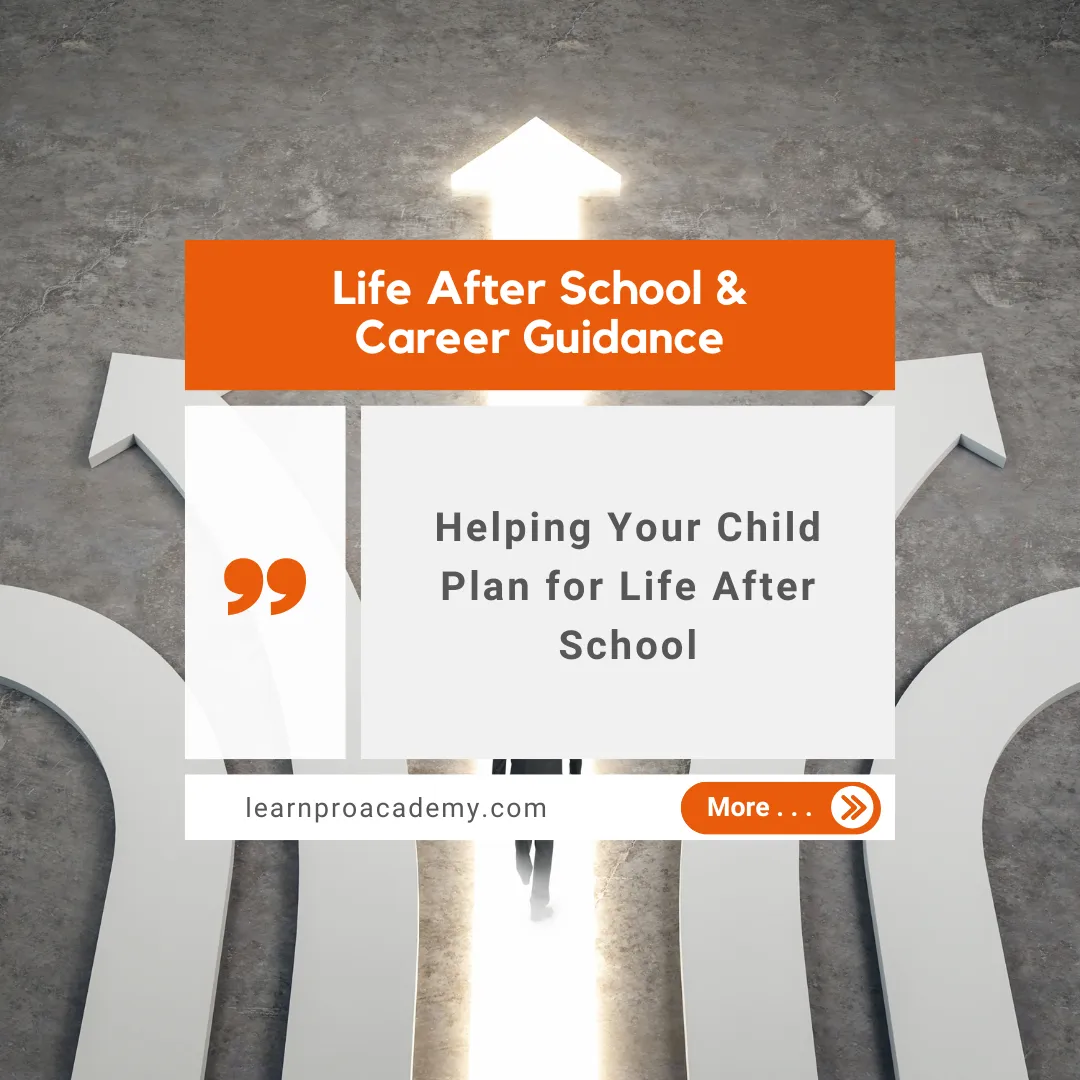
Life After School & Career Guidance: Helping Your Child Plan for Life After School
This is article #1 of 5 in the Life After School & Career Guidance Series
Introduction
Many high school learners in Grades 10 to 12 feel uncertain about what will happen after school. Some are excited, but many feel confused, stressed, or even pressured to “choose the right path.”
As a parent, you play an important role in helping your child think about the future in a calm and practical way. Planning for life after school does not mean your child must have everything figured out immediately. It simply means helping them explore options, understand themselves better, and start preparing step by step.
This article will guide you on how to support your child in planning for life after school in a realistic and supportive way.
1. Why Planning for Life After School Is Important
Life after high school comes with many new decisions. Learners must think about studying further, finding work, or learning a skill. Without guidance, many young people feel lost or make rushed decisions.
Good planning helps your child:
Feel more confident about the future
Understand their strengths and interests
Avoid unnecessary stress or confusion
Make better career choices
Prepare early for adult responsibilities
Planning does not remove uncertainty completely, but it makes the journey easier and clearer.
2. When Should Planning Start?
Many parents wait until Grade 12, but it is better to start earlier.
Grade 10: Explore interests and subjects
Grade 11: Start researching careers and study options
Grade 12: Final decisions and applications
Starting early reduces pressure and gives your child more time to explore different paths.
3. Understanding the Main Options After School
There is no single “correct” path after high school. Every learner is different. The main options include:
University
Focuses on academic degrees (e.g. law, engineering, teaching)
Usually requires strong academic results
Takes 3–6 years depending on the course
College or TVET College
Focuses on practical skills and training
Includes careers like plumbing, electrical work, business studies, hospitality
Often shorter and more hands-on
Work or Apprenticeships
Some learners enter the workplace directly
Apprenticeships combine work and training
Helps learners earn while learning a skill
Gap Year
A short break before further study or work
Can include volunteering, part-time work, or travel
Should still include some planning, not just “doing nothing”
Helping your child understand these options reduces pressure and opens their mind to possibilities.
4. How Parents Can Guide Without Pressure
Your role is not to choose for your child, but to guide them.
You can help by:
Having open conversations about their interests
Asking questions like: “What subjects do you enjoy most?”
Listening without judging their ideas
Sharing your own experiences (without forcing opinions)
Encouraging them to explore different careers
Avoid pressuring your child into a career based only on status or income. A good career is one that matches their skills and interests.
5. Helping Your Child Explore Career Options
Career exploration is an important step in planning.
You can help by:
Looking at career websites together
Watching videos about different jobs
Visiting career expos or open days
Arranging job shadowing opportunities
Talking to professionals in different fields
Encourage your child to ask:
What does this job involve daily?
What qualifications are needed?
What skills are important?
What are the challenges of this career?
This helps them make realistic decisions instead of guessing.
6. Skills That Matter for Life After School
Success after school is not only about marks. Life skills are just as important.
Key skills include:
Communication skills
Problem-solving skills
Time management
Basic financial skills (budgeting, saving)
Responsibility and discipline
Digital skills
Parents can help by giving small responsibilities at home, such as managing pocket money, planning tasks, or helping with household decisions.
7. Setting Simple and Realistic Goals
Goal setting helps learners stay focused.
Help your child set:
Short-term goals: Improve marks, research careers, complete applications
Medium-term goals: Choose subjects, apply for institutions
Long-term goals: Decide on a career path or study direction
Remind your child that goals can change. It is normal to adjust plans as they learn more about themselves.
8. Common Mistakes to Avoid
Many families make avoidable mistakes during this stage:
Choosing careers only based on money
Ignoring the learner’s interests and strengths
Waiting too long to start planning
Applying too late for institutions
Not researching requirements properly
Adding pressure instead of support
Avoiding these mistakes makes the planning process smoother and less stressful.
9. Final Advice for Parents
Your child does not need a perfect plan, but they do need guidance, support, and time to explore. Stay involved, stay patient, and keep communication open.
Remember, the goal is not to choose a path for your child, but to help them discover their own path with confidence.
Checklist: Helping Your Child Plan for Life After School
Use this checklist to guide your support process:
I talk regularly with my child about their future plans
I help my child explore different career options
I encourage my child to research study and work opportunities
I avoid pressuring my child into a specific career
I support my child’s interests and strengths
I help my child understand university, college, and work options
I encourage job shadowing or career exposure opportunities
I help my child develop life skills at home
I assist with planning timelines (Grade 10–12 progression)
I support my child in setting realistic goals
I help my child prepare applications on time
I remain patient and positive during decision-making
Related Articles in the Life After School & Career Guidance Series
Helping Your Child Plan for Life After School
University, College, or Work: Understanding Options
Supporting Career Exploration in High School
Helping Your Child Prepare for Job Applications
Teaching Life Skills Alongside School Learning
Disclaimer
AI Tools were used to assist with research. Remember to always cross-check everything that you read.