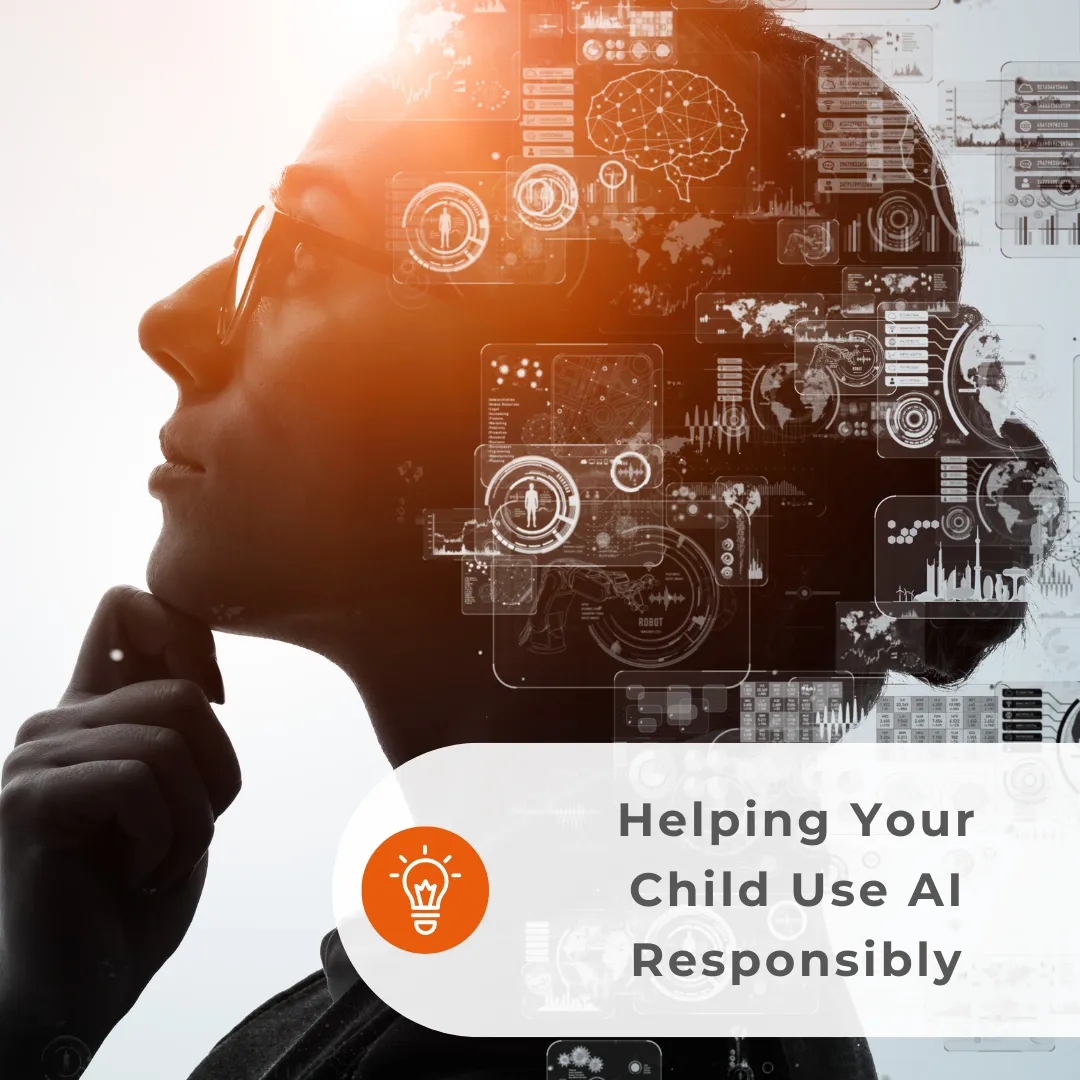
Technology, AI & Online Learning: Helping Your Child Use AI Responsibly
This is article #2 of 5 in the Technology, AI & Online Learning Series
Introduction
Artificial Intelligence (AI) is now part of everyday learning for high school students. Many learners use AI tools to help them understand schoolwork, summarise notes, or even get help with assignments.
While AI can be very helpful, it can also be misused if learners do not understand how to use it properly. Some parents worry that AI may lead to cheating or reduce real learning.
The good news is that AI can improve learning significantly when used responsibly. The key is guidance from parents and clear boundaries at home.
This article explains how you can help your child use AI in an honest, balanced, and productive way.
Why Responsible AI Use is Important
AI is a powerful learning tool, but it must be used correctly. If not, it can affect your child’s learning development.
When used responsibly, AI can:
Improve understanding of difficult subjects
Help with revision and summaries
Provide extra practice questions
Support language and writing skills
When used irresponsibly, AI can:
Encourage copying instead of learning
Reduce independent thinking
Create over-dependence
Lead to dishonest academic behaviour
The difference lies in how your child is guided.
Common Ways Learners Misuse AI
Parents should be aware of how misuse can happen:
1. Copying Answers Without Understanding
Some learners ask AI to complete tasks and submit the answers directly.
2. Avoiding Thinking or Problem-Solving
Instead of trying first, learners immediately rely on AI for solutions.
3. Using AI During Tests or Exams
This is not allowed and counts as academic dishonesty.
4. Accepting Answers Without Checking
AI can sometimes give incorrect or incomplete information.
How AI Should Be Used for Learning
AI should support learning, not replace it.
✔ Understanding Concepts
AI can explain difficult topics in simpler ways.
✔ Practising Questions
Learners can use AI to generate extra revision exercises.
✔ Summarising Notes
Long study material can be broken down into key points.
✔ Improving Writing and Language Skills
AI can help with grammar, spelling, and structure.
✔ Planning Study Time
AI can assist in creating revision schedules and study plans.
How Parents Can Guide Responsible AI Use
You don’t need technical knowledge to guide your child effectively.
✔ Set Clear Expectations
Make sure your child understands:
AI is for learning, not cheating
Understanding is more important than answers
Effort must always come first
✔ Teach the “Try First” Rule
Before using AI, your child should:
Read the question carefully
Attempt it on their own
Then use AI for help if needed
This builds independent thinking.
✔ Ask Them to Explain Their Work
After AI use, ask:
“Can you explain this in your own words?”
“Why is this answer correct?”
If they cannot explain it, learning has not taken place.
✔ Encourage Honest Use
Teach your child that it is better to admit when AI was used for help rather than hide it. Honesty builds responsibility.
✔ Stay Involved Without Controlling
You don’t need to supervise everything. Instead:
Talk regularly about schoolwork
Ask what tools they are using
Show interest in their learning process
Setting Healthy AI Boundaries at Home
Clear boundaries help prevent misuse.
Suggested Rules:
AI can be used for learning and explanation
AI cannot be used during tests or exams
Homework must show personal effort
AI answers must be understood before submission
AI should support learning, not replace thinking
Teaching Critical Thinking Skills
One of the most important skills today is thinking independently.
Encourage your child to:
Compare AI answers with textbooks
Ask “Does this make sense?”
Look for more than one explanation
Question unclear or doubtful answers
This helps them avoid blindly trusting AI.
Benefits of Responsible AI Use
When used correctly, AI can improve learning significantly:
Better understanding of subjects
Stronger study habits
Improved confidence in schoolwork
Faster revision and preparation
Better readiness for future careers
AI is already used in universities and workplaces, so learning to use it responsibly is a valuable life skill.
Warning Signs of Misuse
Be alert if you notice:
Work that is always perfect but cannot be explained
Sudden drop in effort during studying
Over-reliance on devices
Avoiding thinking or writing tasks
Copy-paste style homework
These may indicate misuse of AI tools.
How to Talk to Your Child About AI
Good communication is very important.
Try asking:
“How did you use AI for this task?”
“What did you learn from it?”
“Would you still understand this without AI?”
Focus on guidance, not punishment.
Key Message for Parents
AI is not the problem. Misuse is the problem.
Your role is to help your child:
Use AI as a learning tool
Avoid shortcuts and copying
Build independent thinking skills
Develop responsible study habits
With the right guidance, AI becomes a powerful support system for learning.
Checklist: Helping Your Child Use AI Responsibly
I understand how AI is used in education
I explain that AI is for learning, not cheating
I encourage my child to try work before using AI
I set clear rules for AI use at home
I ask my child to explain what they learned
I monitor study habits and tool usage
I encourage honesty about AI use
I support critical thinking and understanding
I watch for signs of over-dependence on AI
I reinforce that effort is more important than shortcuts
Related Articles in the Technology, AI & Online Learning Series
Understanding How AI Is Used in Education
Helping Your Child Use AI Responsibly
Managing Screen Time During School Years
Supporting Online Learning at Home
Online Safety for High School Learners
Disclaimer
AI Tools were used to assist with research. Remember to always cross-check everything that you read.