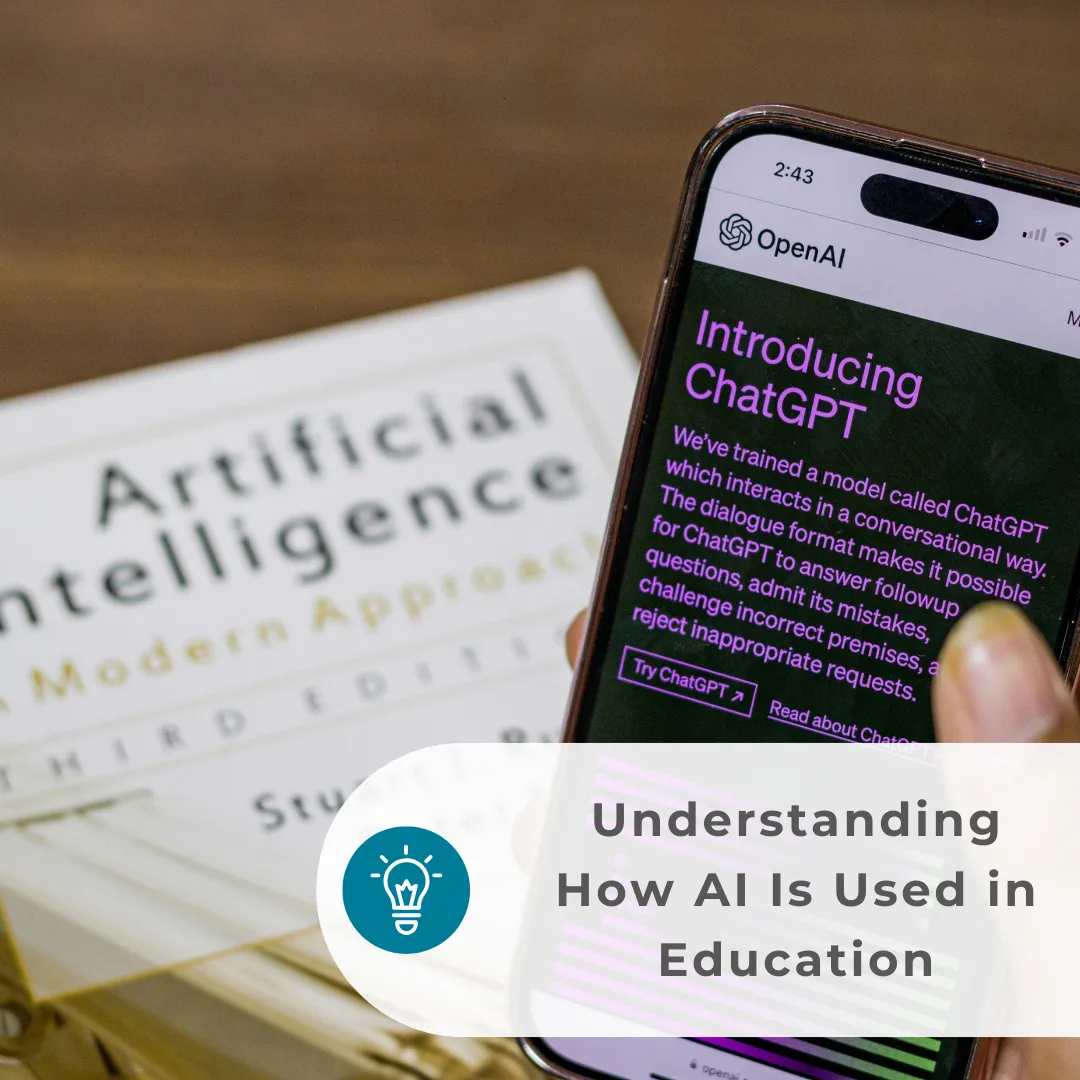
Technology, AI & Online Learning: Understanding How AI Is Used in Education
This is article #1 of 5 in the Technology, AI & Online Learning Series
Introduction
Artificial Intelligence (AI) is no longer something from the future. It is already part of many schools and learning tools today. If your child is in high school, especially Grades 10–12, they are very likely already using AI in some form—even if they do not realise it.
Many parents feel unsure or even worried about AI. Some fear it may lead to cheating or reduce real learning. Others are simply confused about what AI actually does in education.
This article will clearly explain how AI is used in education, what its benefits are, and how it can support your child’s learning when used correctly and responsibly.
What is AI in Simple Terms?
Artificial Intelligence (AI) is when computers are designed to “think” or “learn” in a smart way, similar to humans. In education, AI does not replace teachers. Instead, it helps teachers and learners by making learning easier, faster, and more personalised.
Think of AI as a digital assistant that can:
Answer questions
Explain difficult topics
Mark or check work
Suggest study materials
Help organise learning
How AI Is Used in Education Today
AI is already used in many common school tools and platforms. Here are the main ways:
1. Personalised Learning
Every learner is different. Some understand maths quickly, while others need more time.
AI helps by:
Adjusting difficulty levels
Giving extra practice in weak areas
Moving faster in strong subjects
This means your child can learn at their own pace.
2. Smart Study Tools
Many apps now use AI to help learners study better.
These tools can:
Summarise long notes
Create quizzes
Explain difficult concepts in simple language
Suggest revision topics
This helps learners study more effectively without wasting time.
3. Virtual Tutors and Chat Tools
AI chat tools can act like a tutor available anytime.
They can:
Answer questions instantly
Explain step-by-step solutions
Help with homework guidance
However, they should be used for learning, not copying answers.
4. Automated Marking and Feedback
Teachers often use AI tools to help mark assignments faster.
AI can:
Check spelling and grammar
Mark multiple-choice questions
Give instant feedback
This helps learners improve faster because they do not wait long for results.
5. Language Support
For learners whose first language is not English, AI is very helpful.
It can:
Translate words or sentences
Simplify difficult text
Improve writing skills
This is especially useful in South African classrooms where many languages are spoken.
Benefits of AI in Education
When used correctly, AI can greatly improve learning.
✔ Better Understanding
Learners can get explanations in different ways until they understand.
✔ More Practice
AI provides extra questions and exercises for revision.
✔ Faster Learning Support
Students do not have to wait for the next lesson to get help.
✔ Builds Confidence
When learners understand work better, their confidence improves.
✔ Helps Teachers Focus
Teachers can spend more time teaching and less time on routine marking.
Concerns Parents Often Have
It is normal for parents to worry. Here are common concerns and the truth behind them:
“Will AI make my child lazy?”
Not if it is used correctly. AI should support learning, not replace effort.
“Is AI cheating?”
It depends on how it is used. Using AI to copy answers is wrong. Using it to understand work is helpful.
“Can my child rely too much on AI?”
Yes, if there are no rules. That is why guidance from parents is important.
How Parents Can Guide Responsible AI Use
You do not need to be a technology expert. You only need to set simple boundaries.
✔ Encourage Learning, Not Copying
Teach your child:
Use AI to understand, not to cheat
Always try first before asking AI
✔ Set Clear Rules
For example:
No AI during tests or exams
AI can be used for explanations only
Homework must show personal effort
✔ Ask Your Child to Explain What They Learned
If they used AI, ask:
“Can you explain this in your own words?”
This ensures real understanding.
✔ Monitor Usage Without Controlling Everything
Check:
What apps they are using
How much time they spend on screens
Whether they are learning or just copying
✔ Encourage Balance
AI is helpful, but learners still need:
Books
Teachers
Practice
Thinking on their own
AI and the Future of Learning
AI is becoming a permanent part of education. In the future, learners will use AI even more in:
Career training
University studies
Workplace skills
This means students who learn how to use AI responsibly now will have an advantage later in life.
Instead of fearing AI, it is better to teach learners how to use it wisely.
Key Message for Parents
AI is not the enemy of education. Misuse is the problem, not the technology itself.
When guided properly, AI can:
Improve learning
Support weak subjects
Build stronger study habits
Prepare learners for the future
Your role as a parent is not to remove AI, but to guide how it is used.
Checklist: Helping Your Child Use AI in Education
☐ I understand what AI is used for in education
☐ I explain to my child that AI is a learning tool, not a shortcut
☐ I set clear rules for when AI can and cannot be used
☐ I encourage my child to try work before using AI help
☐ I check that my child understands answers they get from AI
☐ I monitor screen time and online learning habits
☐ I encourage balance between AI tools and traditional studying
☐ I talk regularly with my child about their schoolwork and tools they use
☐ I support responsible and ethical use of technology
☐ I remind my child that real learning requires effort and practice
Related Articles in the Technology, AI & Online Learning Series
Understanding How AI Is Used in Education
Helping Your Child Use AI Responsibly
Managing Screen Time During School Years
Supporting Online Learning at Home
Online Safety for High School Learners
Disclaimer
AI Tools were used to assist with research. Remember to always cross-check everything that you read.