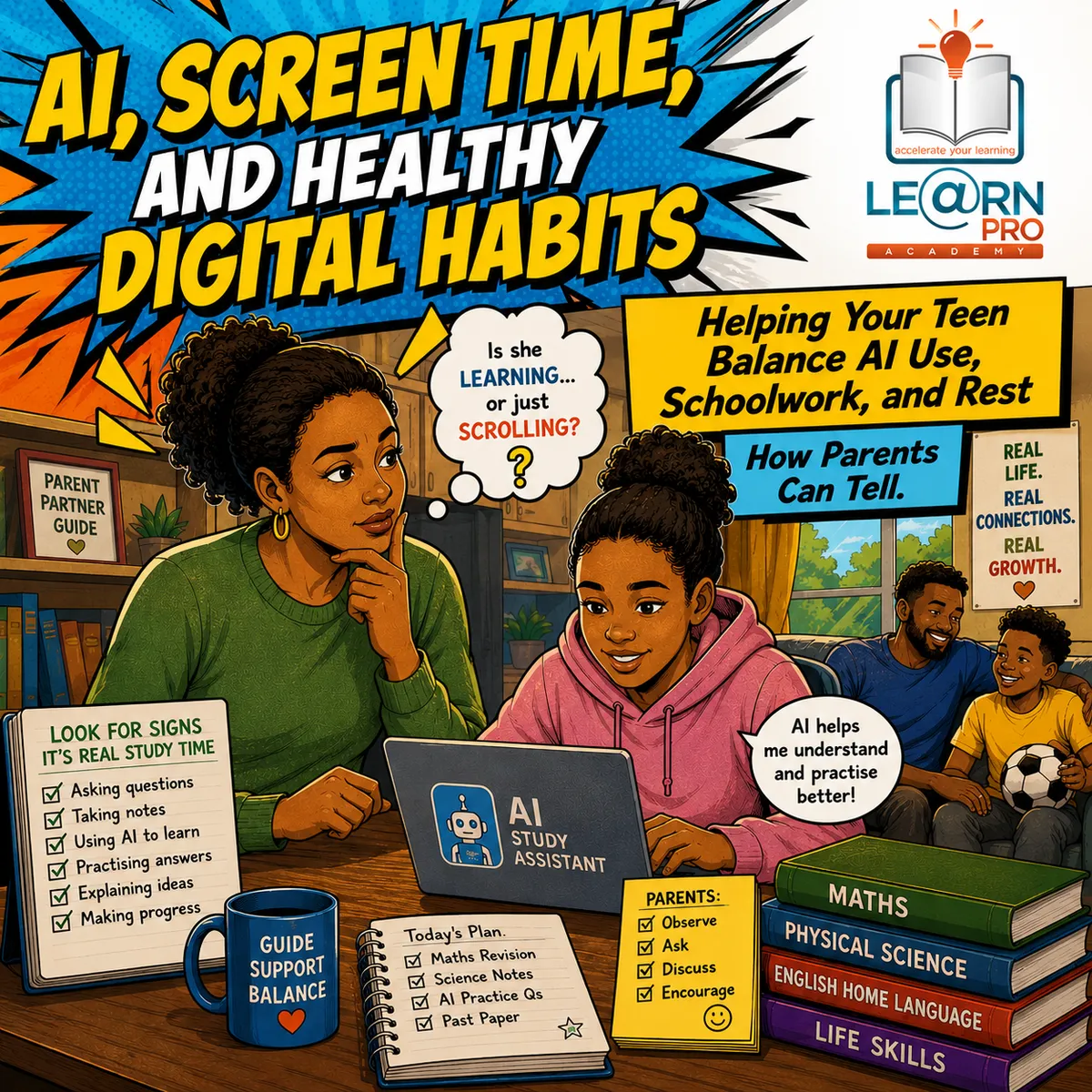
Helping Your Teen Balance AI Use, Schoolwork, and Rest
This is article #2 of 5 in the AI, Screen Time, and Healthy Digital Habits Series
Introduction
Artificial intelligence (AI) is becoming part of everyday school life. Many high school learners now use AI to explain difficult concepts, create revision questions, plan study schedules, and improve their understanding of school subjects. Used wisely, AI can be a valuable learning companion.
However, there is another side that parents need to consider.
Every AI conversation happens on a screen. Whether a learner is using a phone, tablet, or laptop, AI usually adds to the amount of time they already spend online. Between schoolwork, messaging friends, social media, videos, gaming, and entertainment, many teenagers are spending a significant part of each day looking at a screen.
This does not mean AI is harmful. It means families need to think about balance.
A healthy teenager needs more than good grades. They also need enough sleep, physical activity, face-to-face conversations, relaxation, hobbies, family time, and opportunities to think without a device in front of them.
This article will help parents encourage responsible AI use while protecting their child's overall wellbeing.
Why Balance Matters More Than Ever
Technology is now woven into almost every part of modern education.
Learners may use digital devices to:
Access school notes.
Complete assignments.
Attend online classes.
Communicate with teachers.
Conduct research.
Revise with AI.
Prepare for exams.
Collaborate with classmates.
Because school itself increasingly depends on technology, parents cannot simply remove all screens.
Instead, the goal is to help teenagers develop healthy habits that allow technology to support learning without taking over daily life.
Balance is a skill that will benefit them long after they leave school.
AI Is A Tool, Not A Lifestyle
One of the healthiest messages parents can give is simple: AI is a useful tool — not something that should dominate every moment of the day.
Just as calculators did not replace mathematical thinking, AI should not replace healthy routines, personal responsibility, or independent thinking.
Teenagers should learn that technology has a purpose.
When the task is finished, it is healthy to put the device away and move on to something else.
Learning this habit now prepares them for responsible technology use throughout adulthood.
Understand That Not All Screen Time Is The Same
Many parents worry whenever they see their child using a device. While this concern is understandable, it helps to remember that different types of screen time have different effects.
For example:
High-value screen time
Completing homework.
Revising with AI.
Watching educational videos.
Creating study notes.
Researching school topics.
Completing online learning activities.
Low-value screen time
Endless scrolling.
Watching random videos.
Constant social media checking.
Repeated gaming without limits.
Browsing without purpose.
The aim is not simply fewer hours on screens.
The aim is more meaningful hours.
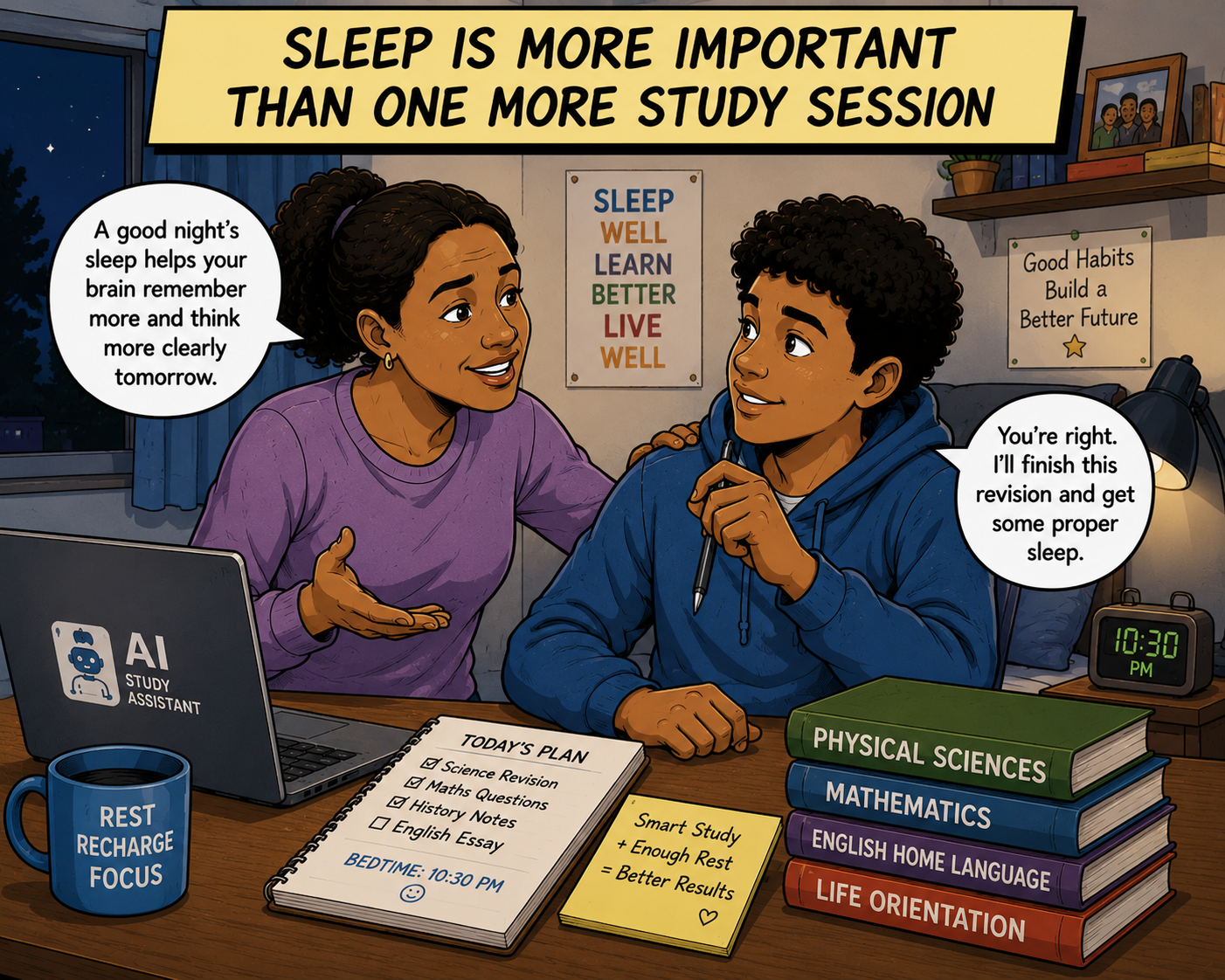
Sleep Is More Important Than One More Study Session
During exams, many learners believe staying awake later will improve their marks. Often, the opposite happens.
Poor sleep reduces:
Memory.
Concentration.
Problem-solving.
Mood.
Motivation.
Learning speed.
AI can help learners study more efficiently, which should actually reduce unnecessary late-night studying.
Parents should encourage regular bedtime routines, especially during exam periods.
A well-rested brain usually learns more effectively than an exhausted one.
Encourage Study Earlier In The Day
Many teenagers leave studying until late at night. This creates unnecessary stress.
Parents can encourage routines such as:
Homework after school.
Short breaks.
Evening revision.
Relaxation before bedtime.
AI makes it easier to start studying because learners can immediately ask questions instead of becoming stuck.
The earlier study begins, the less pressure builds later.
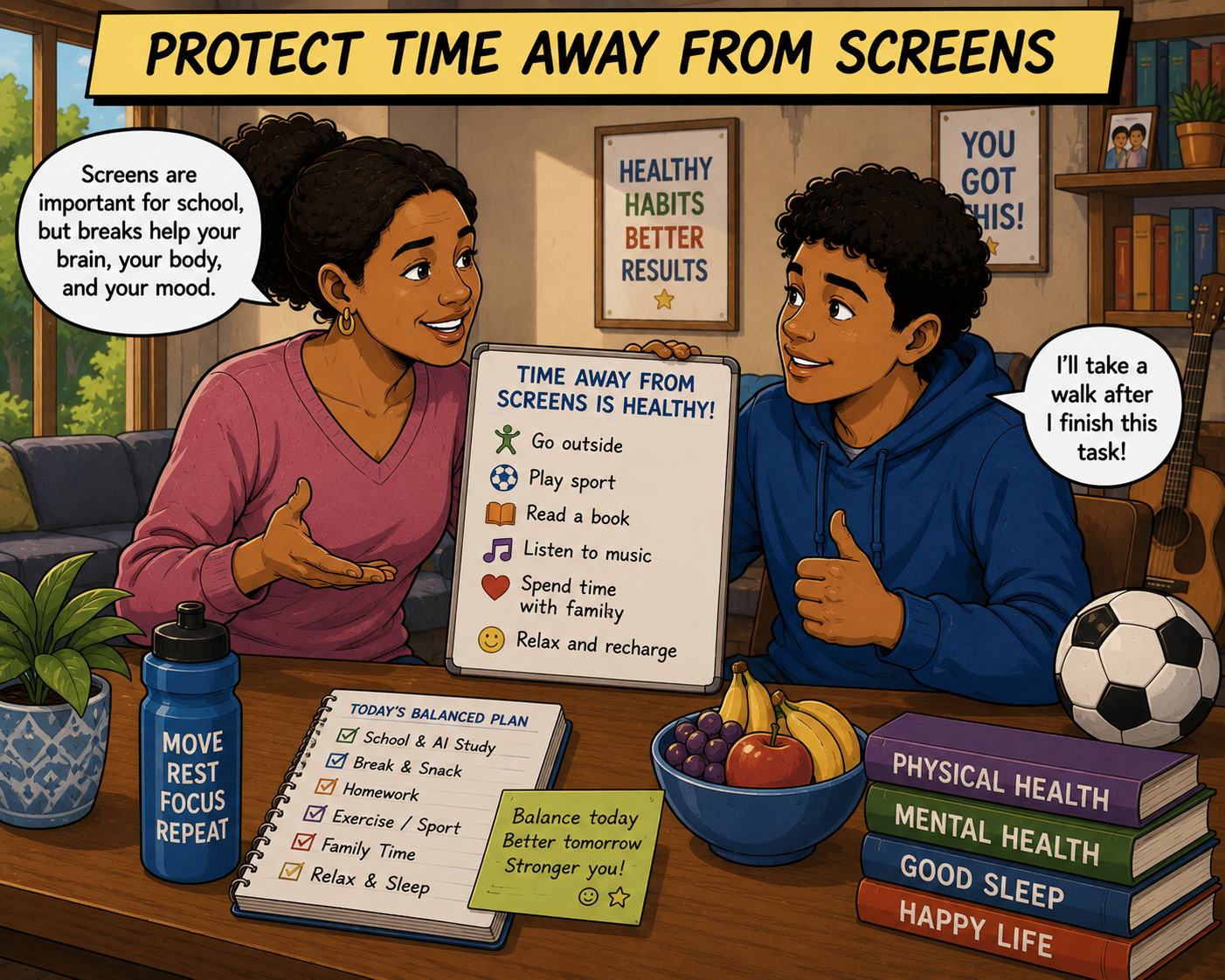
Protect Time Away From Screens
Teenagers need regular breaks from digital devices.
Healthy activities include:
Walking.
Cycling.
Playing sport.
Reading printed books.
Helping with household responsibilities.
Spending time with friends.
Family meals.
Creative hobbies.
Music.
Gardening.
These activities reduce stress while supporting emotional wellbeing.
Parents should remember that rest does not always mean another screen.
Physical Movement Supports Learning
Exercise benefits the brain as well as the body.
Regular physical activity improves:
Concentration.
Mood.
Memory.
Energy.
Sleep quality.
Stress management.
Even twenty or thirty minutes of movement each day can make studying more effective. Parents do not need to organise complicated exercise programmes.
Simple family walks, sport, or active chores all help.
AI Should Not Replace Independent Thinking
One danger of relying too heavily on AI is that learners may begin asking AI every question instead of trying to think first. Parents can encourage a healthier approach.
Before opening AI, learners should ask themselves:
What do I already know?
What have I already tried?
Where exactly am I stuck?
Then AI becomes a learning partner rather than a shortcut.
Thinking still matters.
Create Healthy Daily Routines
Teenagers often thrive when daily routines become predictable.
A balanced weekday might include:
School.
Homework.
AI-supported revision.
Physical activity.
Family time.
Personal relaxation.
Enough sleep.
The exact routine will differ for every family.
The important point is that no single activity—including technology—takes over the whole day.
Avoid Turning Every Conversation Into A Battle About Screens
Many families argue regularly about phones. Unfortunately, constant conflict often reduces cooperation.
Instead of saying: "You're always on your phone."
Try asking:
What are you working on?
How is AI helping?
What have you completed today?
What will you do after studying?
These questions encourage responsibility instead of defensiveness.
Teenagers respond better when they feel respected.
Teach Time Management Instead Of Constant Monitoring
Parents cannot supervise teenagers forever. Eventually learners must manage themselves.
AI can actually help.
Learners can ask AI to:
Build revision timetables.
Break projects into smaller tasks.
Estimate study time.
Plan homework.
Prioritise difficult subjects.
Parents should encourage these planning skills rather than managing every minute themselves.
Recognise Signs Of Digital Overload
Sometimes learners become overwhelmed by constant online activity.
Warning signs may include:
Difficulty concentrating.
Poor sleep.
Irritability.
Constant tiredness.
Reduced physical activity.
Loss of interest in hobbies.
Anxiety when separated from devices.
If several of these signs appear together, families may need to rethink digital routines.
Balance is about protecting wellbeing, not punishing technology use.
Family Time Still Matters
Technology should never replace family relationships.
Simple activities make a difference:
Eating together.
Talking about the school day.
Watching a movie together.
Going for walks.
Visiting relatives.
Playing games.
Sharing weekend activities.
These moments strengthen emotional wellbeing.
Teenagers still need connection with trusted adults, even if they do not always admit it.
Encourage Offline Thinking
Not every problem needs an immediate AI answer.
Sometimes learners benefit from:
Writing ideas on paper.
Drawing mind maps.
Solving maths problems independently.
Reading textbooks.
Reflecting quietly.
Brainstorming before using AI.
Independent thinking builds confidence.
AI works best after learners have already started thinking for themselves.
Balance Responsibilities At Home
School is important, but teenagers also benefit from contributing at home.
Simple responsibilities teach:
Time management.
Responsibility.
Cooperation.
Independence.
Practical life skills.
Parents should avoid allowing schoolwork—or AI—to become an excuse for avoiding every household responsibility.
Balance includes contributing to family life.
South African Families Face Different Challenges
Every South African family has different circumstances.
Some households have:
Fibre internet.
Personal laptops.
Quiet study rooms.
Others may rely on:
Shared smartphones.
Limited mobile data.
Load shedding.
Busy households.
Shared bedrooms.
Parents should avoid comparing themselves with other families. Healthy digital habits are possible in many different environments.
The principles remain the same:
Purposeful technology.
Healthy routines.
Enough rest.
Honest communication.
Balanced living.
Help Teenagers Learn Self-Control
Rules are useful. Self-control is even better.
Parents should gradually encourage teenagers to ask themselves:
Do I really need my phone right now?
Am I studying or getting distracted?
Have I taken a break?
Am I getting enough sleep?
Could I solve this myself before asking AI?
These questions build lifelong decision-making skills.
Eventually, learners should manage themselves even when parents are not present.
Practical Ideas For Healthy AI Use At Home
Families may find these habits helpful:
Decide on regular homework times.
Keep devices charged outside bedrooms overnight if appropriate for your family.
Encourage short movement breaks during long study sessions.
Turn off unnecessary notifications while studying.
Celebrate effort, not only marks.
Encourage AI to explain rather than simply provide answers.
Talk about digital wellbeing as often as academic success.
Make family meals as screen-free as possible.
Encourage hobbies that do not involve technology.
Model healthy technology habits as adults.
Children often copy what they see.
Parents who demonstrate balance make those lessons more believable.
Preparing Teenagers For Adult Life
AI will continue changing education and work. Future employers will expect young people to know how to use technology effectively.
They will also expect employees who can:
Manage time.
Communicate well.
Work independently.
Solve problems.
Stay healthy under pressure.
Think critically.
Build positive relationships.
Healthy digital habits support all of these skills.
Parents are helping prepare teenagers not only for their next examination, but also for adult life.
A Balanced Life Is A Successful Life
Academic achievement is important. However, success is about more than marks.
A healthy teenager should also have:
Good physical health.
Emotional wellbeing.
Strong relationships.
Healthy sleep habits.
Personal confidence.
Opportunities to relax.
Time to enjoy life.
AI should strengthen these areas — not weaken them.
When technology supports a balanced lifestyle, it becomes a powerful tool instead of a source of stress.
Conclusion
Artificial intelligence is becoming a valuable part of modern education, helping learners revise, solve problems, organise their studies, and prepare for exams more effectively. Yet every benefit of AI takes place within a broader picture of a teenager's daily life. School success should never come at the cost of sleep, physical health, family relationships, or emotional wellbeing.
Parents do not need to fear AI or remove technology from their child's education. Instead, they can focus on building healthy routines that include purposeful study, regular exercise, enough rest, time away from screens, and open conversations about digital habits. By encouraging balance rather than strict control, parents help teenagers develop the judgment they will need throughout adulthood.
The most successful learners are not those who spend the most hours online. They are those who know when to use AI, when to think independently, when to take a break, and when to put the device away. By teaching these habits at home, parents give their teenagers something even more valuable than good exam results — they give them the skills to build a healthy relationship with technology for the rest of their lives.
Additional Articles in the AI, Screen Time, and Healthy Digital Habits Series
Is AI Study Time Really Study Time? How Parents Can Tell
Helping Your Teen Balance AI Use, Schoolwork, and Rest
AI, Phones, and Procrastination: What Parents Should Watch For
Setting Healthy Rules for AI and Device Use During Exam Time
Teaching Your Child That Technology Should Support Life — Not Control It
Disclaimer
AI Tools were used to assist with research. Remember to always cross-check everything that you read.