
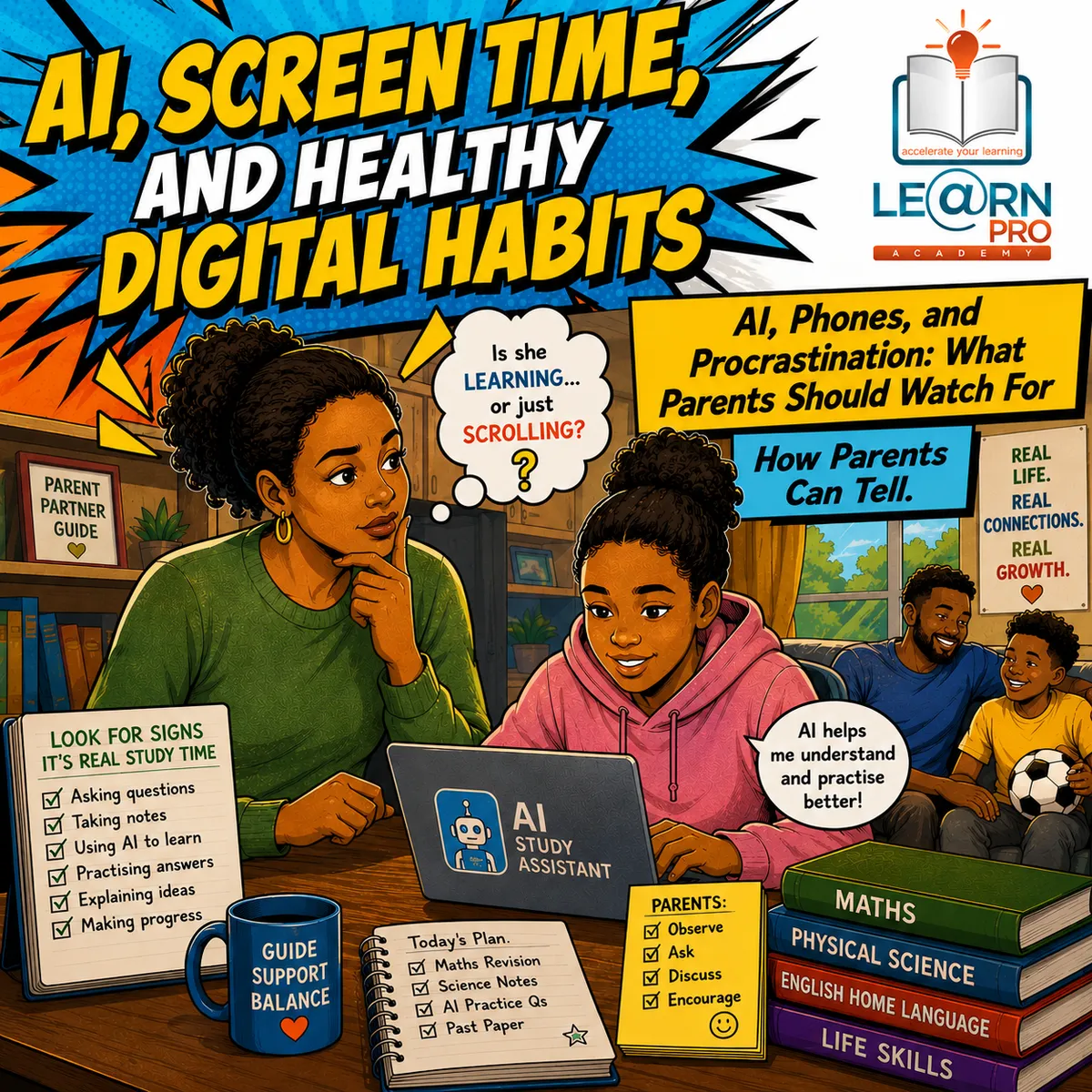
AI, Phones, and Procrastination: What Parents Should Watch For
This is article #3 of 5 in the AI, Screen Time, and Healthy Digital Habits Series
Introduction
Artificial intelligence (AI) has made it easier than ever for high school learners to find explanations, revise difficult topics, create study plans, and prepare for tests and exams. For many teenagers, AI has become a valuable study companion that can answer questions in seconds and provide personalised support whenever they need it.
The challenge is that AI is often accessed through the same device that also contains social media, games, videos, messaging apps, and countless other distractions.
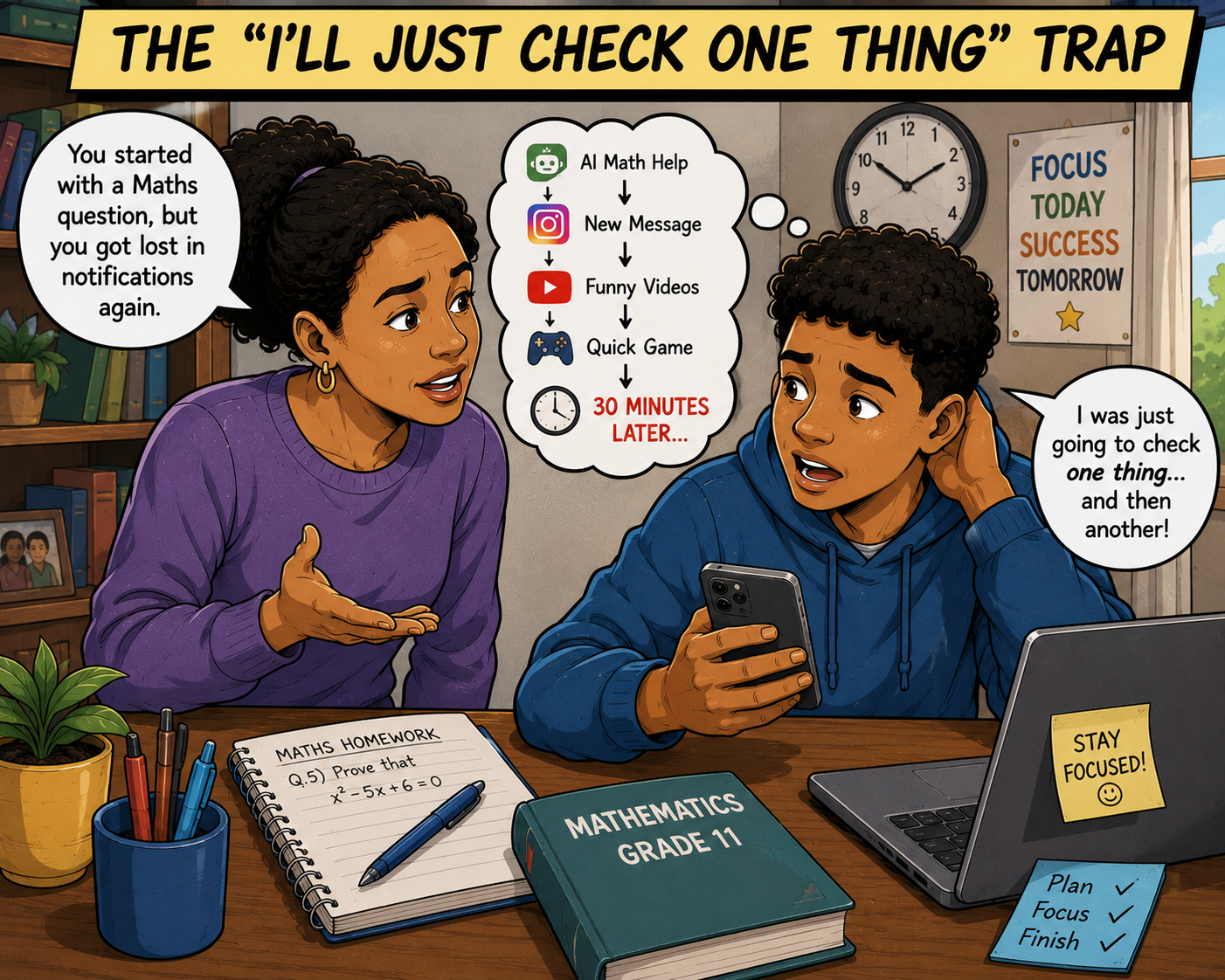
A learner may open their phone intending to ask AI a Mathematics question, only to notice a new message, open a social media app, watch several short videos, and suddenly realise that thirty minutes have passed without completing any schoolwork.
This is not unusual.
Phones are designed to attract attention, and procrastination is a challenge for many teenagers, especially when schoolwork feels difficult, stressful, or overwhelming.
Parents do not need to ban phones completely or fear AI. Instead, they can help their teenagers understand how distraction happens and develop practical habits that keep learning on track.
This article explores the relationship between AI, smartphones, and procrastination, while offering realistic strategies that support learning without creating constant conflict at home.
Why Phones Create A Unique Challenge
Unlike previous generations, today's teenagers carry powerful computers in their pockets.
One phone can provide access to:
AI study assistants
School learning platforms
Educational videos
Email
Online textbooks
Messaging apps
Social media
Games
Music
Streaming services
Internet browsing
The same device used for productive learning can also become a major source of distraction.
This means parents cannot judge a learner's activity simply by seeing them use a phone.
The important question is not: "Are they on their phone?"
Instead ask: "How are they using it?"
AI Is Not The Problem
It is easy to blame AI when learners spend long hours on their devices. However, AI itself is not usually the cause of procrastination.
In fact, AI often helps learners:
Start difficult homework.
Understand confusing concepts.
Create revision plans.
Build confidence.
Save time.
The problem usually begins when learners leave the AI conversation and become distracted by everything else available on the same device.
Parents should separate the learning tool from the distractions surrounding it.
Understanding Procrastination
Many people think procrastination is simply laziness. It usually is not.
Procrastination often happens because a learner feels:
Overwhelmed.
Confused.
Anxious.
Afraid of failure.
Unsure where to begin.
Mentally tired.
Avoiding work temporarily reduces those uncomfortable feelings. Unfortunately, the work still needs to be completed later.
This often creates even more stress.
Understanding this helps parents respond with support rather than criticism.
The "I'll Just Check One Thing" Trap
One of the biggest challenges with smartphones is how quickly attention shifts.
A learner may:
Open AI.
Receive a notification.
Reply to one message.
Watch one short video.
Scroll for "just five minutes."
Forget the original task.
What felt like a quick distraction becomes half an hour of lost study time. Parents should help teenagers recognise this pattern rather than pretending they are immune to it.
Almost everyone experiences digital distraction.
Multitasking Is Usually Less Productive
Many teenagers believe they can:
Study.
Watch videos.
Reply to messages.
Listen to social media clips.
Check notifications.
All at the same time. In reality, the brain constantly switches attention between tasks.
Each interruption requires time to refocus.
Learning becomes slower.
Mistakes increase.
Memory becomes weaker.
Focused study is usually much more effective than trying to do everything at once.
Help Your Teen Start Before They Feel Ready
One reason teenagers procrastinate is because large tasks feel intimidating.
Parents can encourage a simple approach: Just start.
Instead of saying: "Finish your whole assignment."
Suggest:
Read the first page.
Answer one question.
Spend ten focused minutes.
Ask AI to explain the first concept.
Starting is often the hardest part.
Once learners begin, continuing usually becomes easier.
AI Can Reduce Procrastination When Used Well
AI can actually help learners overcome avoidance.
For example, a learner might ask:
"Help me break this project into smaller steps."
"Create a one-hour revision plan."
"Explain this chapter in simple English."
"Give me five practice questions."
These prompts reduce uncertainty. Smaller tasks feel more manageable. Progress becomes easier.
Parents can encourage this type of AI use.
Watch For Endless AI Conversations
Although AI can be helpful, learners should avoid spending hours chatting without taking action.
For example:
A learner spends forty-five minutes asking AI how to study.
They spend five minutes actually studying.
Planning becomes another form of procrastination.
AI should support action.
Eventually the learner needs to:
Read.
Write.
Solve problems.
Practise.
Revise.
Think independently.
Learning happens through doing.
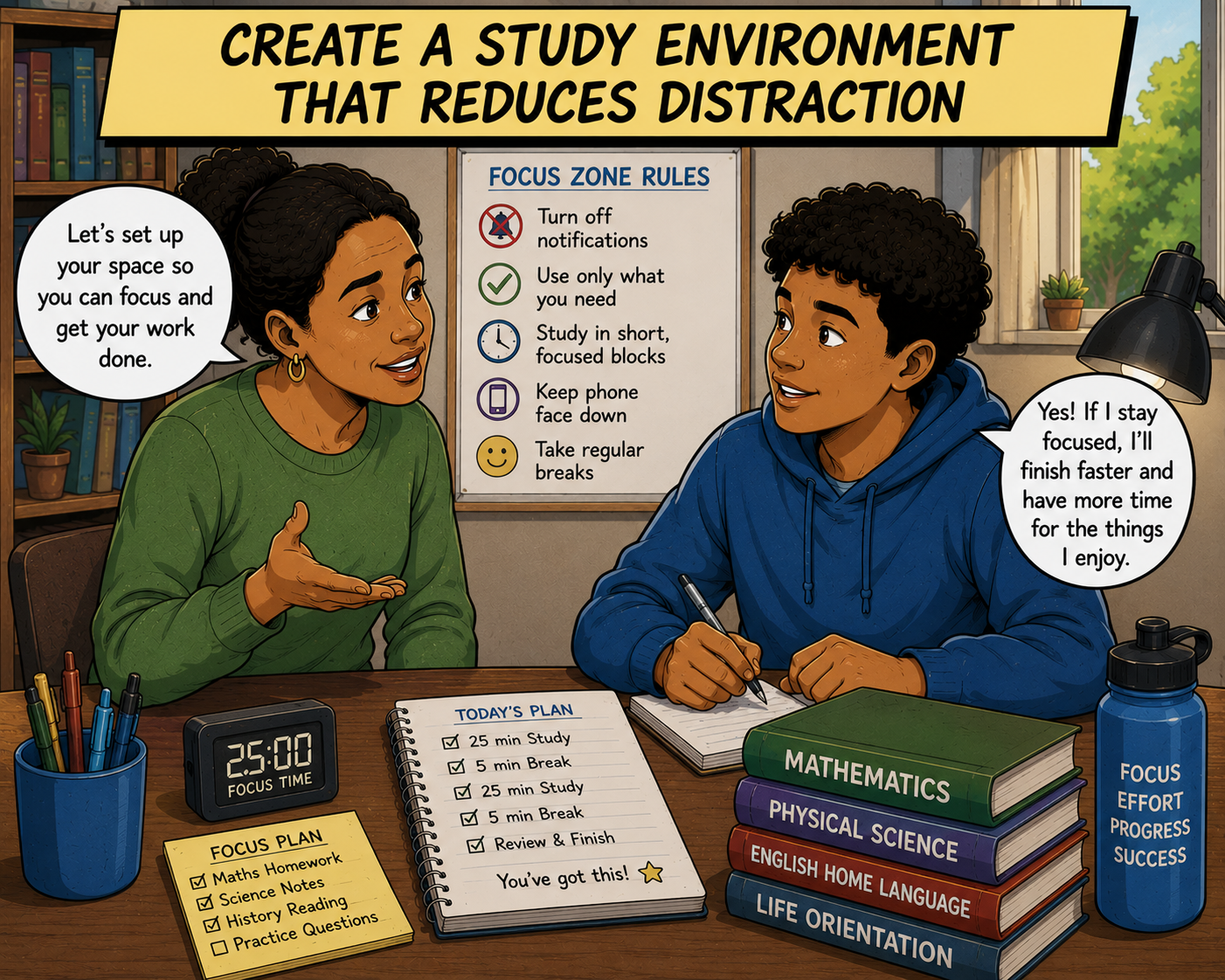
Create A Study Environment That Reduces Distraction
The study environment influences concentration.
Helpful ideas include:
Keeping only necessary apps open.
Turning off notifications during study sessions.
Placing unnecessary devices out of reach.
Using a quiet study space where possible.
Having study materials ready before starting.
Small changes often improve focus significantly.
Encourage Short, Focused Study Sessions
Long study sessions often become unproductive.
Many learners focus better when studying in shorter periods.
For example:
Study for 25 to 40 minutes.
Take a short break.
Return to studying.
During study time:
Use AI when needed.
Avoid unrelated apps.
Stay focused on one task.
Short, focused sessions usually produce better results than several hours of distracted studying.
Teach Your Teen To Notice Their Own Distractions
Self-awareness is one of the most valuable study skills.
Parents can ask:
What distracts you most?
When do you lose concentration?
Which apps interrupt your studying?
What helps you focus?
Teenagers who understand their own habits become better at managing them.
Replace Guilt With Problem Solving
Many learners feel guilty after procrastinating. Unfortunately, guilt often makes procrastination worse.
Instead of asking: "Why were you wasting time?"
Try asking: "What made it difficult to start?"
Then work together to find solutions.
Perhaps the learner:
Did not understand the work.
Felt anxious.
Needed a break.
Had no clear study plan.
Support leads to better habits than blame.
Parents Should Model Healthy Phone Habits Too
Teenagers notice adult behaviour. If parents constantly check messages during meals or conversations, teenagers receive mixed messages.
Healthy examples include:
Putting phones away during family meals.
Giving full attention during conversations.
Taking breaks from screens.
Reading printed books.
Spending time outdoors.
Parents who model balance often have greater influence than parents who simply set rules.
Encourage Offline Learning Too
Not every study activity requires technology.
Learners also benefit from:
Handwritten notes.
Printed textbooks.
Mind maps.
Flashcards.
Practice papers.
Solving problems on paper.
Reading without distractions.
Mixing digital and offline learning helps reduce screen fatigue.
Recognise Signs That Procrastination Is Becoming A Bigger Problem
Occasional procrastination is normal.
However, parents should pay attention if they notice patterns such as:
Homework regularly left until the last minute.
Frequent excuses for avoiding schoolwork.
Panic before deadlines.
Staying up very late to finish assignments.
Falling marks despite long study hours.
Constant switching between apps.
Increased stress around school.
These signs suggest that better study routines may be needed.
South African Families May Face Different Challenges
South African households have different circumstances:
Some learners share devices with siblings.
Others rely on prepaid mobile data.
Some experience load shedding or unreliable internet.
Busy homes may also make concentration difficult.
Parents should adapt study routines to their own situation.
The goal is not perfection. The goal is making the best use of the resources available.
Even a learner using a shared phone can develop excellent study habits with planning and consistency.
Build Trust Instead Of Becoming A Detective
Parents sometimes feel they must constantly inspect phones. While supervision is appropriate, trust remains important.
Rather than secretly checking every activity, create open conversations about:
Responsible AI use.
Honest study habits.
Managing distractions.
Asking for help when overwhelmed.
Teenagers who feel trusted are often more willing to discuss their challenges honestly.
Practical Family Strategies That Work
Many families benefit from simple routines such as:
Agreeing on daily homework times.
Switching off unnecessary notifications during study sessions.
Completing difficult subjects first.
Using AI for explanations rather than answers.
Taking regular movement breaks.
Keeping phones away during family meals.
Celebrating consistent effort rather than perfect marks.
Talking openly about digital distractions.
These small habits often make a significant difference over time.
Preparing Teenagers For The Future
Managing distractions is no longer only a school skill.
Future university students and employees will also work in environments filled with digital interruptions.
Learning to:
Stay focused,
Manage phones responsibly,
Use AI wisely,
Complete tasks consistently,
Avoid procrastination,
are valuable life skills.
Parents who help teenagers develop these habits are preparing them for success well beyond school.
Progress Matters More Than Perfection
Every learner procrastinates occasionally. Every parent experiences frustration from time to time.
The goal is not to eliminate every distraction. The goal is gradual improvement.
Each time a teenager:
Starts studying sooner,
Stays focused longer,
Uses AI responsibly,
Recognises distractions,
Returns to work after a break,
they strengthen habits that will benefit them throughout life.
Small improvements repeated consistently create lasting success.
Conclusion
Smartphones and artificial intelligence have transformed the way teenagers learn, offering immediate access to explanations, revision tools, and personalised study support. At the same time, these same devices also provide endless opportunities for distraction, making procrastination a common challenge for many learners.
Parents do not need to fear phones or remove AI from their child's education. Instead, they can help teenagers understand how distractions occur, create routines that encourage focused study, and use AI as a tool for learning rather than avoidance. Open conversations, realistic expectations, and practical habits are far more effective than constant conflict or strict control.
Ultimately, success is not about never becoming distracted. It is about recognising distractions quickly, returning attention to what matters, and developing the self-discipline to use technology with purpose. By guiding teenagers to balance AI, smartphones, and focused learning, parents equip them with skills that will support both academic achievement and lifelong success.
Additional Articles in the AI, Screen Time, and Healthy Digital Habits Series
Is AI Study Time Really Study Time? How Parents Can Tell
Helping Your Teen Balance AI Use, Schoolwork, and Rest
AI, Phones, and Procrastination: What Parents Should Watch For
Setting Healthy Rules for AI and Device Use During Exam Time
Teaching Your Child That Technology Should Support Life — Not Control It
Disclaimer
AI Tools were used to assist with research. Remember to always cross-check everything that you read.