
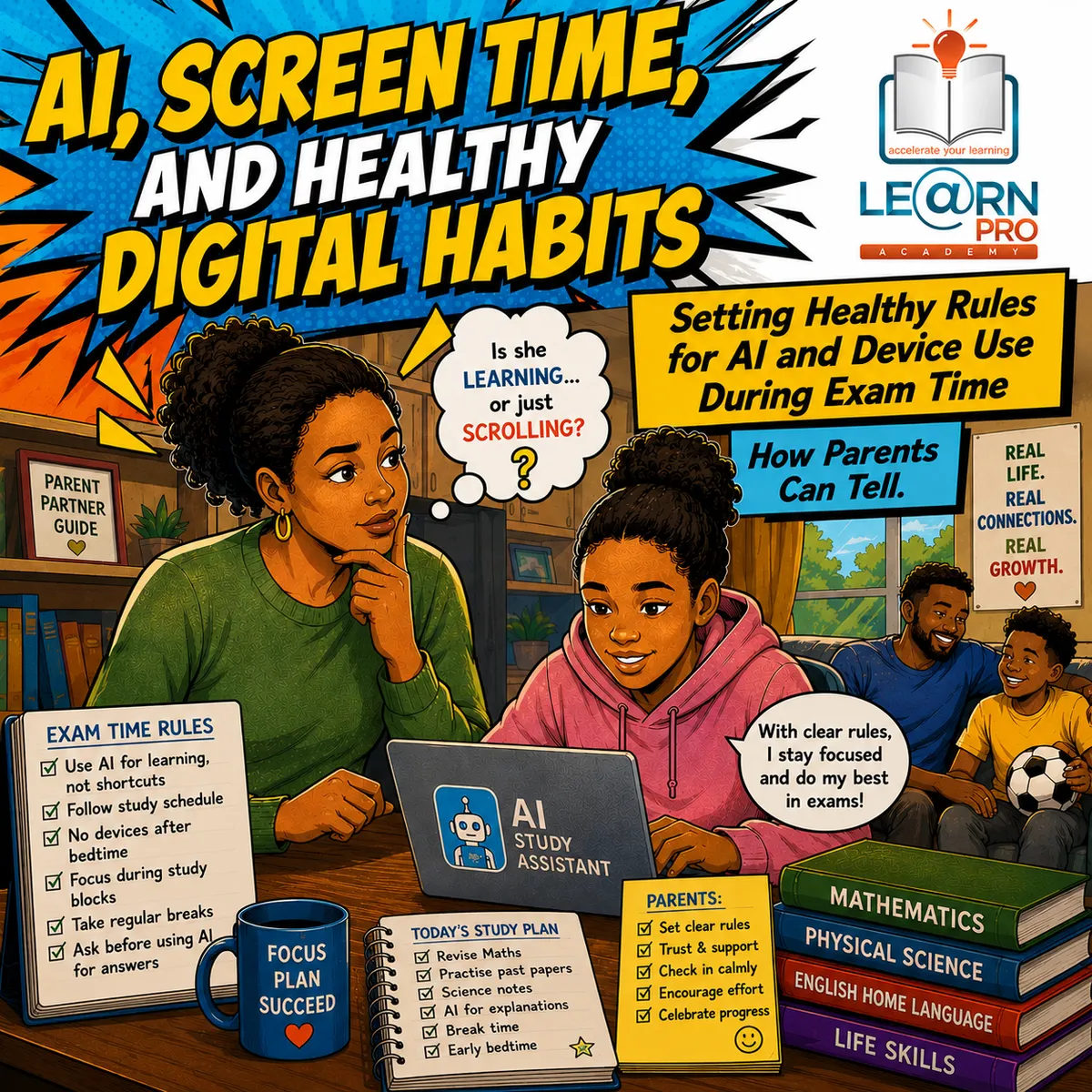
Setting Healthy Rules for AI and Device Use During Exam Time
This is article #4 of 5 in the AI, Screen Time, and Healthy Digital Habits Series
Introduction
Examination season is one of the most stressful periods of the school year for both learners and parents. As tests and final exams approach, many families begin thinking about study schedules, revision plans, sleep, and how to reduce distractions at home.
One topic that often causes disagreement is device use.
Parents know that phones, tablets, and laptops can distract learners. At the same time, these devices are now essential learning tools. Many learners use artificial intelligence (AI) to explain difficult concepts, generate practice questions, create revision summaries, organise study plans, and prepare for examinations.
This creates a difficult question:
How can parents encourage productive AI use without allowing devices to become a source of distraction?
The answer is not banning technology completely, nor is it allowing unlimited screen time. Instead, families benefit from creating clear, fair, and practical rules that everyone understands before exam pressure reaches its highest point.
This article explores how parents can establish healthy AI and device guidelines that support learning, reduce conflict, and encourage teenagers to become responsible digital learners.
Why Exam Time Feels Different
During the school term, learners usually have a mixture of schoolwork, sport, hobbies, family activities, and social time.
Examination periods are different.
Learners often:
Spend more time revising.
Feel greater academic pressure.
Experience increased anxiety.
Use devices more frequently for study.
Need access to AI and online resources.
Parents may also become more concerned about distractions because every study session feels important.
Without clear expectations, disagreements can increase quickly.
Devices Are Now Part Of Learning
Many parents remember studying with only:
Textbooks.
Exercise books.
Printed notes.
Past examination papers.
Today's learners still use these resources, but they also rely on:
AI study assistants.
Online learning platforms.
Digital textbooks.
Educational videos.
Teacher communication apps.
School portals.
This means removing every device during exam time is often unrealistic.
Instead, the goal should be using technology intentionally.
AI Can Improve Exam Preparation
When used responsibly, AI helps learners:
Explain difficult topics.
Create revision questions.
Generate flashcards.
Build study schedules.
Summarise notes.
Test understanding.
Identify weak areas.
Simplify complex explanations.
Parents should recognise these benefits.
The aim is not preventing AI use. The aim is encouraging purposeful AI use.
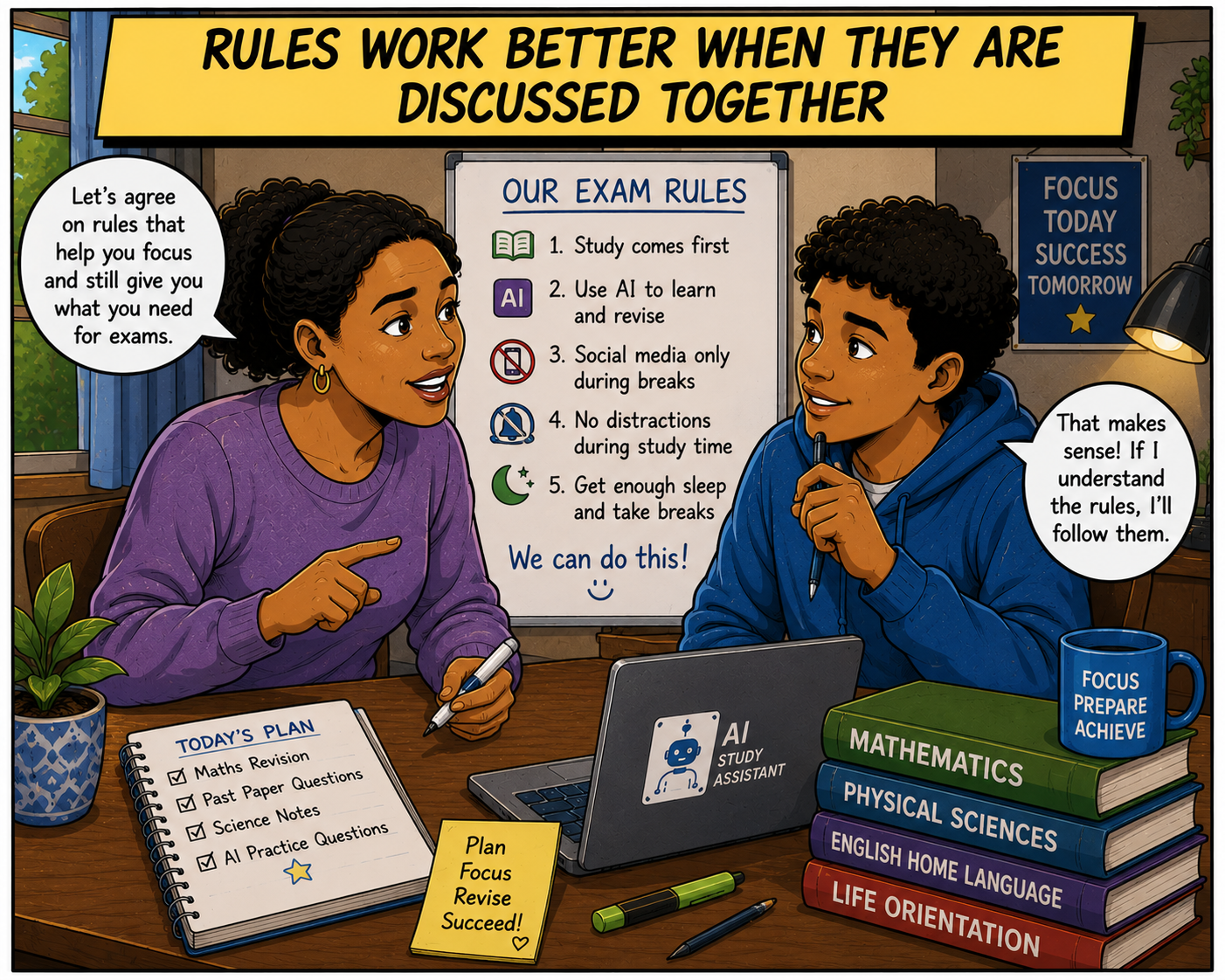
Rules Work Better When They Are Discussed Together
Teenagers are more likely to follow rules they understand. Instead of announcing new restrictions without discussion, invite your child into the conversation.
Ask questions such as:
What distracts you most?
When do you study best?
How does AI help you revise?
Which apps are useful during exams?
What rules would help you stay focused?
This creates shared responsibility instead of creating an "us versus them" situation.
Focus On Purpose Rather Than Devices
Instead of saying: "No phones allowed."
Try saying: "Phones are for study during study time."
The emphasis shifts from punishment to purpose.
If the learner needs AI to understand a difficult Physical Sciences concept, the phone has a clear educational purpose.
If they spend twenty minutes watching unrelated videos, the purpose has changed.
Helping teenagers think about purpose encourages better decision-making.
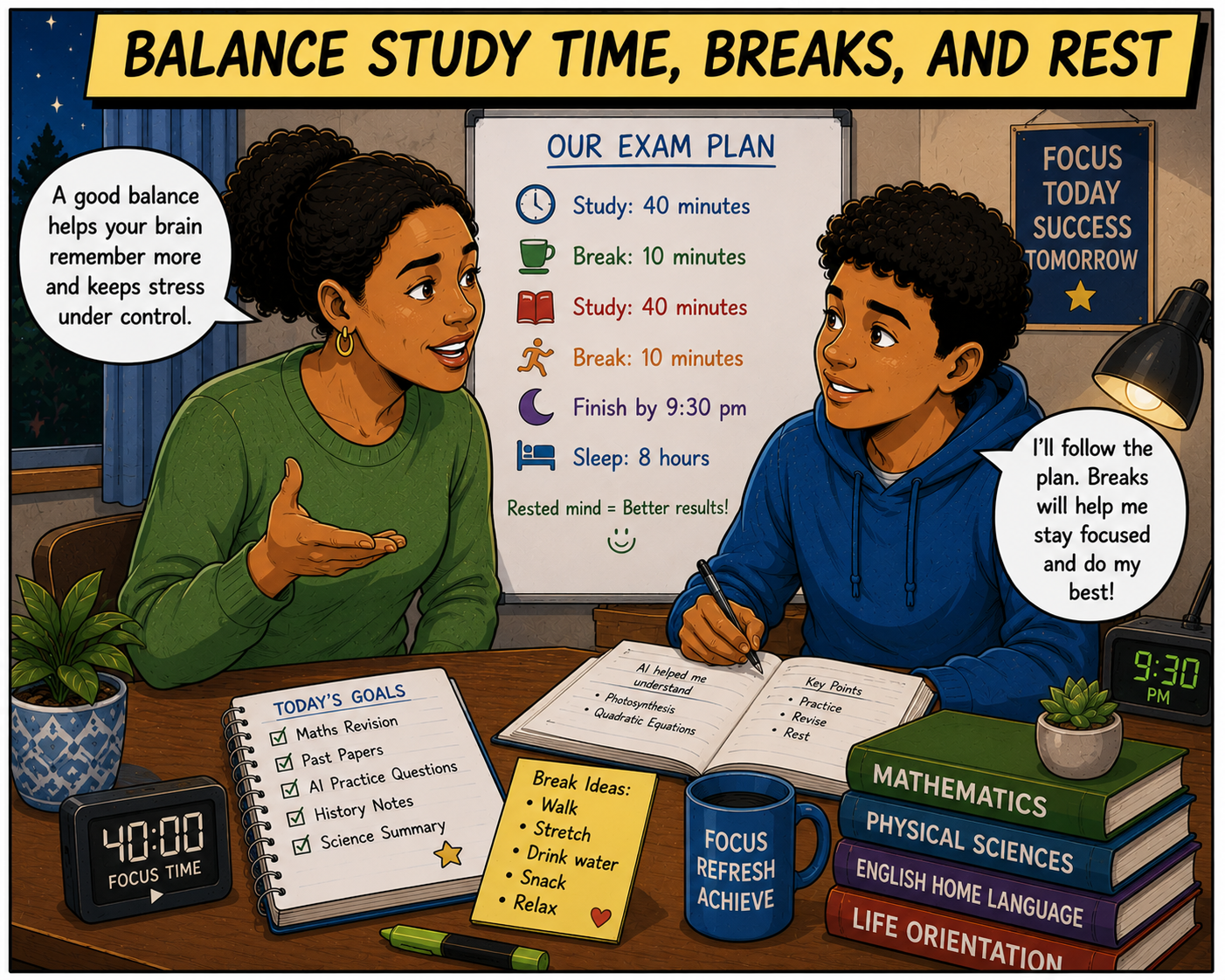
Create Clear Study Times
Unstructured studying often leads to procrastination. Parents can help by encouraging regular study periods.
For example:
Review tomorrow's work after school.
Schedule revision sessions.
Take planned breaks.
Finish studying before bedtime.
AI becomes one part of the study session instead of something used randomly throughout the day.
Routine reduces stress.
Agree On Break Times
No one concentrates perfectly for hours. Short breaks improve focus.
Healthy break activities include:
Walking.
Stretching.
Drinking water.
Having a healthy snack.
Talking with family.
Looking outside.
Breaks should refresh the learner.
They should not become an excuse for endless scrolling on social media.
Limit Unnecessary Notifications
Notifications are one of the biggest causes of distraction.
Parents can encourage learners to:
Silence unnecessary alerts.
Turn off social media notifications.
Close unused apps.
Activate "Do Not Disturb" mode during study sessions.
Small changes often improve concentration immediately.
Encourage AI To Explain, Not Complete
Healthy AI use means asking questions such as:
Explain this concept.
Show another example.
Test my understanding.
Help me revise.
Give me practice questions.
Less helpful prompts include:
Write my answers.
Complete my assignment.
Do my homework.
Parents can discuss this difference openly.
AI should strengthen learning — not replace it.
Keep Bedrooms Focused On Rest
Many learners study in their bedrooms. However, parents should also protect healthy sleep. Late-night scrolling often begins with genuine studying.
Then:
Messages arrive.
Videos appear.
Notifications continue.
Bedtime becomes much later than planned.
Families may choose to:
Finish studying before bedtime.
Charge devices outside bedrooms if suitable.
Encourage regular sleep routines.
Good sleep supports memory and concentration.
Avoid Constant Monitoring
Some parents feel they must check phones every few minutes. This often increases conflict.
Instead:
Agree on expectations.
Review progress together.
Discuss challenges honestly.
Focus on completed work rather than constant surveillance.
Teenagers preparing for adulthood benefit from learning self-management.
Parents should coach rather than control whenever possible.
Build Trust Through Conversation
Exam pressure can make family conversations tense.
Instead of asking: "Have you been wasting time?"
Try asking:
What did AI help you understand today?
Which subject feels most difficult?
What will you revise tomorrow?
What progress did you make today?
Supportive questions build trust.
Trust encourages honesty.
Watch For Signs That Rules Need Adjusting
Every learner is different. Some teenagers manage technology responsibly. Others struggle with distractions.
Parents should regularly ask:
Are study sessions productive?
Is the learner sleeping enough?
Are assignments being completed?
Are stress levels manageable?
If the current routine is not working, adjust it together.
Healthy rules should remain flexible.
Do Not Compare Your Child With Others
Parents sometimes hear: "My friend studies until midnight."
Or: "Everyone else is allowed unlimited phone time."
Every learner is different.
Every family is different.
Every home has different expectations.
Focus on what helps your own child learn well.
Comparison often creates unnecessary pressure.
Balance Academic Success With Wellbeing
Exam preparation should include:
Sleep.
Healthy meals.
Physical activity.
Family support.
Relaxation.
Positive encouragement.
Studying every waking hour rarely produces the best results. The brain needs opportunities to recover.
Parents should protect balance even during busy periods.
South African Families Face Different Circumstances
Families across South Africa have different realities.
Some learners have:
Personal laptops.
Fibre internet.
Quiet study spaces.
Others depend on:
Shared smartphones.
Mobile data.
Public Wi-Fi.
Shared bedrooms.
Load shedding schedules.
Healthy device rules should match the family's circumstances. The goal is practical solutions rather than perfect conditions.
Even limited resources can support excellent study habits when used wisely.
Encourage Independence Gradually
Grade 10 learners may need more guidance. Grade 12 learners should gradually take greater responsibility.
Parents can encourage teenagers to ask themselves:
Am I using AI to learn?
Am I becoming distracted?
Do I need a short break?
Have I completed today's goals?
Is my phone helping or delaying my work?
These questions encourage independent decision-making.
Create A Simple Family Exam Agreement
Many families find it helpful to agree on a few clear expectations.
For example:
Study begins at agreed times.
AI is used to explain, revise, and practise.
Social media waits until breaks.
Notifications remain off during study sessions.
Devices are put away before bedtime.
Breaks include movement.
Family members respect quiet study time.
Honest conversations happen if challenges arise.
Simple rules are easier to follow than long lists.
Parents Should Model Healthy Device Habits
Teenagers notice adult behaviour.
If parents expect children to avoid unnecessary phone use while they constantly check messages themselves, the rules may seem unfair.
Parents can set a positive example by:
Limiting phone use during family meals.
Giving full attention during conversations.
Reading books.
Taking breaks from screens.
Demonstrating balanced technology use.
Good examples often teach more effectively than repeated reminders.
Prepare Teenagers For Life Beyond School
Learning to manage technology is now a life skill.
University students, apprentices, and employees all need to:
Manage distractions.
Use digital tools responsibly.
Work independently.
Balance online and offline life.
Solve problems without constant supervision.
Healthy exam habits prepare learners for future success. Parents are not only helping with this year's exams.
They are teaching skills that will last for decades.
Progress Is Better Than Perfection
No learner follows every rule perfectly. Some days will go well. Other days will include distractions.
The goal is gradual improvement.
Celebrate:
Better focus.
Consistent routines.
Honest communication.
Responsible AI use.
Increased independence.
Small improvements repeated consistently create lasting habits.
Conclusion
Exam season naturally increases pressure for learners and parents alike, making technology both an important learning resource and a potential source of distraction. Artificial intelligence can help learners understand difficult concepts, organise revision, and prepare more effectively, but it works best when it is supported by clear routines and healthy boundaries.
Parents do not need to choose between banning devices and allowing unlimited screen time. Instead, they can create fair, practical rules that encourage purposeful AI use while reducing unnecessary distractions. Open conversations, shared expectations, consistent routines, and trust are far more effective than constant monitoring or strict control.
Ultimately, the goal is much bigger than helping a teenager through one examination period. By teaching responsible technology use, balanced study habits, and good decision-making, parents prepare their children for university, the workplace, and a future where digital tools will remain part of everyday life. Healthy rules today become lifelong habits tomorrow.
Additional Articles in the AI, Screen Time, and Healthy Digital Habits Series
Is AI Study Time Really Study Time? How Parents Can Tell
Helping Your Teen Balance AI Use, Schoolwork, and Rest
AI, Phones, and Procrastination: What Parents Should Watch For
Setting Healthy Rules for AI and Device Use During Exam Time
Teaching Your Child That Technology Should Support Life — Not Control It
Disclaimer
AI Tools were used to assist with research. Remember to always cross-check everything that you read.