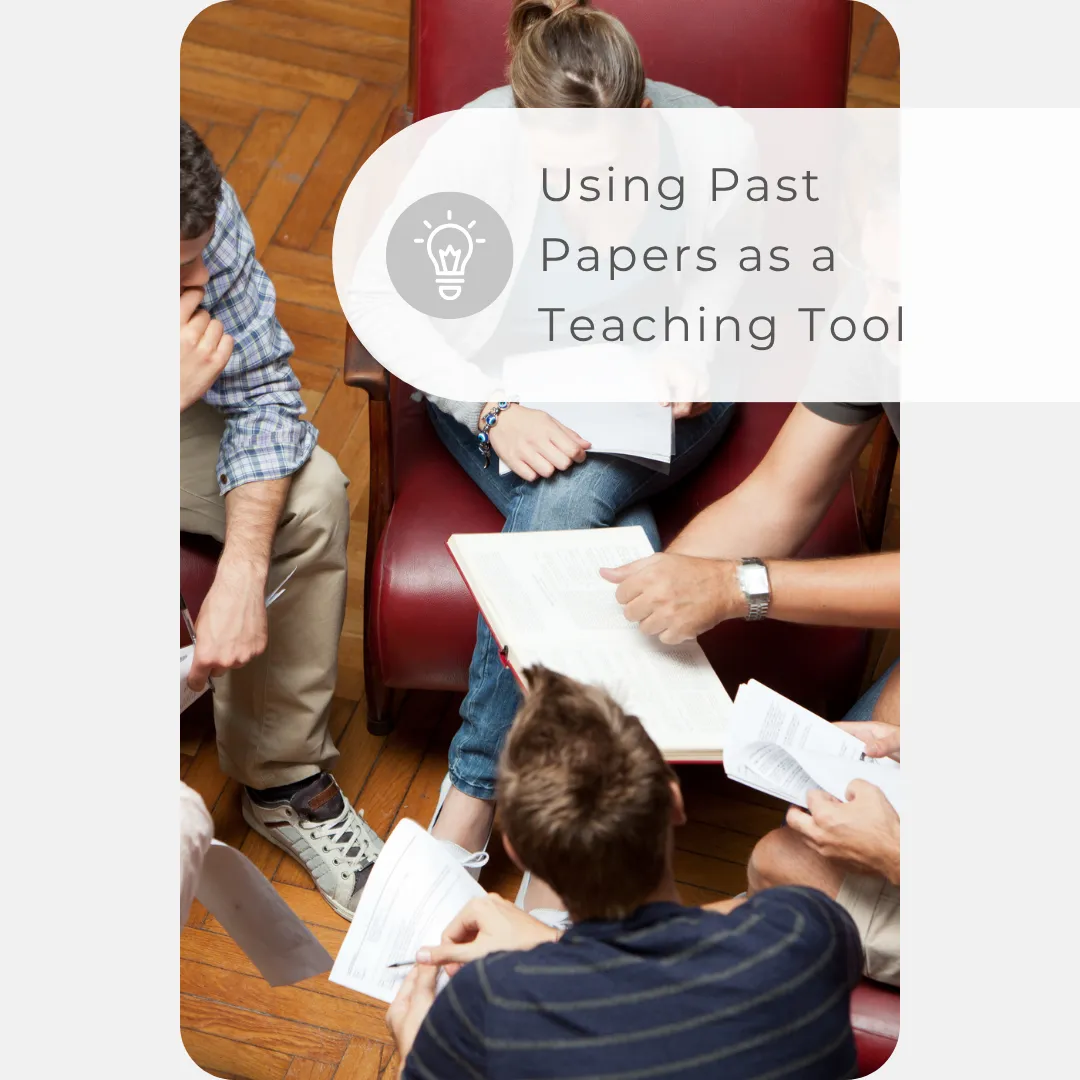
Assessment, Exams & Curriculum Delivery: Using Past Papers as a Teaching Tool
This is article #3 of 5 in the Assessment, Exams & Curriculum Delivery Series
Introduction
Past exam papers are one of the most powerful tools available to educators—but they are often used too late or in the wrong way. Instead of only using past papers just before exams, educators can use them throughout the year to improve understanding, build confidence, and develop strong exam skills.
Why Past Papers Are So Effective
Past papers give learners a clear picture of:
What exams look like
The types of questions they will face
How marks are awarded
They help learners move from theory to application.
Key Benefits:
Reinforces classroom learning
Builds exam confidence
Improves time management
Identifies learning gaps early
When used correctly, past papers are not just revision tools—they are teaching tools.
1. Start Using Past Papers Early
One common mistake is waiting until the last few weeks before exams to introduce past papers.
Instead:
Introduce simple questions early in the term
Use them alongside new topics
Gradually increase difficulty
Example:
After teaching a topic, include one or two past paper questions in your lesson.
This helps learners:
Understand how content is tested
Apply knowledge immediately
Build familiarity over time
2. Teach Learners How to Analyse Questions
Past papers are not just about answering—they are about understanding questions.
Guide learners to:
Identify command words
Break questions into parts
Recognise what is being tested
Classroom Activity:
Write a past paper question on the board and ask:
What is the question asking?
What type of answer is needed?
How many marks are allocated?
This builds strong exam interpretation skills.
3. Use Marking Guidelines Effectively
Marking guidelines (memorandums) are essential for learning.
Show learners:
What correct answers look like
How marks are allocated
Why certain answers earn marks
Teaching Tip:
After completing a question:
Let learners mark their own work
Compare answers with the memo
Discuss differences
This helps learners think like examiners.
4. Focus on Understanding, Not Memorising
A common mistake is learners memorising answers from past papers.
Emphasise:
Understanding concepts behind the answers
Being able to answer similar questions in different ways
Strategy:
Ask follow-up questions like:
“Why is this answer correct?”
“Can you explain it in your own words?”
This ensures deeper learning.
5. Use Past Papers for Group Work
Past paper questions are excellent for collaboration.
Group Activities:
Small group problem-solving
Peer discussions
Presenting answers to the class
Benefits:
Encourages participation
Builds confidence
Allows learners to learn from each other
6. Identify Common Question Patterns
Many exams follow similar patterns over time.
Teach learners to:
Recognise repeated question types
Identify commonly tested topics
Understand how questions are structured
Classroom Tip:
Compare questions from different years and highlight similarities.
This helps learners prepare more effectively.
7. Simulate Real Exam Conditions
Learners need practice under realistic conditions.
Try:
Timed past paper sessions
Quiet, exam-like environments
No notes or assistance
Why this matters:
Builds time management skills
Reduces exam anxiety
Improves focus under pressure
Start with shorter sections and build up to full papers.
8. Use Past Papers for Revision Planning
Past papers can guide revision.
Help learners:
Identify weak areas
Focus on topics that need improvement
Track progress over time
Strategy:
After completing a paper, ask learners to:
List topics they struggled with
Create a revision plan based on those areas
9. Differentiate for Mixed-Ability Classes
Not all learners are at the same level.
Adapt past paper use by:
Giving simpler questions to struggling learners
Providing support or hints
Challenging stronger learners with harder questions
Tip:
Break questions into smaller parts for learners who need extra help.
This ensures all learners benefit.
10. Avoid Overuse and Burnout
While past papers are valuable, too much practice can overwhelm learners.
Avoid:
Repeating the same papers too often
Using past papers without explanation
Turning every lesson into a test
Balance by:
Mixing past paper work with other teaching methods
Keeping lessons engaging and interactive
11. Combine Past Papers With Feedback
Feedback is essential for improvement.
After each activity:
Highlight strengths
Correct mistakes
Provide guidance for improvement
Example:
Instead of saying:
“Incorrect”
Say:
“You need to include an explanation to earn full marks.”
12. Build Confidence Over Time
Regular exposure to past papers reduces fear.
Learners become:
More familiar with exam formats
More comfortable answering questions
More confident in their abilities
Confidence leads to better performance.
Conclusion
Past papers are more than just revision tools—they are a powerful way to teach, assess, and build exam readiness. When used throughout the year, they help learners understand how exams work, improve their answering techniques, and gain confidence.
As an educator, your role is to guide learners in using past papers effectively—not for memorising answers, but for developing real understanding and exam skills that lead to success.
✅ Educator Checklist: Using Past Papers Effectively
Planning & Integration
I introduce past paper questions early in the term
I use them alongside teaching, not only before exams
I gradually increase difficulty
Teaching Strategies
I teach learners how to analyse questions
I explain command words and mark allocation
I focus on understanding, not memorisation
Classroom Activities
I use group work and discussions
I include timed practice sessions
I simulate exam conditions
Assessment & Feedback
I use marking guidelines with learners
I allow self-marking and peer marking
I provide clear and constructive feedback
Learner Support
I help learners identify weak areas
I adapt questions for different ability levels
I avoid overloading learners with too many papers
Related Articles to Assessment, Exams & Curriculum Delivery Series
Preparing Learners for Exams More Effectively
Teaching Learners How to Answer Exam Questions
Using Past Papers as a Teaching Tool
Assessing Understanding, Not Just Memory
Managing Continuous Assessment Without Overload
Disclaimer
AI Tools were used to assist with research. Remember to always cross-check everything that you read.