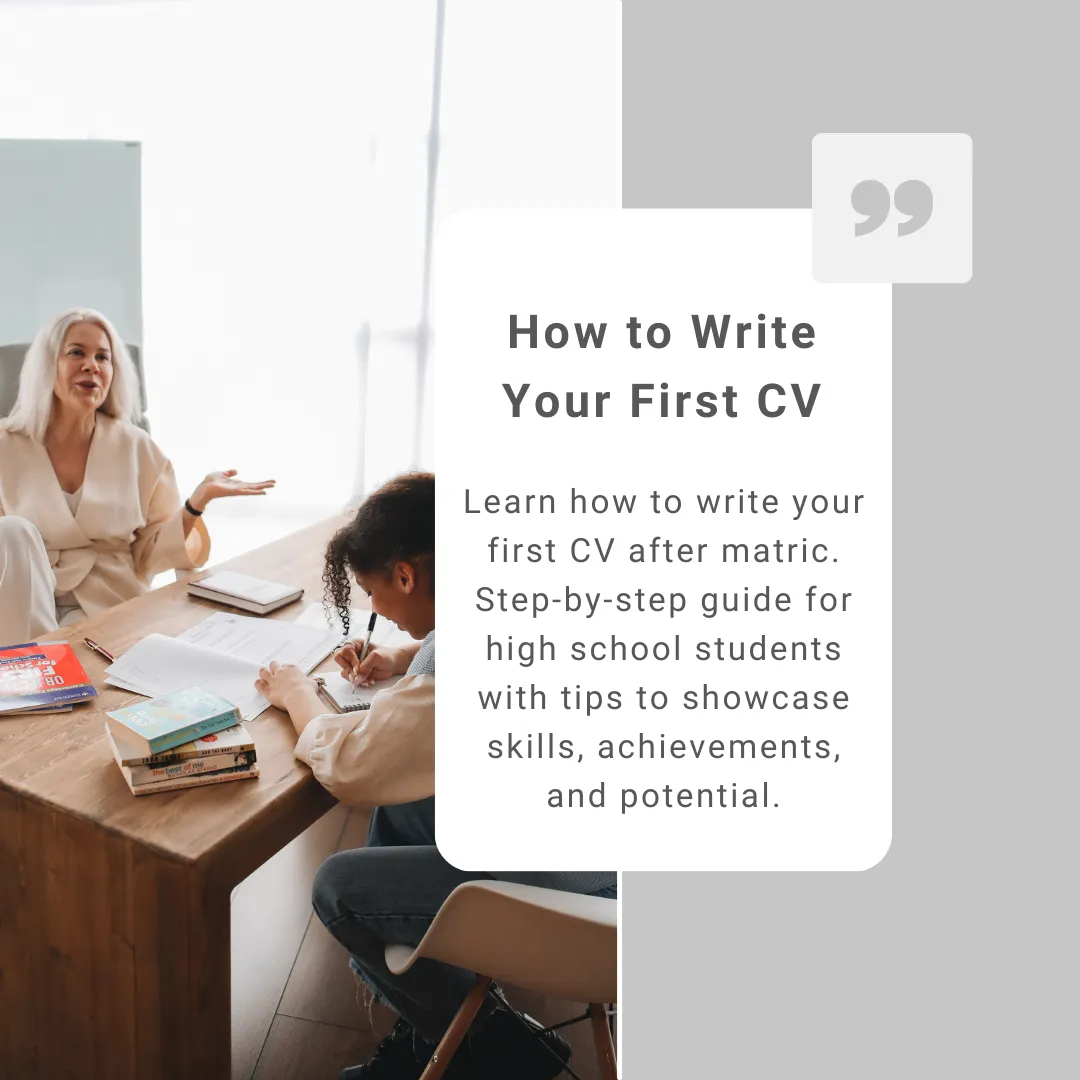
Career, Jobs & Life After School: How to Write Your First CV
This is article #3 of 5 in the Career, Jobs & Life After School Series.
Introduction
Many learners leave school and try to apply for jobs without knowing how to write a proper CV. A CV (Curriculum Vitae) is a document that shows employers who you are, what skills you have, and why they should hire you.
Even if you do not have much work experience, you can still create a strong CV. The key is to focus on your skills, achievements, and potential.
In this article, we will guide you step by step to create your first CV and give you tips to make it stand out.
Step 1: Choose the Right CV Format
There are three main types of CV formats:
Chronological CV
Lists your work experience and education in order, starting with the most recent.
Best if you have some work experience or internships.
Functional CV
Focuses on skills and achievements rather than work experience.
Best if you have little or no work experience.
Combination CV
Mix of chronological and functional.
Shows skills first, then work experience.
For your first CV, a functional or combination CV is usually best.
Step 2: Include Your Contact Information
At the top of your CV, include:
Full name
Phone number
Email address (professional-looking, e.g., [email protected] )
Optional: LinkedIn profile or personal website
Example:
Valdi Venter
Phone: 082 123 4567
Email: [email protected]
LinkedIn: linkedin.com/in/valdiventer
Step 3: Write a Short Personal Statement
Step 3: Write a Short Personal Statement
A personal statement is a 2–4 sentence paragraph that explains:
Who you are
What you are looking for
What makes you a good candidate
Example:
“I am a motivated and hardworking matric learner with strong communication and computer skills. I am looking for an entry-level administrative role where I can learn and contribute to the team. I am punctual, responsible, and eager to grow professionally.”
Step 4: List Your Education
Include your school, qualification, and year. If you have completed matric, you can also list key subjects.
Example:
Hoërskool Johannesburg
National Senior Certificate (NSC), 2025
Key Subjects: Mathematics, English, Physical Science, Accounting
If you are currently studying, you can write “Expected completion: 2026”.
Step 5: Highlight Your Skills
Even without work experience, you have valuable skills. Include hard skills and soft skills.
Hard Skills (learned skills)
Computer skills (Microsoft Office, typing)
Social media management
Bookkeeping basics
Language skills
Soft Skills (personal qualities)
Communication
Teamwork
Problem-solving
Time management
Responsibility
Make sure the skills you list match the job you are applying for.
Step 6: Include Work Experience or Volunteering
If you have no formal work experience, include:
Volunteer work
School projects or leadership roles
Part-time jobs
Internships or apprenticeships
Example:
Volunteer Tutor – Hoërskool Johannesburg
Jan 2024 – Nov 2024
- Helped Grade 8 learners with Mathematics and English
- Prepared study notes and practice exercises
- Improved learners’ understanding and confidence
Step 7: Add Extra Sections (Optional)
You can include sections that make you stand out:
Achievements: Awards, competitions, school honours
Hobbies & Interests: Only if relevant to the job
References: “Available on request” is fine
Tip: Keep it short. One page is enough for a first CV.
Step 8: Formatting and Presentation
Use a clean, simple layout
Use bullet points, not long paragraphs
Keep font professional (Arial, Calibri, or Times New Roman)
Use 10–12 point font size
Save as PDF before sending
Step 9: Proofread
Check for:
Spelling mistakes
Grammar errors
Correct dates
Accurate contact information
Ask a parent, teacher, or friend to check your CV. A second pair of eyes helps catch mistakes.
Step 10: Tailor Your CV for Each Job
Every job is different. Always:
Highlight skills and experience that match the job
Use keywords from the job advert
Keep it short and clear
A well-tailored CV increases your chance of being called for an interview.
Quick CV Checklist ✅
Essentials
☐ Full name and contact information
☐ Personal statement
☐ Education details
☐ Skills (hard and soft)
☐ Work experience, volunteering, or projects
Optional Sections
☐ Achievements and awards
☐ Hobbies and interests
☐ References available on request
Final Checks
☐ Clear and professional layout
☐ Correct spelling and grammar
☐ Tailored to the job
Final Thoughts
Your first CV may feel simple, but it is your first step into the world of work. Employers want to see:
Motivation
Skills
Willingness to learn
Focus on your strengths, show confidence, and keep your CV clean and professional. Over time, you will update and improve it as you gain experience.
Remember: a great CV opens the door to your first job, internship, or training opportunity — and it is your key to building a successful career.
Related Articles in the Career, Jobs & Life After School Series.
What to Do After Matric If You Are Not Going to University
How to Choose the Right Career Path
Job Skills You Can Learn While Still at School
How to Prepare for Job Interviews as a Young Person
Disclaimer
AI Tools were used to assist with research. Remember to always cross-check everything that you read.