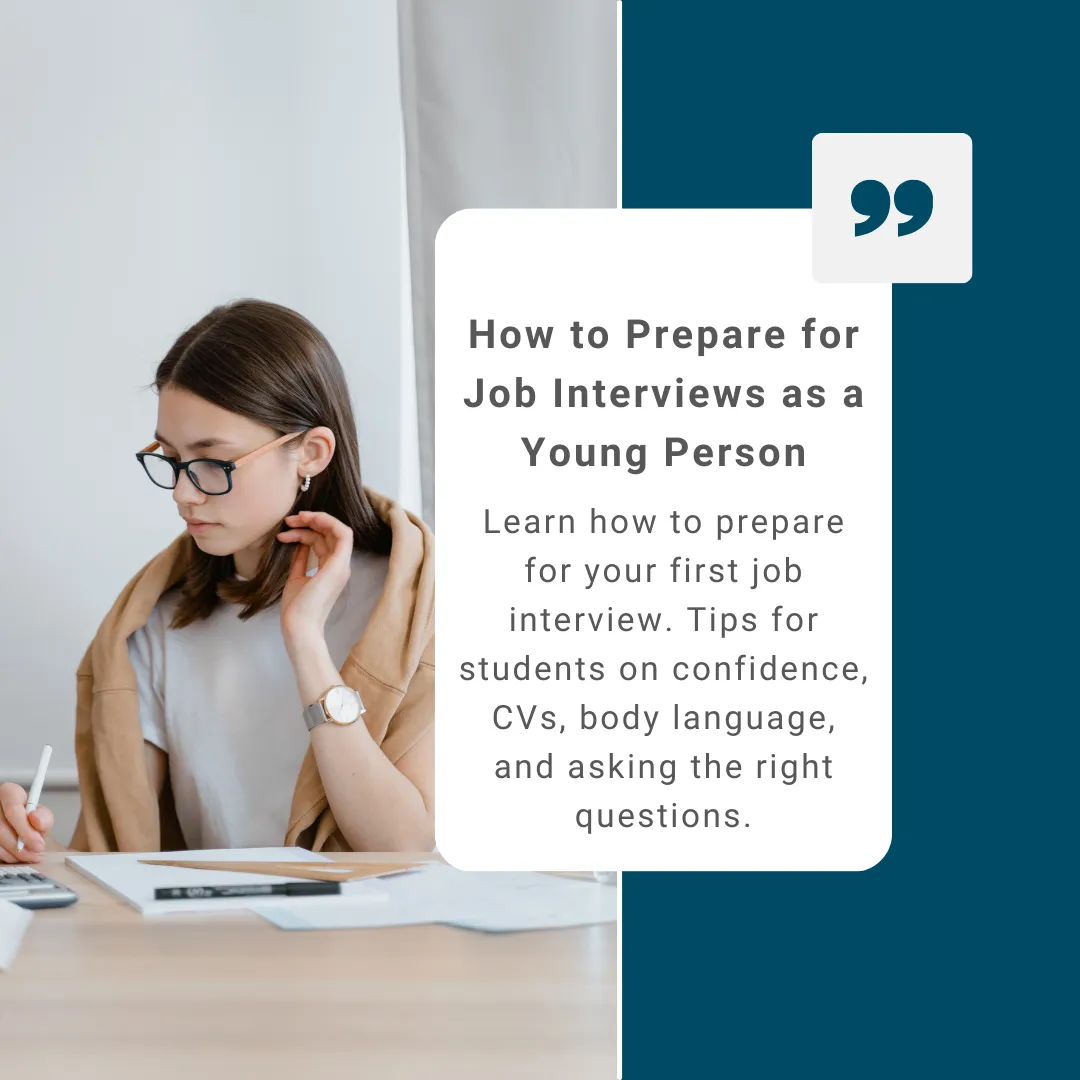
Career, Jobs & Life After School: How to Prepare for Job Interviews as a Young Person
This is article #5 of 5 in the Career, Jobs & Life After School Series
Introduction
Job interviews can feel intimidating, especially for young people applying for their first job. Many learners worry about saying the wrong thing or not having enough experience.
The truth is, employers do not expect you to know everything. They want to see that you are prepared, confident, and eager to learn.
In this article, we will guide you step by step on how to prepare for your first job interview and make a great impression.
1. Research the Company
Before your interview, take time to learn about the company or organisation.
What to do:
Visit their website
Learn what products or services they offer
Understand their mission and values
Look for news articles or social media pages
Why it matters:
Showing that you know about the company proves that you are interested and serious about the job.
2. Understand the Job
Know the role you are applying for and the skills required.
Steps:
Read the job advert carefully
Note the key responsibilities
Identify which of your skills match the requirements
Prepare examples of how you have used these skills
Employers will ask: “Why do you want this job?” and “What makes you a good fit?” — knowing the job helps you answer confidently.
3. Prepare Your CV and Documents
Bring all the necessary documents to the interview:
Updated CV
Certified copies of your ID or qualifications
Letters of reference (if available)
Portfolio or work samples (if relevant)
Tip:
Keep everything neat in a folder or envelope. Organisation shows professionalism.
4. Practice Common Interview Questions
Some common questions for young job seekers include:
Tell me about yourself.
Why do you want this job?
What are your strengths and weaknesses?
Describe a time you worked in a team.
How do you handle challenges?
How to prepare:
Write short answers and practise saying them aloud
Ask a parent, teacher, or friend to do a mock interview
Focus on honesty and confidence, not perfection
Remember, examples from school, volunteering, or hobbies are valuable — you don’t need work experience to answer well.
5. Dress Appropriately
Your appearance makes a strong first impression.
Tips:
Wear clean, neat clothes
Avoid torn or dirty items
Shoes should be polished or clean
Keep accessories simple
For formal interviews, wear a collared shirt or blouse
Looking professional shows respect for the interviewer and the opportunity.
6. Plan Your Journey
Arriving late creates a bad impression.
Steps:
Know the interview location
Check travel time in advance
Plan to arrive 10–15 minutes early
Consider traffic, public transport, or parking
Arriving on time shows responsibility and reliability.
7. Body Language Matters
How you act during the interview is just as important as what you say.
Key points:
Smile and greet the interviewer confidently
Maintain eye contact
Sit up straight
Avoid fidgeting
Use calm and clear speech
Positive body language shows confidence, even if you feel nervous inside.
8. Ask Good Questions
At the end of the interview, you will often have the chance to ask questions.
Good examples:
What does a typical day look like for this role?
What skills are most important for success here?
Can you describe the team I would be working with?
Avoid questions about salary or benefits until you are offered the job.
9. Follow Up After the Interview
After the interview, it is professional to:
Send a short thank-you message or email
Thank the interviewer for their time
Reiterate your interest in the position
A simple follow-up shows appreciation and reinforces your interest.
10. Stay Positive and Learn
Not every interview will result in a job.
Tips:
Treat every interview as practice
Ask for feedback if possible
Learn from your mistakes
Keep applying and improving
Confidence grows with experience, and each interview brings you closer to success.
Interview Preparation Checklist ✅
Research
☐ I have researched the company
☐ I understand the job requirements
☐ I know what skills the employer values
Documents
☐ Updated CV
☐ Certified copies of ID and qualifications
☐ Letters of reference or portfolio (if applicable)
Practice
☐ Practised answers to common questions
☐ Mock interview with a teacher, parent, or friend
☐ Prepared questions to ask the interviewer
Appearance and Arrival
☐ Clean and professional clothing
☐ Arrive 10–15 minutes early
☐ Planned travel and parking
During Interview
☐ Smile and greet confidently
☐ Maintain good posture and eye contact
☐ Speak clearly and calmly
☐ Listen carefully and answer honestly
After Interview
☐ Send a thank-you message or email
☐ Reflect on what went well and what to improve
Final Thoughts
Job interviews may seem scary at first, but preparation makes a huge difference.
Focus on:
Showing that you are responsible and eager to learn
Being confident without being arrogant
Highlighting your skills, school experience, or volunteering
Even as a young job seeker, you can impress employers if you are prepared, polite, and professional.
Remember: every interview is a step forward in your career journey — and your first job is just the beginning.
Related Articles in the Career, Jobs & Life After School Series.
What to Do After Matric If You Are Not Going to University
How to Choose the Right Career Path
Job Skills You Can Learn While Still at School
How to Prepare for Job Interviews as a Young Person
Disclaimer
AI Tools were used to assist with research. Remember to always cross-check everything that you read.