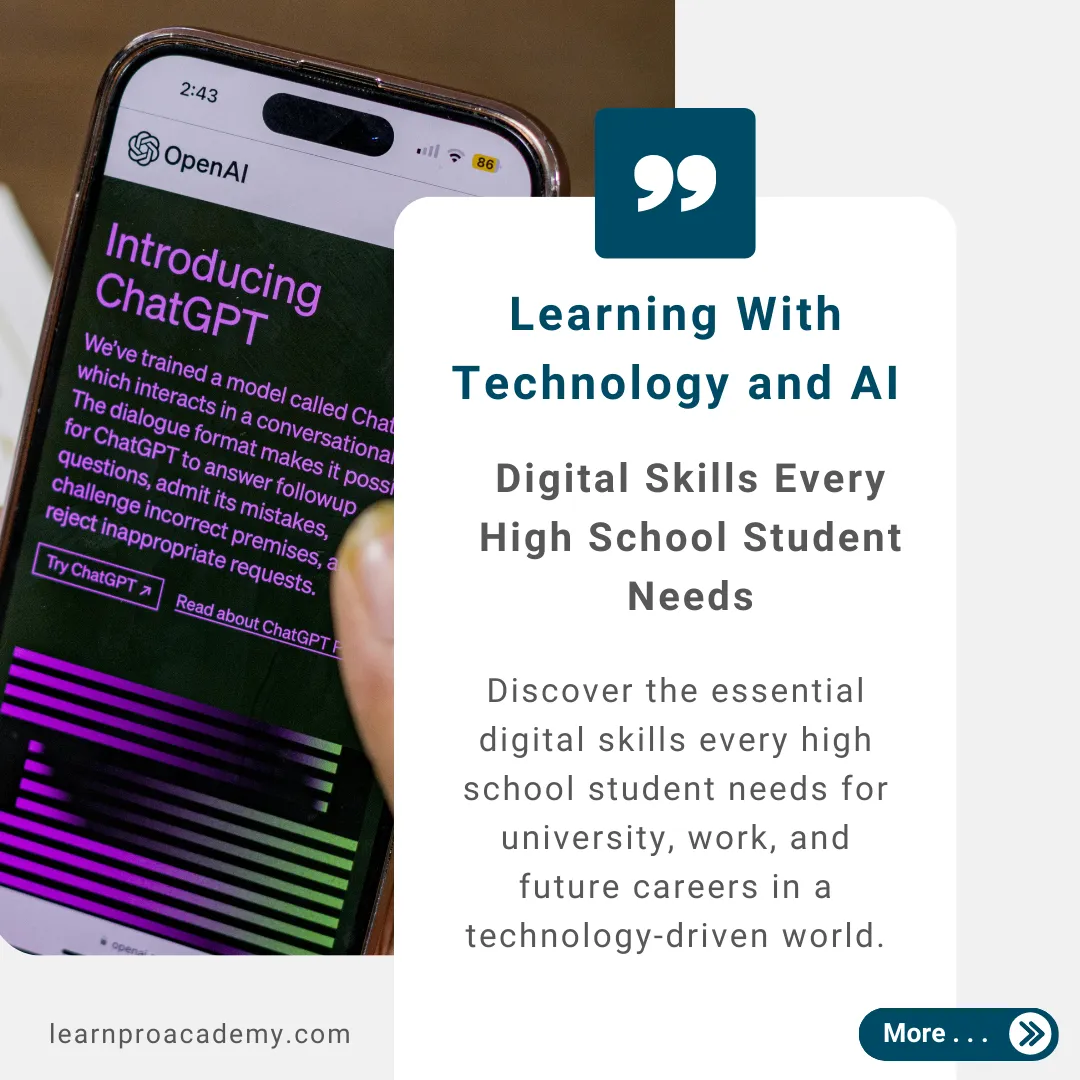
Learning with Technology & AI: Digital Skills Every High School Student Needs
This is article #4 of 5 in the Learning with Technology & AI Series
Introduction
We live in a digital world. Almost every career today uses computers, the internet, or digital tools. Whether you want to become a teacher, engineer, entrepreneur, nurse, designer, or technician — digital skills are important.
High school is the best time to start building these skills. You do not need to be a computer expert. But you do need to understand how to use technology safely, responsibly, and effectively.
In this article, you will learn the most important digital skills every high school student should develop before leaving school.
What Are Digital Skills?
Digital skills are the abilities you need to use technology correctly and confidently.
These include:
Using computers and smartphones properly
Searching for information online
Creating digital documents
Communicating professionally online
Protecting your personal information
Digital skills are not only for IT students. They are for everyone.
1. Basic Computer Skills
Before anything else, every student should know how to:
Use a keyboard and mouse properly
Create and save files
Organise folders
Rename documents correctly
Attach files to emails
Many learners use phones every day, but struggle when working on a computer. In the workplace, computers are still very important.
If you are comfortable using a computer, you already have an advantage.
2. Using Word Processing Software
Word processing software (like Microsoft Word or similar programs) is used in almost every career.
You should know how to:
Type and format a document
Change font size and style
Insert headings
Create bullet points
Add page numbers
Save as PDF
These skills are important for:
School assignments
CV writing
Reports
University applications
Neat, professional documents make a good impression.
3. Online Research Skills
Not everything on the internet is true. One of the most important digital skills is knowing how to find reliable information.
You should learn to:
Use specific search terms
Compare information from different websites
Check the date of the article
Identify trusted sources
Avoid fake news
Do not just copy the first answer you see. Good researchers think carefully and check facts.
4. Digital Communication Skills
Today, many people communicate through:
Email
Messaging apps
Online learning platforms
Video calls
You should know how to:
Write a professional email
Use clear subject lines
Be respectful in online communication
Respond politely
For example, instead of writing:
“Hey. I need help.”
Write:
“Good afternoon Sir/Madam. I am struggling with Question 3 in today’s lesson. Could you please explain it again?”
Professional communication builds respect.
5. Cyber Safety and Online Security
The internet can be useful, but it can also be dangerous.
Every student must understand:
Do not share personal information online
Use strong passwords
Avoid suspicious links
Be careful on social media
Report cyberbullying
Protecting your digital identity is very important. What you post online can affect your future opportunities.
Think before you click. Think before you post.
6. Basic Spreadsheet Skills
Spreadsheets (like Microsoft Excel or similar tools) are used in:
Business
Accounting
Science
Engineering
Project planning
You should know how to:
Enter data into rows and columns
Use basic formulas (like addition)
Create simple tables
Organise information clearly
Even basic spreadsheet knowledge can make you more confident in many subjects.
7. Presentation Skills
Presentation software (like PowerPoint or similar tools) helps you:
Create slides
Add images
Organise ideas
Present information clearly
These skills are useful for:
School projects
Group assignments
Business proposals
University presentations
Good digital presentations show confidence and preparation.
8. Understanding AI and Digital Tools
Artificial Intelligence is becoming more common in education and the workplace.
Students should understand:
What AI is
How to use AI responsibly
The difference between help and cheating
How AI can support learning
You do not need to be an expert in AI, but you should understand how it works and how to use it ethically.
9. Time Management Using Digital Tools
There are many digital tools that can help you:
Set reminders
Create study schedules
Track deadlines
Organise tasks
Using a digital calendar or task manager can help you stay organised and reduce stress.
Learning to manage your time digitally prepares you for university and work life.
10. Problem-Solving with Technology
Technology sometimes fails. Files disappear. Wi-Fi disconnects. Software freezes.
Instead of panicking, learn to:
Restart devices
Check internet connections
Save work regularly
Search online for solutions
Basic troubleshooting skills make you more independent and confident.
Why Digital Skills Matter for Your Future
Digital skills are important because:
Most jobs require computer knowledge
Universities use online systems
Businesses operate digitally
Many careers involve technology
Employers prefer people who:
Can work independently
Understand digital tools
Communicate professionally
The earlier you develop these skills, the better prepared you will be.
Common Digital Mistakes Students Make
Avoid these common mistakes:
❌ Saving files with unclear names like “Document1”
❌ Not backing up important work
❌ Sharing passwords with friends
❌ Posting inappropriate content online
❌ Copying information without checking sources
Being responsible online is part of being mature.
Final Thoughts
Digital skills are not optional anymore. They are essential.
You do not need to know everything about computers. But you should be comfortable using technology for learning, communication, and organisation.
High school is your training ground. The digital skills you develop now will support you in:
University
Work
Business
Everyday life
Start building your digital confidence today. Your future career will thank you.
✅ Student Checklist: Essential Digital Skills
Computer Basics
☐ I can create, save, and organise files.
☐ I can attach documents to emails.
Research Skills
☐ I check if websites are reliable.
☐ I compare more than one source.
Communication
☐ I can write a professional email.
☐ I communicate respectfully online.
Cyber Safety
☐ I use strong passwords.
☐ I avoid sharing personal information.
Productivity Tools
☐ I can create a Word document properly.
☐ I understand basic spreadsheet functions.
☐ I can create a simple presentation.
If you can tick most of these boxes, you are building strong digital skills.
Additional Articles in the Learning with Technology & AI Series
How Students Can Use AI to Study Smarter
AI Tools That Help with Homework and Revision
How to Avoid Cheating When Using AI
Digital Skills Every High School Student Needs
Preparing for a Future with AI and Technology
Disclaimer
AI Tools were used to assist with research. Remember to always cross-check everything that you read.