
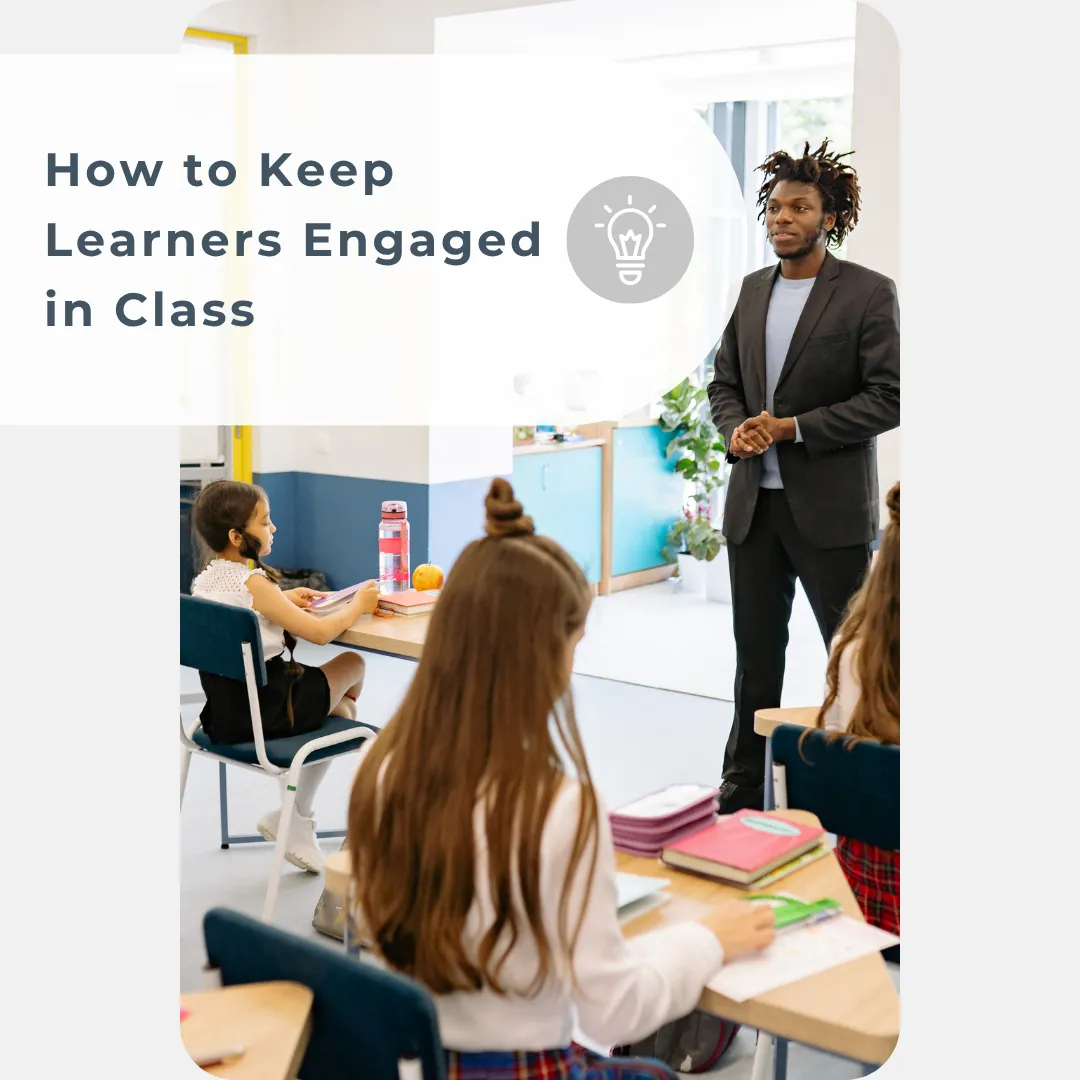
Teaching Effectiveness & Classroom Practice: How to Keep Learners Engaged in Class
This is article #3 of 5 in the Teaching Effectiveness & Classroom Practice Series
Introduction
One of the biggest challenges educators face is keeping learners focused and engaged during lessons. In today’s world, learners are easily distracted by phones, social media, and personal challenges. Even in the classroom, attention can quickly drop if lessons feel boring or difficult.
When learners are not engaged, they do not learn effectively. They may become passive, lose interest, and fall behind.
The good news is that engagement is something you can improve with the right teaching strategies. This article will show you practical ways to keep learners interested, involved, and motivated in every lesson.
1. Start Lessons with a Strong Hook
The first few minutes of a lesson are very important. If you capture attention early, learners are more likely to stay engaged.
Ways to start strong:
Ask an interesting question
Share a surprising fact
Tell a short story
Present a real-life problem
Example:
Instead of starting with a definition, ask:
“Why do you think some objects float while others sink?”
This creates curiosity and gets learners thinking immediately.
2. Make Lessons Interactive
Learners lose focus when they only listen for long periods. Engagement increases when they actively participate.
Simple ways to make lessons interactive:
Ask questions regularly
Use class discussions
Include short activities
Let learners share ideas
Tip:
Try not to speak for more than 10–15 minutes without involving learners.
3. Use Variety in Your Teaching
Doing the same thing every lesson can become boring. Variety keeps learners interested.
You can include:
Group work
Individual tasks
Visual presentations
Practical demonstrations
Short quizzes or games
Changing your teaching style helps maintain energy and attention in the classroom.
4. Connect Learning to Real Life
Learners are more engaged when they see the value of what they are learning.
Examples:
Show how maths is used in shopping or budgeting
Connect science to everyday experiences
Link lessons to future careers
When learners understand why something matters, they are more likely to pay attention.
5. Encourage Participation from All Learners
In many classrooms, only a few learners participate while others remain silent.
To involve everyone:
Ask open-ended questions
Call on different learners (not just the same ones)
Use pair or group discussions
Give thinking time before answering
Tip:
Avoid putting learners under pressure. Encourage participation in a supportive way.
6. Use Movement and Activity
Sitting for long periods can reduce focus, especially for younger learners.
Include movement by:
Letting learners work at the board
Using group activities
Changing seating arrangements
Including short physical breaks
Movement helps refresh energy and improves concentration.
7. Give Clear and Achievable Tasks
Learners disengage when they feel confused or overwhelmed.
To keep learners engaged:
Give clear instructions
Break tasks into smaller steps
Check that learners understand what to do
When learners know what is expected, they are more likely to stay focused and complete the task.
8. Use Positive Reinforcement
Recognition and encouragement can increase motivation and engagement.
You can:
Praise effort, not just correct answers
Recognise improvement
Give constructive feedback
Example:
“Well done for trying—that’s a good step forward.”
Positive feedback builds confidence and encourages participation.
9. Manage Distractions Effectively
Distractions are a reality in every classroom. The key is to manage them calmly and consistently.
Strategies:
Set clear classroom rules
Keep lessons structured
Address disruptions quickly but calmly
Keep learners busy with meaningful tasks
A well-managed classroom creates a better learning environment.
10. Build Strong Relationships with Learners
Learners are more engaged when they feel respected and supported.
Build relationships by:
Learning learners’ names
Showing interest in their progress
Listening to their opinions
Being approachable
When learners feel valued, they are more willing to participate.
11. Use Technology Wisely
Technology can improve engagement if used correctly.
Examples:
Educational videos
Interactive quizzes
Online learning tools
Important:
Use technology to support learning—not to replace good teaching.
12. Check Engagement Regularly
Do not assume learners are engaged just because they are quiet.
Look for signs:
Are learners asking questions?
Are they participating in activities?
Are they completing tasks?
Quick checks:
Ask questions
Use short quizzes
Observe body language
This helps you adjust your lesson if needed.
Conclusion
Keeping learners engaged in class is essential for effective teaching and learning. When learners are interested and involved, they understand better, remember more, and perform better.
By using interactive methods, real-life examples, and positive reinforcement, you can create a classroom where learners are motivated to learn.
Remember: engagement is not about entertainment—it is about meaningful involvement in learning.
Practical Checklist for Educators
Lesson Planning
☐ Did I plan a strong and interesting lesson start?
☐ Did I include different teaching methods?
☐ Did I connect the lesson to real life?
Learner Participation
☐ Did I ask questions regularly?
☐ Did I involve different learners?
☐ Did I include group or pair activities?
Classroom Management
☐ Did I set clear expectations?
☐ Did I manage distractions effectively?
☐ Did I keep learners focused on tasks?
Teaching Approach
☐ Did I give clear instructions?
☐ Did I break tasks into steps?
☐ Did I use visuals or demonstrations?
Learner Support
☐ Did I encourage and motivate learners?
☐ Did I build positive relationships?
☐ Did I check engagement throughout the lesson?
Related Articles in Teaching Effectiveness & Classroom Practice Series
How to Teach Complex Topics in a Simple Way
Helping Learners Understand Instead of Memorising
How to Keep Learners Engaged in Class
Teaching Mixed-Ability Classes Effectively
Managing Large Classes Without Burnout
Disclaimer
AI Tools were used to assist with research. Remember to always cross-check everything that you read.