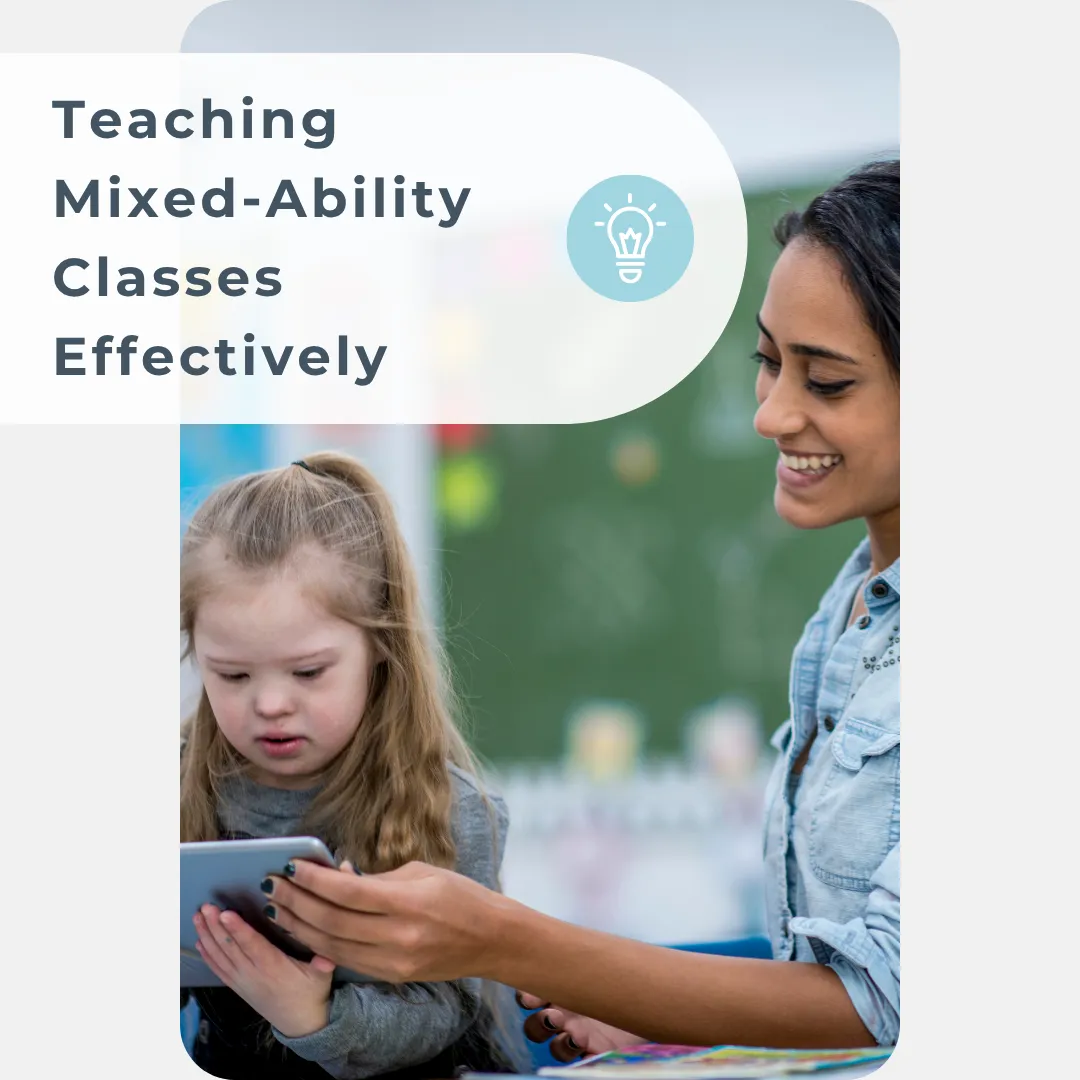
Teaching Effectiveness & Classroom Practice: Teaching Mixed-Ability Classes Effectively
This is article #4 of 5 in the Teaching Effectiveness & Classroom Practice Series
Introduction
Most classrooms today include learners with different ability levels. Some learners understand quickly and want more challenges, while others may struggle with basic concepts and need more support.
Teaching a mixed-ability class can feel difficult. You may worry about moving too fast for some learners or too slow for others. However, with the right strategies, you can create a classroom where all learners can succeed.
This article will show you practical ways to manage mixed-ability classes effectively while keeping learners engaged and progressing.
1. Accept and Plan for Differences
The first step is to recognise that mixed ability is normal. Every class will have different learning speeds, strengths, and challenges.
As an educator:
Plan lessons that include different levels of difficulty
Expect different responses from learners
Avoid teaching as if all learners are the same
When you plan for differences, you are better prepared to support everyone.
2. Use Differentiated Instruction
Differentiated instruction means adjusting your teaching to meet different learner needs.
You can differentiate by:
Content (What learners learn):
Provide simpler explanations for some learners
Offer advanced material for stronger learners
Process (How learners learn):
Use group work, discussions, or individual tasks
Allow learners to learn at their own pace
Product (How learners show learning):
Allow different ways to complete tasks (written, oral, visual)
Differentiation ensures that every learner is challenged at the right level.
3. Group Learners Strategically
Group work is a powerful tool in mixed-ability classrooms.
Types of grouping:
Mixed-ability groups:
Strong learners help others
Encourages teamwork and peer learning
Same-ability groups:
Allows targeted teaching
Helps you focus on specific needs
Tip:
Use a combination of both, depending on the lesson goal.
4. Set Clear Learning Goals
All learners should work towards the same main objective, even if tasks differ in difficulty.
Example:
Topic: Solving equations
All learners aim to understand the concept
Tasks vary from basic to advanced
Clear goals:
Keep the class focused
Help learners understand expectations
Make progress easier to measure
5. Use Tiered Activities
Tiered activities allow learners to work at different levels on the same topic.
Example:
Level 1 (Basic):
Simple questions to build understanding
Level 2 (Intermediate):
Standard problems
Level 3 (Advanced):
Challenging questions or real-life applications
This approach:
Supports struggling learners
Challenges stronger learners
Keeps everyone engaged
6. Provide Extra Support Where Needed
Some learners need more guidance to keep up.
Support strategies:
Give additional explanations
Use simpler examples
Provide step-by-step guidance
Offer extra practice
Important:
Support should help learners grow—not make work too easy.
7. Challenge Strong Learners
Advanced learners can become bored if work is too easy.
Keep them engaged by:
Giving extension activities
Asking deeper questions
Encouraging independent research
Assigning leadership roles in groups
Challenging strong learners helps them continue improving.
8. Use Flexible Teaching Methods
Different learners respond to different teaching styles.
Include a variety of methods:
Visual (diagrams, charts)
Auditory (discussion, explanation)
Practical (activities, experiments)
Using multiple approaches increases understanding across the class.
9. Encourage Peer Learning
Learners can learn effectively from each other.
Examples:
Pair stronger learners with those who need help
Use group discussions
Encourage learners to explain concepts
Peer learning:
Builds confidence
Reinforces understanding
Creates a supportive classroom environment
10. Monitor Progress Regularly
In a mixed-ability class, it is important to track how each learner is doing.
You can:
Use short quizzes
Observe classwork
Ask questions during lessons
Provide feedback
Regular monitoring helps you:
Identify struggling learners
Adjust your teaching
Ensure no one falls behind
11. Create a Positive and Inclusive Environment
Learners should feel respected and supported, regardless of their ability level.
Create this environment by:
Encouraging effort, not just results
Avoiding comparisons between learners
Promoting respect and teamwork
Celebrating improvement
A positive classroom builds confidence and motivation.
12. Manage Your Time Effectively
Teaching different levels can be time-consuming.
Time management tips:
Plan lessons carefully
Use group work to support multiple learners at once
Prepare resources in advance
Focus on key concepts
Efficient use of time helps you support more learners without feeling overwhelmed.
Conclusion
Teaching mixed-ability classes can be challenging, but it is also an opportunity to create a dynamic and inclusive learning environment.
By using differentiated instruction, group work, and flexible teaching methods, you can support struggling learners while still challenging stronger ones.
Remember: every learner can succeed with the right support and encouragement. Your role is to guide each learner on their own path to success.
Practical Checklist for Educators
Lesson Planning
☐ Did I plan for different ability levels?
☐ Did I set clear learning goals?
☐ Did I include tiered activities?
Teaching Strategies
☐ Did I use differentiated instruction?
☐ Did I include a variety of teaching methods?
☐ Did I provide both support and challenge?
Learner Engagement
☐ Did I use group or peer learning?
☐ Did I involve all learners?
☐ Did I encourage participation?
Support & Monitoring
☐ Did I provide extra help where needed?
☐ Did I monitor learner progress?
☐ Did I give feedback?
Classroom Environment
☐ Did I create an inclusive and respectful space?
☐ Did I encourage effort and improvement?
☐ Did I avoid comparing learners?
Related Articles Teaching Effectiveness & Classroom Practice Series
How to Teach Complex Topics in a Simple Way
Helping Learners Understand Instead of Memorising
How to Keep Learners Engaged in Class
Teaching Mixed-Ability Classes Effectively
Managing Large Classes Without Burnout
Disclaimer
AI Tools were used to assist with research. Remember to always cross-check everything that you read.