
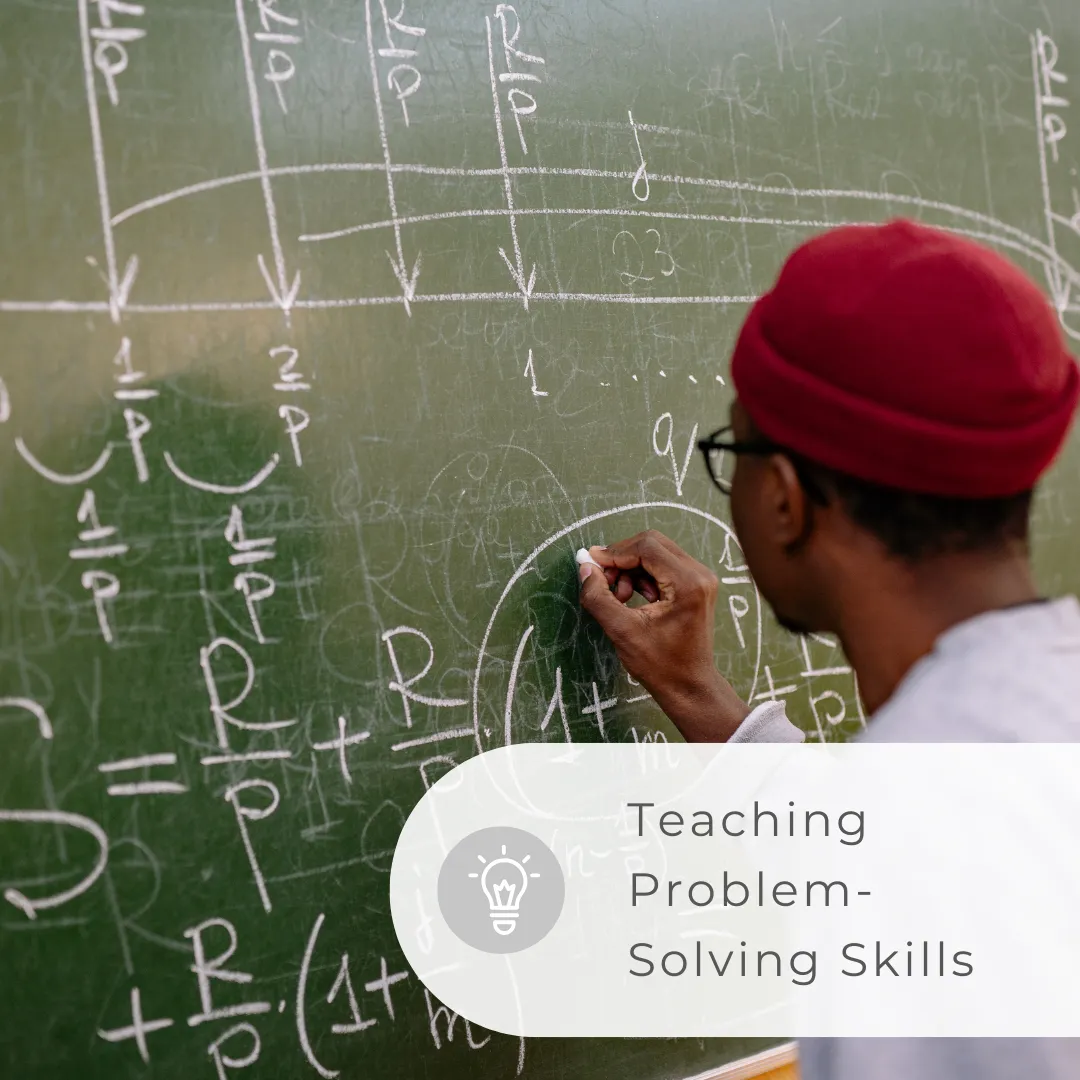
Teaching Skills for the Modern Classroom: Teaching Problem-Solving Skills
This is article #3 of 5 in the Teaching Skills for the Modern Classroom Series
Introduction
In school and in life, learners are constantly faced with challenges. Whether it is solving a Maths question, writing an essay, or making decisions, success depends on one key ability—problem-solving.
However, many learners struggle because they are used to being told what to do instead of thinking through problems themselves.
As an educator, your role is to guide learners to become independent thinkers who can approach problems with confidence. This article will provide simple, practical strategies to help you teach problem-solving skills in your classroom.
What Is Problem-Solving?
Problem-solving is the ability to:
Understand a problem
Think of possible solutions
Choose the best solution
Apply it effectively
Reflect on the result
It is not just about getting the correct answer — it is about the process of thinking and decision-making.
Why Problem-Solving Skills Are Important
1. Improves Academic Performance
Many exam questions require learners to:
Apply knowledge
Analyse situations
Solve unfamiliar problems
Learners with strong problem-solving skills perform better because they can:
Break down questions
Choose the correct method
Avoid confusion
2. Builds Independent Learners
Problem-solving helps learners:
Work without constant help
Think for themselves
Take responsibility for their learning
3. Prepares Learners for Real Life
In everyday life, learners must:
Make decisions
Handle challenges
Solve unexpected problems
Problem-solving skills prepare them for these situations.
Common Challenges Learners Face
Learners often struggle with problem-solving because:
They rely on memorisation
They give up easily
They fear making mistakes
They do not know where to start
They lack confidence
Your teaching approach can help learners overcome these challenges.
Practical Strategies to Teach Problem-Solving Skills
1. Teach a Clear Problem-Solving Process
Give learners a simple step-by-step method:
Understand the problem
Plan a solution
Solve the problem
Check the answer
Repeat this process regularly so it becomes a habit.
2. Model the Thinking Process
Do not only give answers—show learners how you think.
Example:
“First, I need to understand what the question is asking…”
“Now I will choose a method…”
“Let me check if this makes sense…”
This helps learners see how problem-solving works.
3. Start with Simple Problems
Build confidence by:
Starting with easier problems
Gradually increasing difficulty
This prevents learners from feeling overwhelmed.
4. Encourage Learners to Try First
Avoid solving problems immediately for learners.
Instead:
Give them time to attempt
Encourage effort
Guide them if needed
This builds independence and confidence.
5. Ask Guiding Questions
Help learners think without giving answers.
Examples:
“What do you already know?”
“What is the question asking?”
“What method could you use?”
This supports thinking without removing responsibility.
6. Use Real-Life Problems
Connect learning to everyday situations.
Examples:
Budgeting in Maths
Solving community issues in Life Orientation
Analysing real-world scenarios in subjects
This makes problem-solving meaningful and engaging.
7. Encourage Multiple Solutions
Show learners that problems can have more than one solution.
Ask:
“Is there another way to solve this?”
“Which method is better? Why?”
This develops flexible thinking.
8. Promote Group Problem-Solving
Let learners work together to solve problems.
Benefits:
Share ideas
Learn from each other
Build confidence
Group work also helps quieter learners participate.
9. Allow Mistakes and Learning from Them
Mistakes are part of problem-solving.
Encourage learners to:
Try without fear
Learn from errors
Improve their approach
Say:
“Mistakes help us learn.”
“Let’s see what we can fix.”
10. Reflect on the Process
After solving a problem, ask learners to reflect:
“What worked well?”
“What could you do differently next time?”
Reflection helps learners improve their thinking skills.
Creating a Problem-Solving Classroom
To develop strong problem-solvers, your classroom must support thinking and exploration.
1. Encourage Effort Over Answers
Focus on the process, not just the result.
2. Be Patient
Allow learners time to think and try.
3. Support, Don’t Rescue
Guide learners, but do not solve problems for them.
4. Build Confidence
Celebrate progress, not just correct answers.
Signs of Strong Problem-Solving Skills
You will notice improvement when learners:
Attempt problems independently
Ask useful questions
Try different approaches
Explain their thinking
Show confidence in tackling challenges
Overcoming Common Challenges
Learners Give Up Quickly
Break problems into smaller steps
Encourage small successes
Large Classes
Use group work
Walk around and support learners
Limited Time
Focus on key problems
Go deeper rather than covering too much
Checklist: Teaching Problem-Solving Skills
Daily Checklist
I teach a clear problem-solving process
I model my thinking
I give learners time to try
I ask guiding questions
I encourage effort
Weekly Checklist
I include real-life problems
I allow group problem-solving
I encourage multiple solutions
I include reflection activities
Classroom Environment Checklist
Mistakes are accepted
Learners feel confident to try
Thinking is encouraged
Effort is recognised
Conclusion
Problem-solving is one of the most valuable skills learners can develop. It helps them succeed academically and prepares them for real-life challenges.
As an educator, you can develop this skill by focusing on the process of thinking, not just the final answer. By guiding learners, encouraging effort, and creating opportunities to solve problems, you help them become confident and independent thinkers.
Start small—teach a simple process, ask guiding questions, and give learners time to think. Over time, you will see a clear improvement in their confidence, engagement, and performance.
Related Articles in the Teaching Skills for the Modern Classroom Series
Teaching Critical Thinking in High School
Encouraging Questions and Curiosity
Teaching Problem-Solving Skills
Making Lessons More Interactive
Supporting Learners with Exam Anxiety
Disclaimer
AI Tools were used to assist with research. Remember to always cross-check everything that you read.