

Building a Home Culture of Effort, Not Shortcuts
This is article #5 of 5 in the AI, Cheating, and Academic Honesty at Home Series
Introduction
Artificial intelligence (AI), smartphones, and the internet have made it easier than ever to find quick answers. Within seconds, learners can ask AI to explain a topic, solve a mathematics problem, write an essay, or summarise an entire chapter. These tools can be incredibly helpful when used responsibly.
However, technology also makes shortcuts more tempting.
When learners become used to finding the fastest answer instead of working through challenges, they may begin to value convenience more than learning. Over time, this can weaken important qualities such as perseverance, patience, responsibility, and independent thinking.
Parents have an important role to play in shaping how children think about effort. Long before learners enter university or the workplace, they develop beliefs about success inside their own homes. When families celebrate learning, honesty, and persistence — not just high marks — children are more likely to develop habits that will benefit them throughout their lives.
This article explores practical ways to build a family culture where effort matters more than shortcuts, and where AI becomes a helpful learning tool instead of a replacement for hard work.
Why Home Culture Matters
Children learn far more than academic subjects at home.
They also learn attitudes such as:
How to approach challenges.
How to respond to mistakes.
How to treat other people.
How to solve problems.
How to define success.
These lessons are often taught through everyday conversations and family routines rather than formal instruction.
If children regularly hear messages such as:
"Do your best."
"Keep trying."
"What did you learn today?"
they begin to associate success with effort.
If they hear only: "What mark did you get?" they may begin believing that results matter more than the learning process.
Understand Why Shortcuts Are So Attractive
Modern technology encourages speed. Food arrives quickly. Messages are sent instantly. Information appears within seconds. AI fits naturally into this world of immediate results.
For busy teenagers balancing school, sport, friendships, and family responsibilities, shortcuts can seem very appealing.
Parents should recognise that this temptation is normal.
The goal is not to remove every shortcut from life.
The goal is to help children recognise when shortcuts prevent real learning.
Explain That Difficult Does Not Mean Impossible
Many learners assume that if something feels difficult, they are not good at it. Parents can help change this mindset. Explain that learning often feels difficult because the brain is developing new skills.
Every successful person has experienced challenges while learning.
Whether someone becomes:
A teacher.
An engineer.
A doctor.
A plumber.
An accountant.
A business owner.
they all reached their goals through consistent effort rather than instant success.
Difficulty is often a sign that learning is taking place.
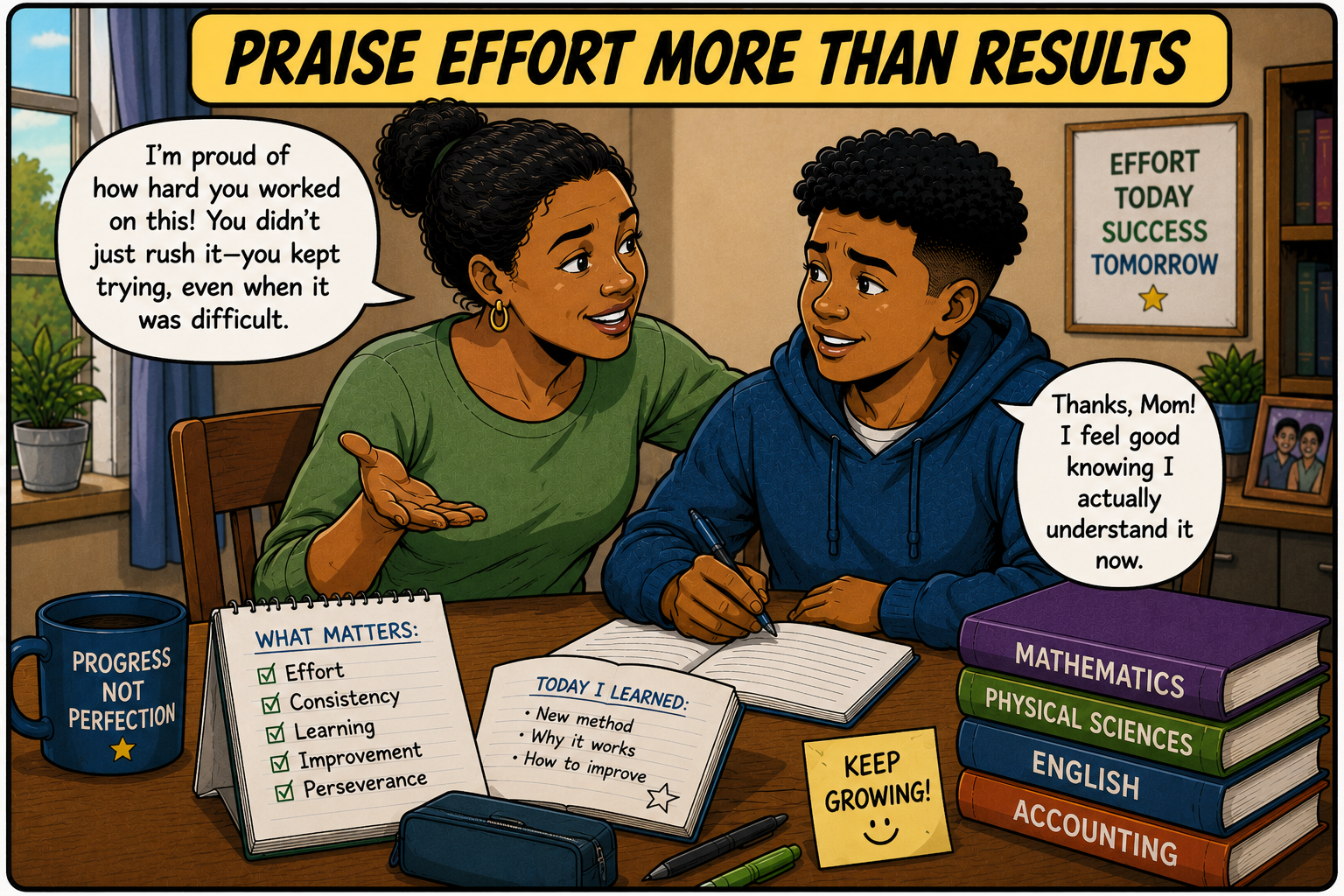
Praise Effort More Than Results
One of the simplest ways to build healthy attitudes is to praise effort consistently.
Instead of saying only: "Well done for getting 90%."
also recognise behaviours such as:
Studying consistently.
Asking thoughtful questions.
Improving from previous tests.
Completing work honestly.
Practising difficult topics.
Remaining positive after setbacks.
Children notice what adults celebrate.
If effort receives recognition, they are more likely to continue working hard.
Celebrate Progress
Not every learner achieves the highest marks immediately. Progress deserves celebration too.
For example:
A learner improves from 50% to 65%.
Another becomes more organised.
Another gains confidence in public speaking.
These improvements matter.
Parents who recognise progress encourage continuous growth rather than perfection.
Make Learning A Family Value
Children are influenced by what adults value.
Families can build a positive learning culture by:
Reading together.
Discussing current events.
Asking interesting questions.
Sharing new discoveries.
Talking about school positively.
Showing curiosity.
Learning becomes part of everyday family life instead of something that happens only at school.
Teach That Mistakes Help People Grow
Many children fear mistakes because they believe mistakes mean failure. Parents can help them see mistakes differently.
When your child makes an error, ask:
What did you learn?
What would you do differently?
What helped you improve?
This teaches resilience.
Children become less likely to hide mistakes or look for shortcuts when they understand that mistakes are part of learning.
Encourage Independent Problem Solving
Children become more confident when they solve problems themselves.
Before giving answers, try asking:
What have you tried already?
What do you think the next step is?
Is there another way to solve this?
Where could you find more information?
This encourages independent thinking while still providing support.
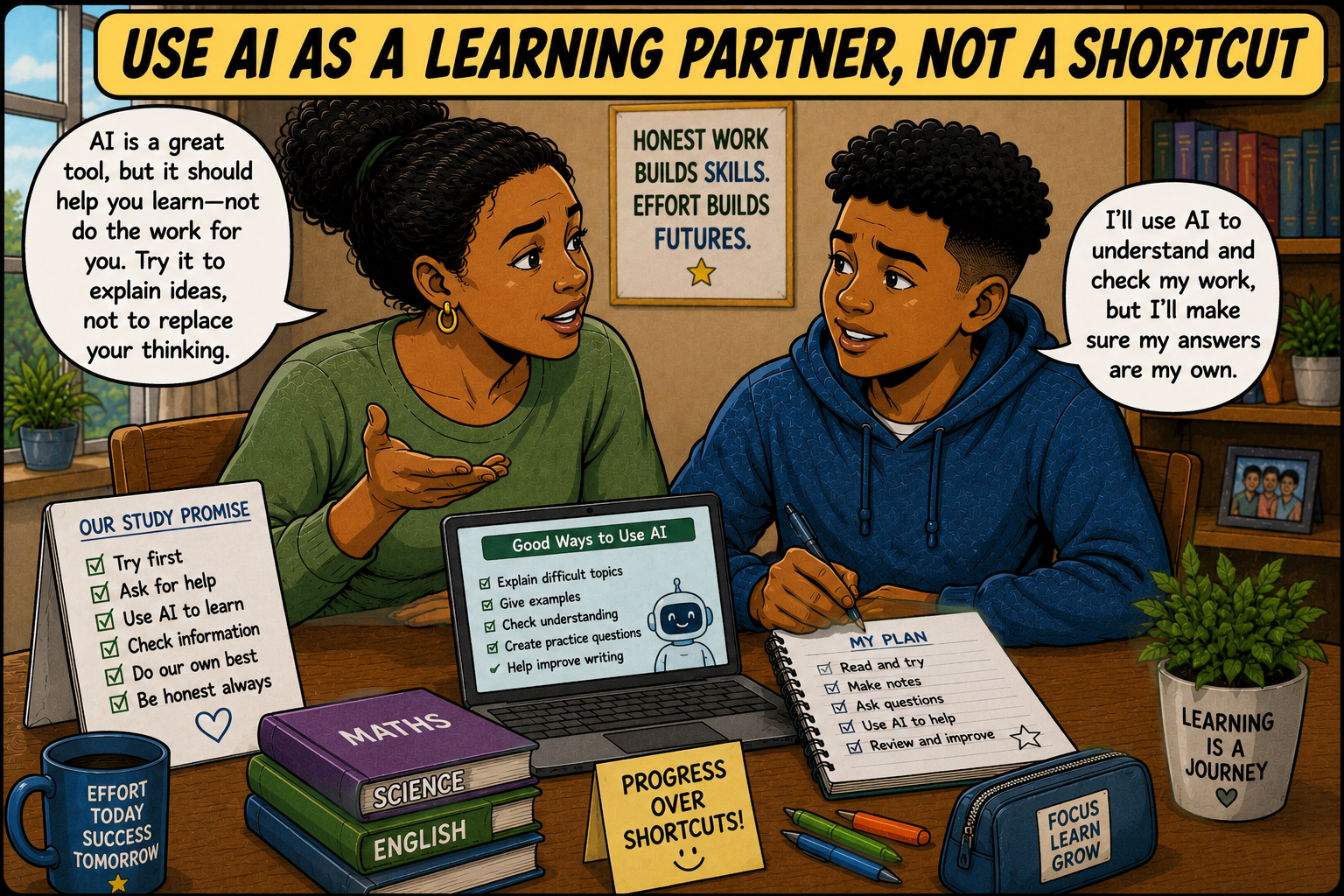
Use AI As A Learning Partner
Parents do not need to ban AI. Instead, teach children to use it wisely.
AI can help them:
Understand difficult concepts.
Create revision questions.
Check grammar.
Explain mistakes.
Suggest study plans.
Generate practice activities.
Encourage your child to ask AI: "Help me understand this."
instead of: "Do this for me."
This small difference changes AI from a shortcut into a learning partner.
Build Good Homework Habits
Consistent routines reduce the temptation to look for quick answers.
Helpful habits include:
Studying at the same time each day.
Starting assignments early.
Working in a quiet environment.
Taking short breaks.
Asking for help when needed.
Attempting questions before using AI.
Simple routines often improve both confidence and independence.
Show That Adults Also Work Hard
Children observe adults carefully. Share examples of your own learning.
For example: "I had to practise this many times before I understood it."
or: "I made mistakes before I learned how to do this properly."
These conversations help children understand that learning continues throughout life.
Reduce The Fear Of Failure
Fear often drives shortcut behaviour. Some learners believe they must never fail.
Parents can reduce this pressure by reminding children that:
Nobody succeeds every time.
Improvement takes practice.
Temporary setbacks are normal.
Character matters more than perfection.
Children who are not afraid of failure usually become more willing to work honestly.
Focus On Character
School teaches subjects. Families help shape character.
Qualities worth discussing include:
Honesty.
Responsibility.
Perseverance.
Respect.
Self-discipline.
Kindness.
Integrity.
Technology will continue changing.
Strong character remains valuable in every generation.
Encourage Responsibility
Give children opportunities to take responsibility.
For example:
Managing homework schedules.
Planning revision.
Organising school materials.
Meeting deadlines.
Taking ownership of mistakes.
Responsibility develops through practice.
Parents can guide without doing everything for their children.
Talk About Long-Term Success
Many learners think only about today's assignment. Parents can help them think further ahead.
Ask questions like:
What kind of person do you want to become?
What skills will you need after school?
How will honesty help your future career?
Why does independent thinking matter?
Connecting today's habits with tomorrow's goals increases motivation.
Avoid Comparing Children
Comparisons often reduce confidence.
Avoid statements like: "Your cousin gets better marks."
or: "Your friend finishes homework faster."
Instead, compare your child with their own previous progress.
This encourages personal growth rather than unhealthy competition.
Create Family Expectations Around AI
Clear expectations reduce confusion.
Families might agree that:
Homework begins with independent effort.
AI should explain rather than replace.
Assignments should reflect the learner's own understanding.
School AI rules will always be followed.
AI use should be discussed openly.
Simple expectations create consistency.
Make Time For Conversations
Building family values happens through regular conversations.
Talk about:
School experiences.
Difficult assignments.
New technology.
Future careers.
Honesty.
Responsibility.
Learning from mistakes.
Children who regularly discuss these topics often make wiser decisions independently.
Encourage Curiosity
Curiosity is one of the strongest drivers of lifelong learning.
Instead of always giving answers, ask questions such as:
Why do you think that happened?
What would happen if...?
How could we find out?
Is there another explanation?
Curious learners become active thinkers rather than passive receivers of information.
Help Children Find Pride In Honest Work
One of the greatest rewards parents can give children is pride in their own effort.
When learners complete difficult work honestly, they gain:
Confidence.
Satisfaction.
Independence.
Self-respect.
These feelings are difficult to achieve when someone else — including AI — does the work for them.
Remind your child that genuine achievement always feels more meaningful than borrowed success.
Build A Growth Mindset
Children benefit from believing that ability can improve.
Instead of saying: "I'm just bad at maths."
encourage them to say: "I haven't mastered this yet."
The word yet creates hope.
It reminds learners that improvement is always possible through practice.
Prepare Your Child For A Changing Future
AI will almost certainly become part of almost every profession. The future will not reward people simply for finding information.
It will reward those who can:
Think critically.
Solve problems.
Work ethically.
Learn continuously.
Adapt to change.
Collaborate with others.
These qualities cannot be downloaded instantly. They develop through years of honest effort.
Parents who encourage perseverance today prepare their children for tomorrow's opportunities.
Remember That Small Daily Habits Matter Most
Family culture is not built through one big conversation. It grows through small daily actions.
Simple habits such as:
Asking about learning instead of only marks.
Praising persistence.
Encouraging questions.
Supporting honest effort.
Celebrating improvement.
Using AI responsibly.
gradually shape how children think about success.
Over months and years, these habits become part of your family's identity.
Conclusion
Technology will continue offering faster ways to complete schoolwork, but no shortcut can replace the confidence, knowledge, and character that grow through honest effort. Parents have tremendous influence in helping their children see that real success comes from learning, perseverance, and personal responsibility —not simply from getting the quickest answer.
By praising effort, encouraging curiosity, reducing the fear of mistakes, setting clear expectations around AI, and making learning a valued part of family life, parents can build a home culture where honesty and hard work become everyday habits. These lessons will benefit learners far beyond school, preparing them to use AI wisely while developing the resilience, integrity, and independence needed for lifelong success.
Additional Articles in the AI, Cheating, and Academic Honesty at Home Series
What Counts as Cheating When Your Child Uses AI?
How to Talk About Honesty When AI Can Do the Work So Easily
Signs Your Child May Be Overusing AI for Schoolwork
How to Respond If You Discover Your Child Used AI Dishonestly
Building a Home Culture of Effort, Not Shortcuts
Disclaimer
AI Tools were used to assist with research. Remember to always cross-check everything that you read.