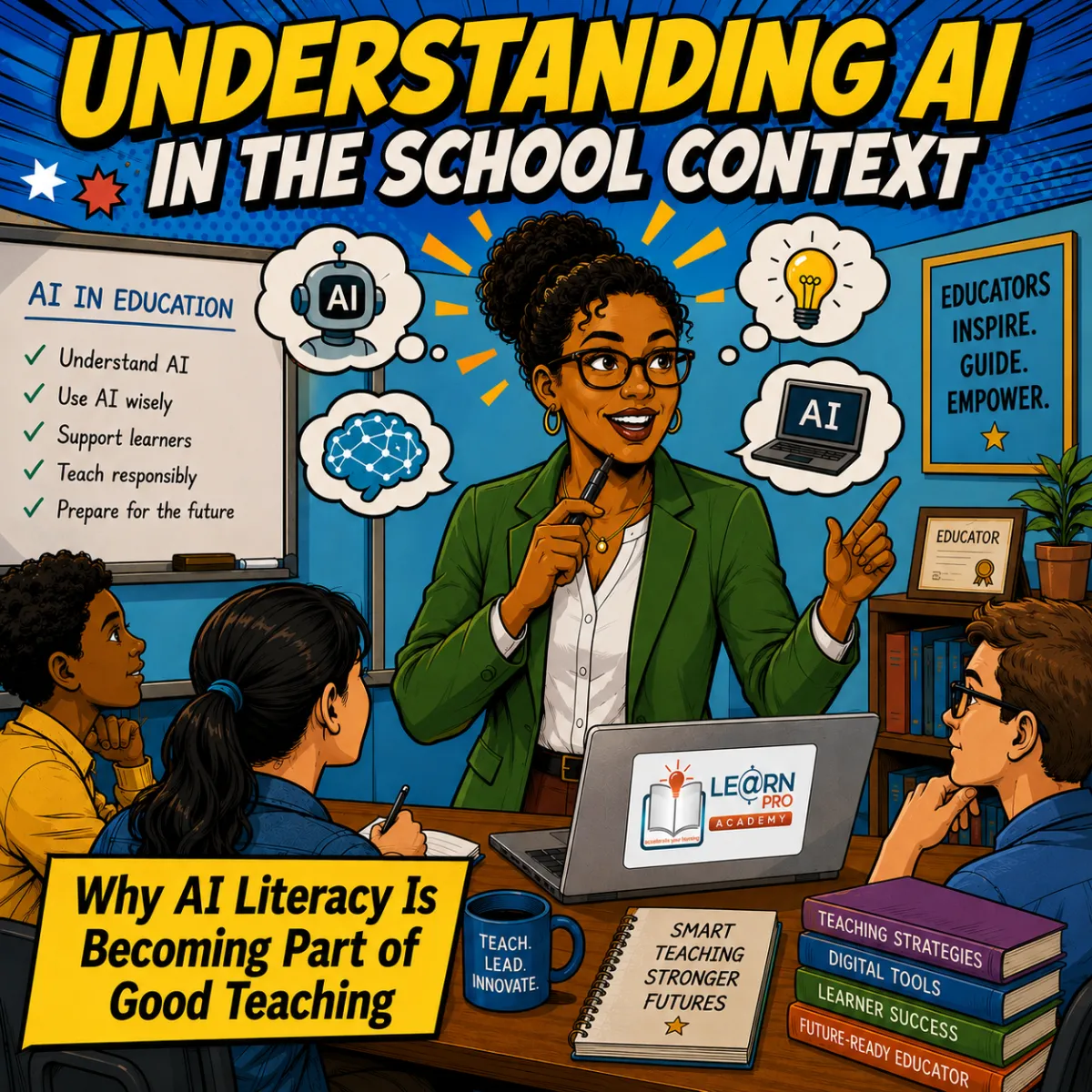
Why AI Literacy Is Becoming Part of Good Teaching: Why AI Literacy Is Becoming Part of Good Teaching
This is article #4 of 5 in the Understanding AI in the School Context Series
Introduction
Education has always evolved alongside society. As the world changes, so do the knowledge, skills, and teaching practices that educators need to remain effective. Over the past few decades, teachers have adapted to computers, the internet, interactive whiteboards, smartphones, online learning platforms, and digital classrooms. Today, Artificial Intelligence (AI) is becoming the next major development influencing education.
Many learners are already using AI to explain concepts, generate revision questions, improve writing, and prepare for examinations. At the same time, schools are beginning to explore how AI can assist with lesson planning, learner support, administration, and assessment. These changes mean that understanding AI is no longer only relevant for technology specialists — it is becoming an important professional skill for educators across every subject.
This does not mean teachers need to become programmers or AI engineers. Instead, they need enough knowledge to understand how AI works, recognise both its strengths and its limitations, and guide learners in using it responsibly. This combination of knowledge, judgement, and practical application is known as AI literacy.
This article explains what AI literacy means, why it is becoming an essential part of good teaching, and how South African educators can begin developing these skills with confidence.
What Is AI Literacy?
AI literacy is the ability to understand, evaluate, and use Artificial Intelligence responsibly.
For educators, this includes understanding:
What AI is.
What AI is not.
How AI generates responses.
Where AI can support teaching.
Where AI should be used cautiously.
How learners are using AI.
The ethical issues surrounding AI.
How to evaluate AI-generated information.
AI literacy is not about becoming a technical expert.
It is about becoming an informed professional.
AI Literacy Is Similar To Digital Literacy
Twenty years ago, many educators had to learn digital skills.
Teachers gradually became familiar with:
Email
Internet research
Word processing
Presentation software
Online learning platforms
Interactive whiteboards
Educational websites
Today, these skills are considered normal parts of teaching.
AI literacy is following a similar path.
It is becoming another layer of professional knowledge that helps educators work effectively in modern classrooms.
Why AI Literacy Matters
AI is already influencing education.
Learners use AI to:
Study.
Research.
Generate ideas.
Improve writing.
Practise examination questions.
Translate information.
Explain difficult concepts.
If educators understand AI, they can help learners use these tools responsibly while avoiding common mistakes.
Without AI literacy, teachers may struggle to:
Recognise AI-generated work.
Give appropriate guidance.
Design effective assessments.
Teach responsible AI use.
Evaluate AI-generated content.
Knowledge creates confidence.
Confidence leads to better classroom decisions.
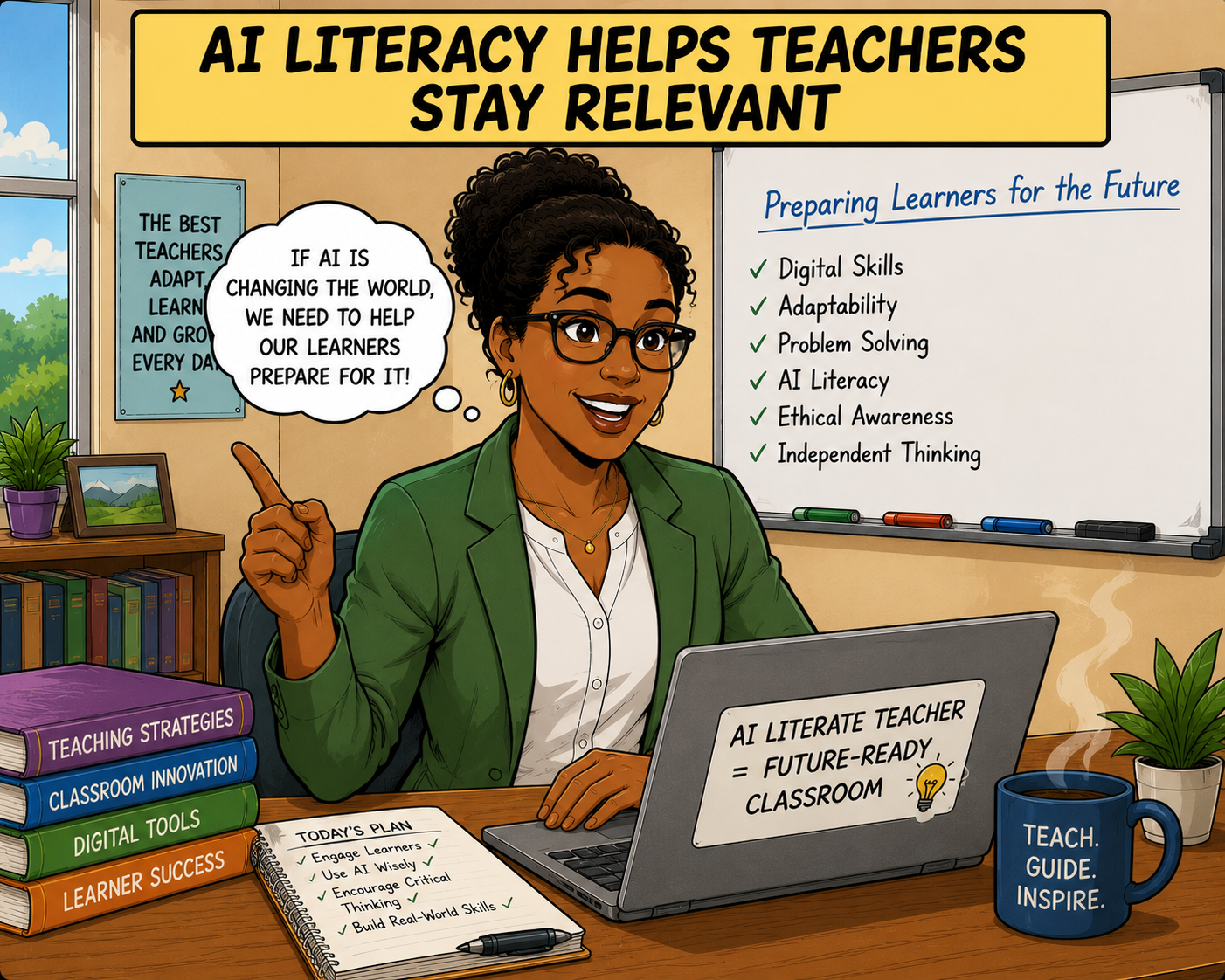
AI Literacy Helps Teachers Stay Relevant
Education prepares learners for the future.
If AI is becoming part of higher education, business, healthcare, engineering, finance, agriculture, and many other industries, schools also need to prepare learners for that reality.
Teachers who understand AI can better connect classroom learning to the world beyond school.
This does not mean teaching AI in every lesson.
It means recognising where AI is influencing modern life and helping learners develop the skills to work alongside intelligent technology.
Understanding How AI Works
Educators do not need advanced technical knowledge.
However, they should understand the basic principles.
AI:
Learns patterns from large amounts of information.
Generates responses based on probability.
Does not think like humans.
Can make mistakes.
Can produce inaccurate information.
Does not understand emotions.
Requires human judgement.
These basic ideas help teachers evaluate AI realistically rather than treating it as either magical or dangerous.
AI Literacy Supports Better Lesson Planning
Teachers spend many hours preparing learning materials.
AI can assist by creating first drafts of:
Lesson plans
Worksheets
Revision activities
Discussion questions
Rubrics
Homework ideas
Classroom examples
AI literacy helps educators recognise that these are starting points—not finished products.
Professional teachers still decide:
What learners need.
Which examples work best.
Which activities meet curriculum outcomes.
Which adaptations suit their classrooms.
AI supports planning.
Teachers lead learning.
Helping Learners Use AI Responsibly
Many learners experiment with AI before understanding its limitations.
Without guidance they may:
Accept incorrect information.
Copy AI responses.
Depend too heavily on technology.
Ignore source verification.
Lose confidence in their own thinking.
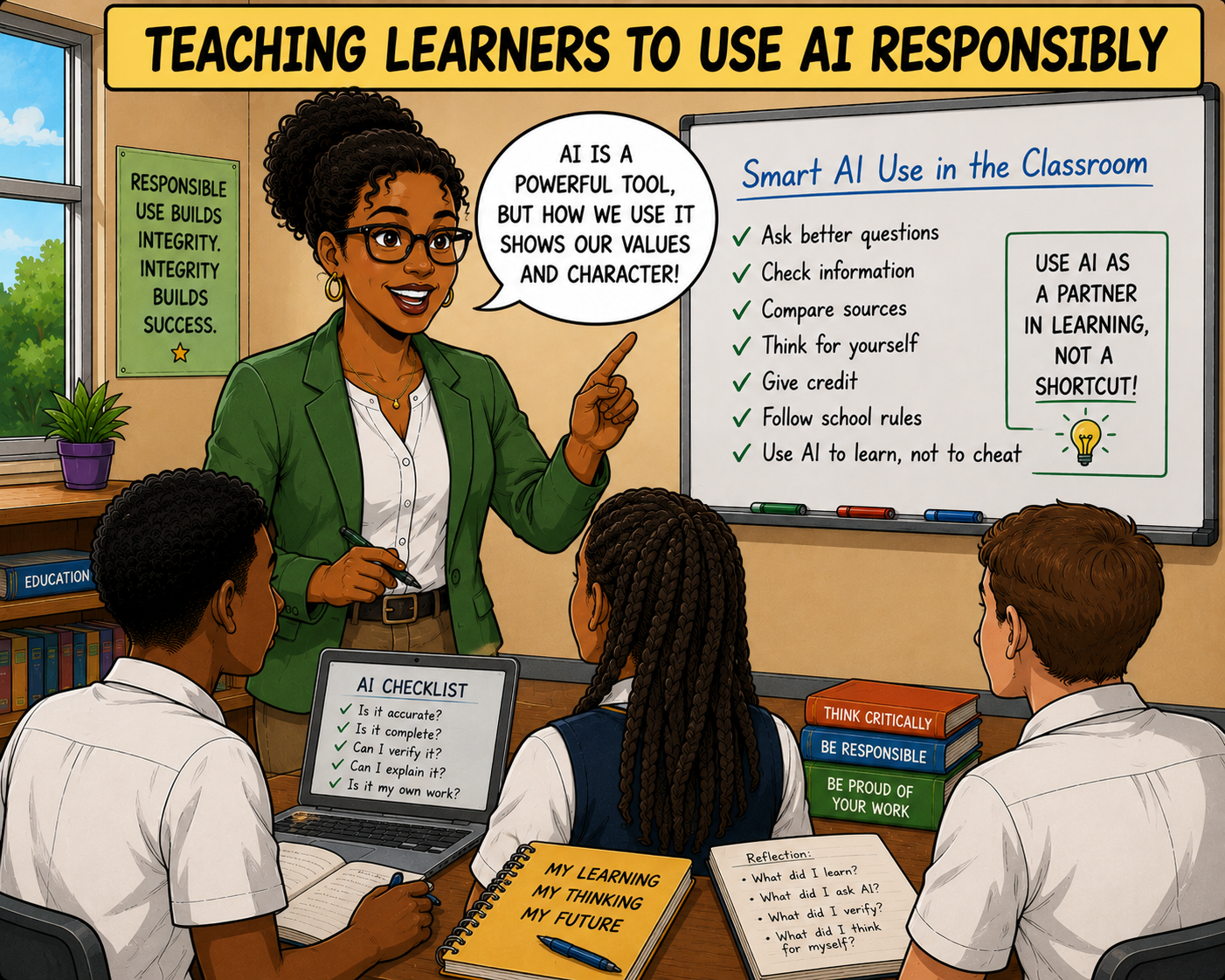
AI-literate educators can teach learners to:
Ask better questions.
Check information carefully.
Compare multiple sources.
Think independently.
Use AI ethically.
This is becoming an important part of digital citizenship.
Critical Thinking Becomes Even More Important
One misconception is that AI reduces the need for thinking.
In reality, AI makes critical thinking more valuable than ever.
Learners should ask:
Is this information correct?
Is it complete?
Can I verify it?
Is there another perspective?
Can I explain it myself?
Teachers play an essential role in developing these habits.
AI literacy and critical thinking work together.
AI Literacy Improves Assessment Design
Traditional assessment often focused on finished written work.
AI changes this.
Educators increasingly need assessments that encourage learners to demonstrate:
Understanding
Reasoning
Reflection
Creativity
Application
Communication
Examples include:
Oral presentations
Classroom discussions
Practical investigations
Draft submissions
Reflection journals
Case studies
Real-world problem-solving
AI literacy helps educators design assessments that remain meaningful even when AI tools are available.
Understanding AI's Limitations
Good AI literacy includes understanding what AI cannot do well.
AI struggles with:
Human relationships.
Emotional understanding.
Moral judgement.
Context that is not clearly explained.
Original lived experiences.
Classroom management.
Building trust.
Recognising these limitations prevents unrealistic expectations.
AI Literacy Helps Reduce Fear
Many concerns about AI come from uncertainty.
When educators understand how AI works, they often become more confident.
Instead of asking:
"Will AI replace me?"
They begin asking:
"How can I use AI to become more effective?"
This shift changes AI from a threat into a professional tool.
AI Literacy Supports Inclusive Education
South African classrooms include learners with diverse:
Languages
Learning needs
Academic abilities
Educational backgrounds
AI can help educators prepare:
Simplified explanations
Vocabulary support
Additional practice
Alternative examples
Differentiated activities
Teachers remain responsible for selecting and adapting these resources appropriately.
AI literacy helps educators recognise where AI genuinely supports inclusion.
Ethical AI Use Is Part Of AI Literacy
AI literacy includes understanding ethics.
Educators should consider:
Accuracy
Always verify AI-generated information.
Privacy
Protect learner information.
Academic Integrity
Encourage honest use of AI.
Copyright
Respect intellectual property.
Fairness
Recognise possible AI bias.
Ethics should guide every educational decision involving AI.
AI Literacy Across Every Subject
AI is not limited to Information Technology classrooms.
Teachers across subjects can benefit.
Mathematics
Practice questions and worked examples.
English
Writing support and vocabulary development.
History
Comparing historical perspectives.
Geography
Environmental explanations and revision.
Physical Sciences
Simplified scientific concepts.
Business Studies
Case studies and business scenarios.
Accounting
Revision activities and terminology support.
Life Sciences
Concept explanations and revision planning.
Every educator can develop AI literacy regardless of subject specialisation.
The South African Context
AI adoption will differ across South Africa.
Some schools have:
High-speed internet.
Individual learner devices.
Digital learning platforms.
Modern infrastructure.
Others continue to face:
Limited connectivity.
Shared computers.
Electricity interruptions.
Budget limitations.
Large classes.
AI literacy remains valuable in both contexts.
Even where technology access is limited today, understanding AI prepares educators for future developments.
Professional knowledge is never wasted.
Building AI Literacy Gradually
Teachers do not need to learn everything immediately.
A gradual approach is often best.
Start by:
Exploring One AI Tool
Become comfortable with its basic features.
Asking Simple Questions
Experiment with lesson ideas or explanations.
Reviewing The Results
Evaluate accuracy and usefulness.
Editing AI Outputs
Improve every draft before using it.
Reflecting On The Experience
Consider where AI genuinely saves time.
Small improvements build long-term confidence.
Professional Learning Never Stops
Excellent teachers are lifelong learners.
AI literacy is simply another area of professional growth.
Educators can continue learning through:
School workshops.
Online webinars.
Professional reading.
Department meetings.
Colleague collaboration.
Practical classroom experimentation.
No teacher needs to know everything.
The willingness to learn matters most.
AI Literacy Benefits Schools
When teachers become AI literate, schools benefit as well.
Possible advantages include:
Better lesson preparation.
Improved learner support.
More consistent resource development.
Increased collaboration.
Better assessment design.
Stronger digital citizenship education.
More informed policy decisions.
AI literacy becomes part of building a modern learning culture.
Preparing Learners For The Future
Many future careers will involve AI in some form.
Learners will need to know how to:
Evaluate AI information.
Work responsibly with AI.
Solve problems alongside technology.
Think independently.
Make ethical decisions.
Teachers who understand AI are better positioned to prepare learners for this future.
Education has always been about more than subject knowledge.
It is about preparing young people for life.
Looking Ahead
AI will continue evolving rapidly.
New educational tools will appear.
Existing systems will improve.
Schools will gradually adapt.
The educators who thrive will not necessarily be those who know the most about technology.
They will be the teachers who remain:
Curious.
Adaptable.
Ethical.
Reflective.
Committed to lifelong learning.
These qualities have always defined excellent teaching.
AI literacy simply strengthens them.
Practical Steps You Can Take This Month
Developing AI literacy does not require major changes.
Try one or two of these practical actions over the next month:
Use an AI tool to draft a lesson introduction and compare it with your own.
Ask AI to create ten revision questions for one CAPS topic and review the quality.
Rewrite a difficult reading passage using AI to make it more suitable for English First Additional Language learners.
Discuss responsible AI use with one of your classes.
Share successful AI experiences with colleagues during a department meeting.
Read one article each week about AI in education.
Reflect on where AI genuinely saves time and where your professional judgement remains essential.
Consistent, small steps are far more valuable than trying to master every new AI tool at once.
Key Takeaways
AI literacy is becoming an essential professional skill because Artificial Intelligence is increasingly influencing the way teaching, learning, and assessment take place. Educators do not need advanced technical knowledge, but they do need to understand how AI works, where it adds value, and where careful human judgement is still required. AI-literate teachers are better equipped to evaluate information, design meaningful learning experiences, guide learners responsibly, and make informed decisions about technology in the classroom.
For South African educators, AI literacy is not about keeping up with every new digital trend. It is about building confidence, developing practical knowledge, and preparing learners for a world where AI will become part of everyday life and work. By embracing continuous learning, maintaining ethical standards, and placing learners' needs at the centre of every decision, teachers can use AI as a powerful support tool while preserving the human relationships and professional expertise that remain at the heart of excellent education.
Additional Articles in the Understanding AI in the School Context Series
What High School Educators Need to Know About AI
How AI Is Changing Teaching, Learning, and Assessment
Common Myths and Fears About AI in Education
Why AI Literacy Is Becoming Part of Good Teaching
AI in South African Education: Opportunity, Pressure, and Practical Reality
Disclaimer
AI Tools were used to assist with research. Remember to always cross-check everything that you read.