

Supporting Struggling Learners: Helping Learners Who Lack Motivation
This is article #2 of 5 in the Supporting Struggling Learners Series
Introduction
Motivation is a key factor in student success. Even the brightest learners can struggle if they lack the drive to complete assignments, participate in class, or aim for improvement. For educators, understanding why learners lose motivation and how to re-engage them is essential. This article explores the causes of low motivation, signs to watch for, and practical strategies to help learners regain their focus and enthusiasm.
1. Understanding Motivation in Learners
Motivation is the internal drive that encourages students to take action and persist in learning. It can be:
Intrinsic – motivated by personal interest or enjoyment of a subject.
Extrinsic – motivated by rewards, grades, or recognition.
Low motivation does not mean a student is lazy. Often, it results from external challenges or internal struggles such as:
Feeling overwhelmed by schoolwork.
Lack of confidence in their abilities.
Poor relationships with peers or teachers.
Feeling that learning is irrelevant to their future.
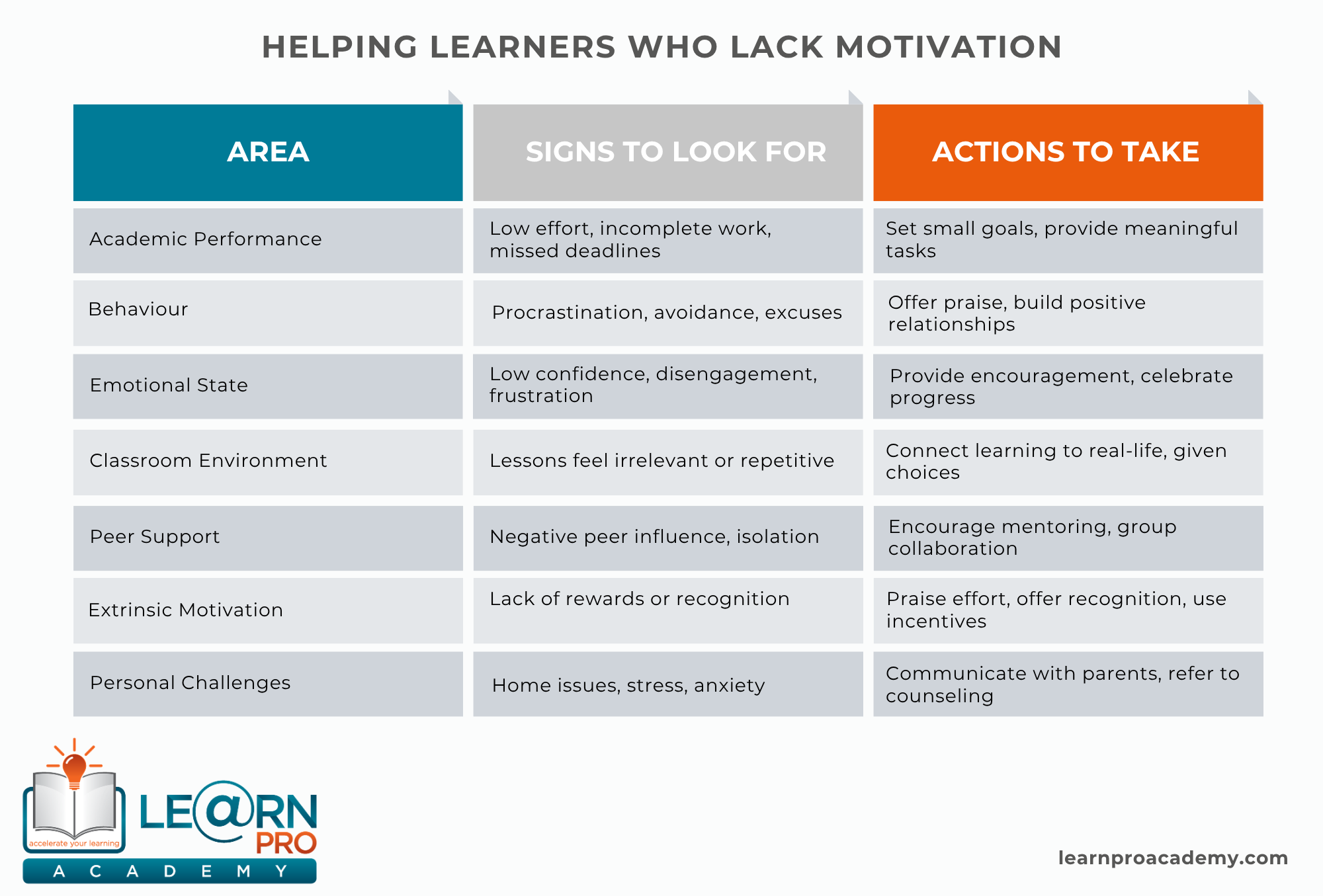
2. Signs a Learner Lacks Motivation
Educators can spot motivation issues through observable behaviours:
a) Academic Indicators
Missed deadlines or incomplete assignments.
Low effort in tasks even when capable.
Minimal participation in class discussions.
b) Behavioural Clues
Procrastination or avoidance of tasks.
Frequent excuses or blaming others.
Lack of interest in extracurricular activities.
c) Emotional Indicators
Frustration or giving up quickly.
Low self-esteem or self-doubt.
Signs of boredom or disengagement during lessons.
3. Discovering the Root Causes
Before taking action, try to understand why the learner is unmotivated:
Talk with the learner – ask about their interests, goals, and challenges.
Involve parents or guardians – home situations may impact motivation.
Observe peer interactions – negative peer influence can reduce engagement.
Evaluate workload – excessive or poorly structured assignments can overwhelm learners.
4. Creating a Motivating Classroom Environment
A supportive classroom can significantly improve motivation:
Set clear goals – learners need to understand what is expected and why.
Provide regular feedback – highlight progress, not just mistakes.
Offer meaningful tasks – relate lessons to real-life applications.
Encourage choice and autonomy – let students select topics, projects, or methods of learning.
Celebrate effort – acknowledge persistence, creativity, and problem-solving.
5. Practical Strategies to Increase Motivation
Here are strategies educators can use:
a) Build Relationships
Get to know learners personally.
Show empathy and understanding of challenges.
Be a role model for enthusiasm and curiosity.
b) Set Achievable Goals
Break tasks into smaller, manageable steps.
Use short-term goals to build momentum.
Track progress and celebrate milestones.
c) Use Rewards Wisely
Offer praise, recognition, or small incentives.
Focus on effort rather than only results.
Encourage self-reward strategies, like celebrating personal achievements.
d) Make Learning Relevant
Connect lessons to students’ interests or future careers.
Use real-world examples and problem-solving activities.
Encourage project-based learning to spark creativity.
e) Foster Peer Support
Create group activities where learners support each other.
Pair motivated learners with less motivated ones for mentoring.
Encourage collaboration rather than competition.
6. Supporting Learners Beyond the Classroom
Some motivation challenges need support outside of lessons:
Counselling or mentoring – learners may need guidance for personal challenges.
Parental engagement – consistent encouragement at home reinforces motivation.
Extra-curricular opportunities – sports, clubs, or competitions can inspire engagement.
Flexible approaches – adjust tasks or deadlines to prevent discouragement.
7. Monitoring Motivation Progress
Once strategies are in place, it’s essential to track improvement:
Observe changes in participation, effort, and behaviour.
Ask learners for feedback on what helps them stay engaged.
Adjust teaching methods if motivation remains low.
Record milestones to celebrate progress and build confidence.
8. Checklist: Helping Learners Who Lack Motivation
Conclusion
Motivation is not fixed—it can be nurtured and restored. By understanding the causes of low motivation, spotting early warning signs, and implementing practical strategies, educators can help learners re-engage and thrive academically. A motivated learner not only performs better but also develops resilience, confidence, and a love for learning that lasts a lifetime.
Related Articles to Series
Identifying Learners Who Need Extra Support
Helping Learners Who Lack Motivation
Learners with Poor Study Skills
Teaching Learners How to Study Independently
Behaviour Without Constant Discipline
Disclaimer
AI Tools were used to assist with research. Remember to always cross-check everything that you read.