
Supporting Struggling Learners: Managing Behaviour Without Constant Discipline
This is article #5 of 5 in the Supporting Struggling Learners Series
Introduction
Classroom behaviour can significantly affect learning. While traditional discipline methods focus on punishment, constantly reprimanding learners can create stress, resentment, and disengagement. Effective behaviour management focuses on positive strategies that encourage good conduct while maintaining a calm and supportive environment. This article explains how educators can manage behaviour proactively, reduce disruptions, and foster a positive classroom culture.
1. Understanding Classroom Behaviour
Behaviour in the classroom reflects more than just a student’s personality. It can be influenced by:
Learning challenges – frustration from struggling academically.
Emotional or social issues – anxiety, stress, or peer conflicts.
Environmental factors – classroom layout, noise, or lack of structure.
Lack of understanding expectations – unclear rules or routines.
Understanding these causes helps teachers respond with support rather than punishment.
2. Signs Learners May Struggle with Behaviour
Some common indicators that learners may need support rather than strict discipline include:
a) Academic Indicators
Frequent incomplete assignments or lack of participation.
Difficulty concentrating during lessons.
b) Behavioural Clues
Talking out of turn or disrupting peers.
Avoiding tasks or refusing to follow instructions.
Impulsive actions or aggressive reactions.
c) Emotional Indicators
Anxiety, frustration, or withdrawal.
Low confidence or fear of making mistakes.
Overreaction to minor corrections.
3. The Principles of Positive Behaviour Management
Managing behaviour without constant discipline relies on proactive, positive approaches:
Consistency – clear rules applied fairly to all learners.
Predictability – routines help learners know what to expect.
Positive reinforcement – reward good behaviour to encourage repetition.
Respectful communication – treat learners with dignity, even when correcting behaviour.
Focus on learning – behaviour management should support, not interrupt, teaching and learning.
4. Practical Strategies to Manage Behaviour
a) Set Clear Expectations
Explain rules and routines clearly at the start.
Display classroom expectations visually.
Use positive language: “Walk in the classroom” rather than “Don’t run.”
b) Build Relationships
Get to know learners personally.
Show empathy and understanding of challenges.
Encourage respect through mutual trust.
c) Encourage Self-Regulation
Teach learners strategies to manage frustration or impulses.
Model calm responses to stress or conflict.
Provide opportunities for reflection on behaviour: “What could I do differently next time?”
d) Use Positive Reinforcement
Praise effort and cooperation, not just academic success.
Use token systems, certificates, or verbal recognition for consistent good behaviour.
Highlight positive examples in class to motivate peers.
e) Prevent Disruptions
Organise seating to minimise conflicts.
Vary teaching methods to maintain engagement.
Give clear instructions and check understanding before starting activities.
5. Supporting Learners with Behaviour Challenges
Some learners need extra support to manage behaviour:
Individual behaviour plans – set specific goals and monitor progress.
Collaboration with support staff – involve school counsellors or learning support specialists.
Parental engagement – consistent strategies at home and school reinforce positive behaviour.
Mentoring or peer support – pairing learners with role models for guidance.
6. Monitoring and Adjusting Strategies
Behaviour management is an ongoing process. Teachers should:
Keep records of behaviour incidents and interventions.
Observe patterns to understand triggers.
Adjust strategies when current methods are ineffective.
Celebrate improvements, however small, to reinforce progress.
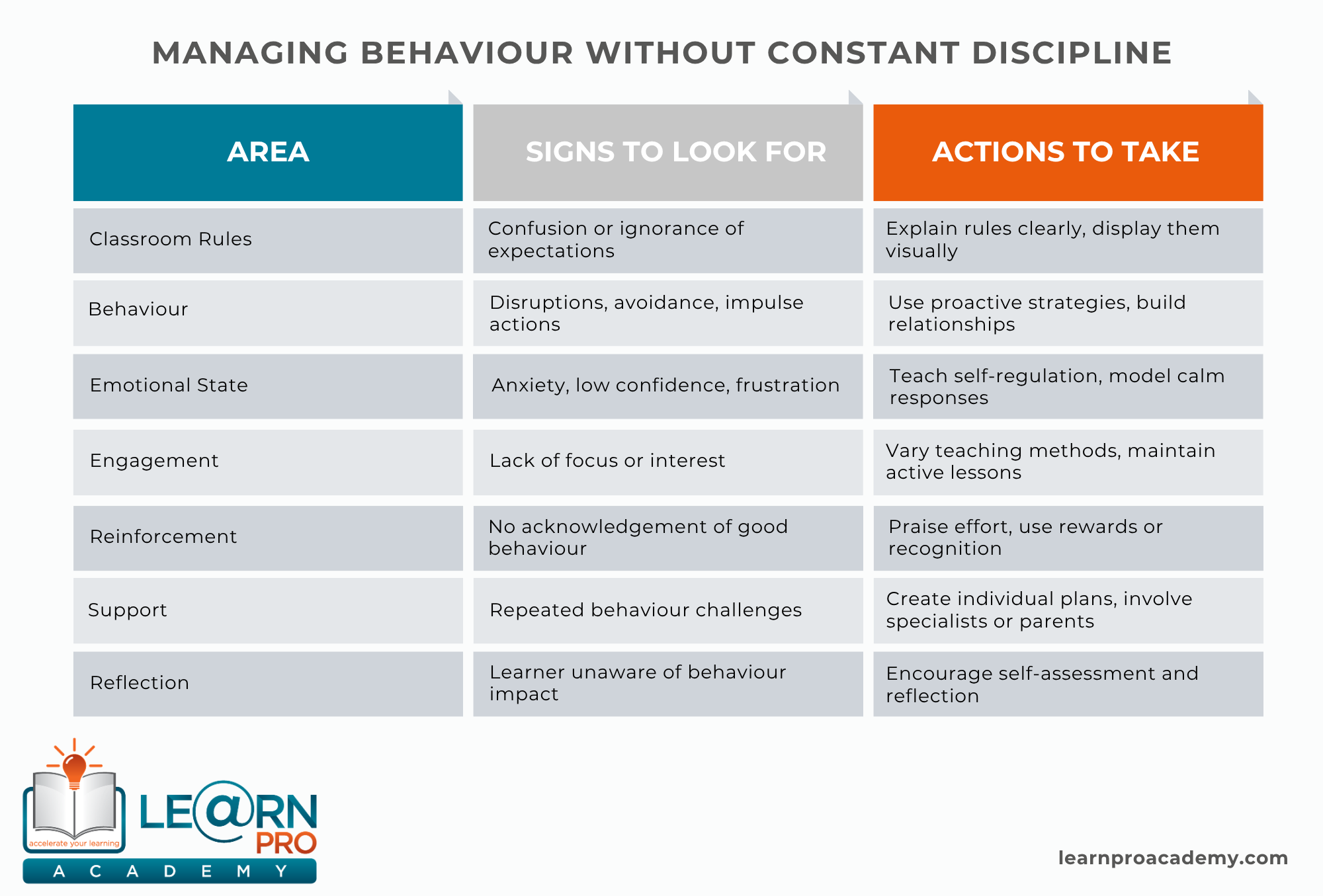
7. Checklist: Managing Behaviour Without Constant Discipline
Conclusion
Effective behaviour management is not about constant discipline—it’s about guiding learners, preventing problems, and encouraging positive conduct. By setting clear expectations, building relationships, and using proactive strategies, educators can maintain a calm, focused classroom. Positive behaviour management improves learning outcomes, strengthens student-teacher relationships, and creates a classroom environment where all learners can thrive.
Related Articles to Assessment, Exams & Curriculum Delivery Series
Identifying Learners Who Need Extra Support
Helping Learners Who Lack Motivation
Learners with Poor Study Skills
Teaching Learners How to Study Independently
Behaviour Without Constant Discipline
Disclaimer
AI Tools were used to assist with research. Remember to always cross-check everything that you read.