Supporting Struggling Learners: Teaching Learners How to Study Independently
This is article #4 of 5 in the Supporting Struggling Learners Series
Introduction
Independent learning is an essential skill for academic success and lifelong learning. Learners who can study independently take responsibility for their progress, understand concepts on their own, and develop confidence in their abilities. Many students, however, rely too heavily on teachers or peers, which can limit their growth. This article explores why independent study is important, signs learners need guidance, and practical strategies to help educators develop this skill in their students.
1. Understanding Independent Study
Independent study is when learners take responsibility for their own learning. This includes:
Planning and organising study time – deciding what and when to study.
Setting goals – knowing what they want to achieve in a session or term.
Finding resources – using textbooks, online materials, or notes effectively.
Self-assessment – checking understanding and progress without relying solely on the teacher.
Independent learners develop confidence, self-discipline, and critical thinking—skills that are essential for exams, higher education, and life beyond school.
2. Signs a Learner Needs Guidance in Independent Study
Educators can spot students who struggle with independent learning through these indicators:
a) Academic Performance
Difficulty completing homework or projects without help.
Incomplete or disorganised notes.
Poor preparation for tests and exams.
b) Behavioural Clues
Constantly asking for instructions or answers.
Reliance on peers to complete tasks.
Avoidance of tasks requiring planning or self-direction.
c) Emotional Indicators
Anxiety about studying alone.
Lack of confidence in handling new or challenging material.
Frustration when working independently.
3. Laying the Foundation for Independent Study
Before students can learn independently, they need guidance:
Teach organisation skills – planners, to-do lists, and calendars.
Demonstrate goal setting – show how to set short-term and long-term learning targets.
Model study techniques – summarising notes, active recall, and self-testing.
Create a safe learning environment – allow mistakes and encourage problem-solving.
4. Practical Strategies to Encourage Independent Learning
Here are effective strategies educators can use:
a) Gradual Release of Responsibility
Start with guided practice, then move to collaborative work, and finally to independent tasks.
Provide clear instructions at first, then gradually reduce support.
b) Teach Study Techniques
Active recall – encourage learners to test themselves.
Mind mapping – help visual learners organise ideas.
Summarising and paraphrasing – improve understanding and retention.
c) Encourage Goal-Setting
Have learners set achievable daily or weekly goals.
Track progress visually with charts or checklists.
Reward milestones to build motivation.
d) Foster Self-Assessment
Teach learners to review their work critically.
Encourage reflection: “What did I learn? What is still difficult?”
Use rubrics or self-grading exercises.
e) Provide Resources and Tools
Show learners how to use textbooks, online tutorials, and library materials effectively.
Introduce study apps or tools that support planning and revision.
Provide examples of good study routines.
5. Supporting Independent Study in the Classroom
Teachers can reinforce independent learning while maintaining engagement:
Assign tasks that require self-direction, like research projects or presentations.
Offer choices in assignments to foster ownership.
Provide regular feedback on process as well as content.
Encourage peer collaboration that supports independence, not dependency.
6. Collaborating with Parents and Guardians
Support at home strengthens independent learning skills:
Guide parents on how to monitor study routines without taking over.
Suggest a quiet, distraction-free study area.
Encourage positive reinforcement and celebrate progress.
Provide resources or tips for parents to guide learners effectively.
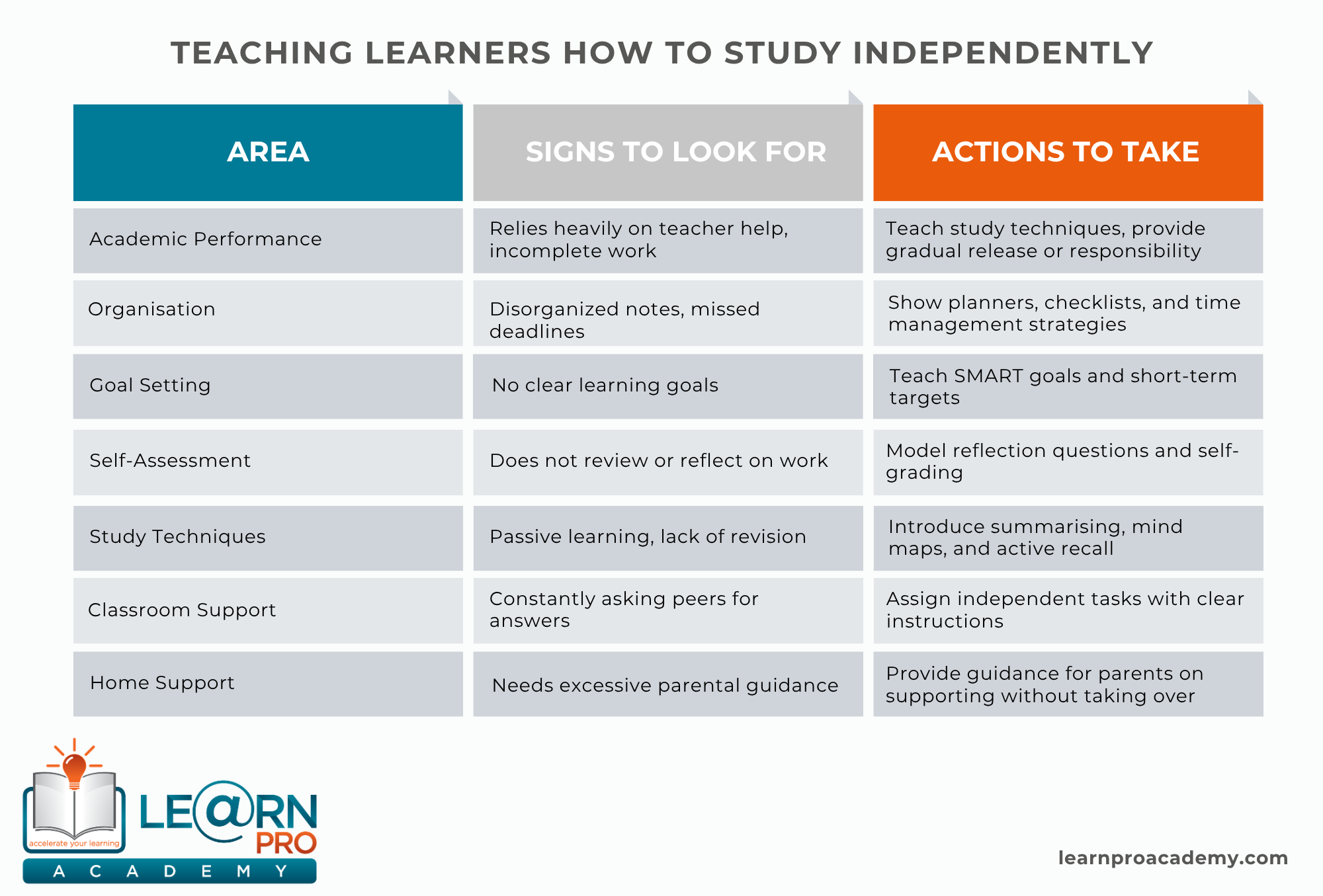
7. Checklist: Teaching Learners How to Study Independently
Conclusion
Independent study skills empower learners to take charge of their learning, improve confidence, and achieve better academic outcomes. By gradually releasing responsibility, teaching practical study techniques, and providing structured support, educators can help students develop the skills needed to learn effectively on their own. Independent learners not only perform better in school but are also better prepared for lifelong learning and future challenges.
Related Articles to Assessment, Exams & Curriculum Delivery Series
Identifying Learners Who Need Extra Support
Helping Learners Who Lack Motivation
Learners with Poor Study Skills
Teaching Learners How to Study Independently
Behaviour Without Constant Discipline
Disclaimer
AI Tools were used to assist with research. Remember to always cross-check everything that you read.