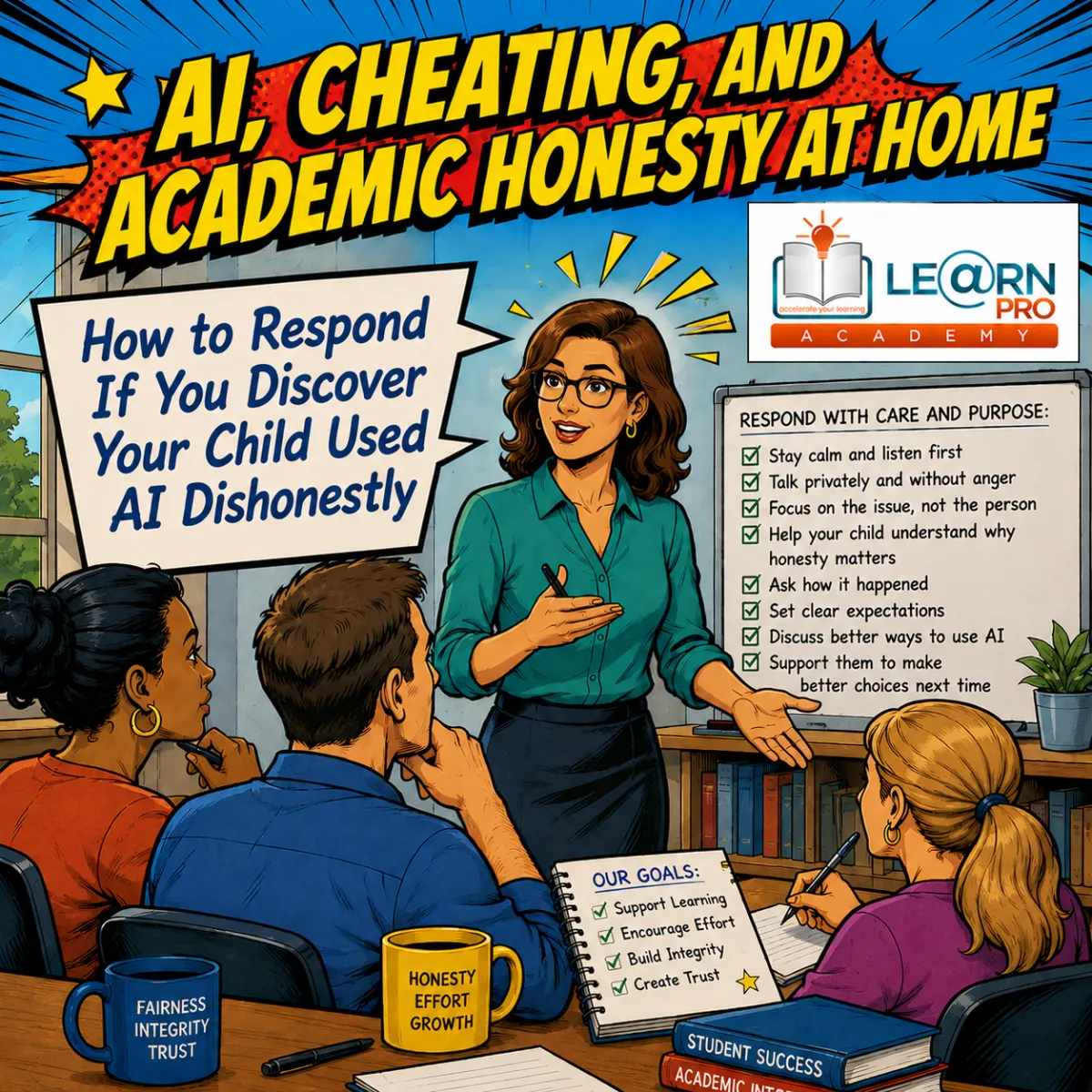
How to Respond If You Discover Your Child Used AI Dishonestly
This is article #4 of 5 in the AI, Cheating, and Academic Honesty at Home Series
Introduction
Finding out that your child used artificial intelligence (AI) dishonestly for schoolwork can be upsetting. You may feel disappointed, angry, frustrated, or worried about what this means for their future. Questions may immediately come to mind:
"Have they been cheating for a long time?"
"Will they get into trouble at school?"
"Have they stopped caring about learning?"
These feelings are completely understandable.
However, how you respond in the first few minutes can have a lasting impact on your child's willingness to be honest with you in the future.
While dishonest AI use should never be ignored, the goal is not simply to punish your child. The bigger goal is to help them understand why their choice was wrong, learn from the experience, rebuild trust, and develop better habits going forward.
Most teenagers make mistakes while learning responsibility. AI is simply a new type of temptation that previous generations did not face. Parents have an opportunity to turn these moments into valuable life lessons about honesty, accountability, and good decision-making.
This article explains practical ways to respond calmly, fairly, and constructively if you discover your child has used AI dishonestly.
Stay Calm Before You Respond
The first reaction often determines how the conversation will continue.
If you immediately shout, accuse, or threaten punishment, your child may become defensive, stop listening, or begin hiding future mistakes.
Instead, pause.
Take a few deep breaths if necessary. Give yourself a few minutes before starting the conversation. Remaining calm does not mean you approve of what happened. It simply means you are choosing to respond thoughtfully instead of emotionally.
Children learn more from calm guidance than from angry reactions.
Gather The Facts First
Avoid making assumptions. Before reaching conclusions, try to understand exactly what happened.
Ask questions such as:
What assignment was involved?
How did you use AI?
Did you write any part yourself?
Did you know the school's AI rules?
Why did you decide to use AI this way?
Sometimes the situation is different from what parents first imagine.
For example:
The learner may have misunderstood the teacher's instructions.
They may have used AI only for grammar.
They may have copied AI without realising it was against school policy.
They may have been under significant pressure.
Understanding the full situation helps parents respond fairly.
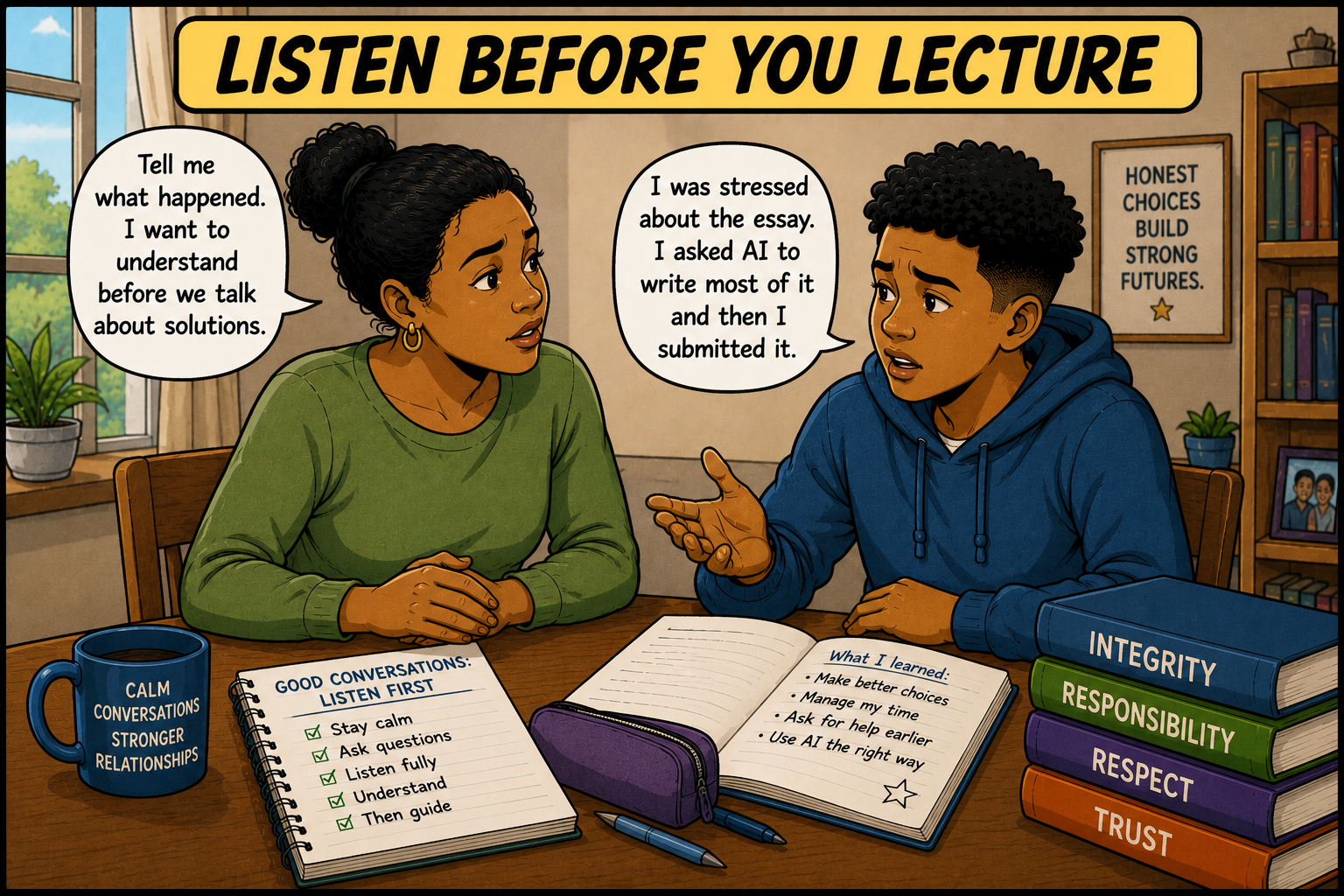
Listen Before You Lecture
Many parents naturally want to explain why cheating is wrong. However, listening first often produces a better outcome. Allow your child to explain without constant interruption.
Ask open questions such as:
What happened?
What were you thinking at the time?
What made this assignment difficult?
How were you feeling?
Listening does not excuse dishonest behaviour. It helps you understand the reasons behind it.
Those reasons often guide the best solution.
Understand The Real Cause
AI dishonesty usually has an underlying cause.
It may be:
Fear of failure.
Poor time management.
Too many commitments.
Lack of confidence.
Pressure for high marks.
Difficulty understanding the work.
Wanting to finish quickly.
Following friends.
The dishonest choice still needs to be addressed.
However, solving only the behaviour without addressing the cause often leads to repeated problems.
Explain Why The Choice Was Wrong
Rather than simply saying: "You cheated."
Explain why dishonest AI use matters.
For example:
"When AI does all your thinking, you lose the chance to learn."
"The assignment is designed to help you build skills."
"If teachers cannot see your real ability, they cannot help you improve."
This helps children understand that honesty is about much more than avoiding punishment.
Separate The Behaviour From The Child
One important parenting principle is to separate poor choices from personal identity.
Avoid saying: "You are dishonest."
Instead say: "You made a dishonest choice."
This difference matters.
Children should understand that:
They made a mistake.
They can learn from it.
They can rebuild trust.
They can make better choices next time.
Mistakes do not define who they are.
Avoid Public Humiliation
If possible, discuss the situation privately.
Avoid:
Embarrassing your child in front of siblings.
Telling extended family unnecessarily.
Using social media to complain.
Comparing them to other children.
Respectful conversations preserve dignity while still allowing accountability.
Encourage Personal Responsibility
Help your child take ownership of what happened.
Ask questions like:
What could you have done differently?
What would you change next time?
How do you think your teacher would feel?
How has this affected your learning?
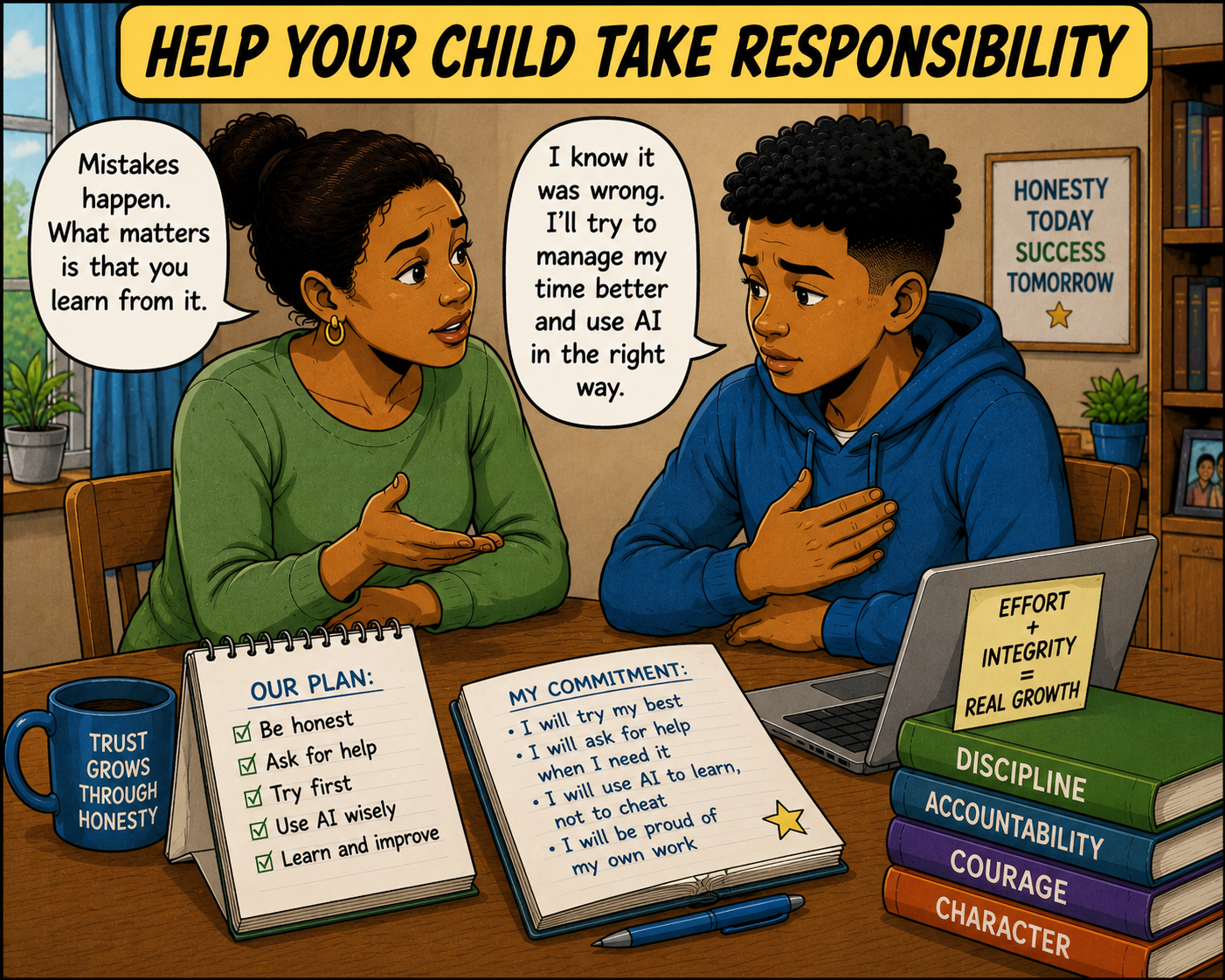
When children reflect on their own decisions, they develop stronger responsibility.
Discuss School Consequences Honestly
If the dishonest AI use affects school assessments, your child may need to face school consequences.
Parents should avoid encouraging children to hide mistakes. Instead, discuss the importance of honesty. Sometimes accepting responsibility builds more character than avoiding consequences.
You can also support your child emotionally while they face the results of their decisions.
Rebuild Trust Together
Trust can be damaged by dishonest behaviour. Fortunately, it can also be rebuilt.
Explain that trust grows through:
Honest communication.
Consistent behaviour.
Taking responsibility.
Showing improvement over time.
Rebuilding trust is usually a process rather than a single conversation.
Teach Responsible AI Use
Instead of banning AI completely, teach better ways to use it.
Show your child how AI can help them:
Understand difficult topics.
Generate practice questions.
Check grammar.
Improve writing.
Review concepts.
Create study plans.
Explain that AI should help learning — not replace it.
Create A Better Homework Routine
Sometimes dishonest AI use happens because homework routines are poor.
Consider encouraging your child to:
Start assignments earlier.
Break work into smaller sections.
Attempt questions independently first.
Use AI only after trying.
Check AI answers carefully.
Ask teachers for help when necessary.
Better routines reduce temptation.
Focus On Learning Instead Of Marks
Some learners cheat because they believe marks matter more than understanding.
Parents can help change this mindset.
Instead of asking:
"What mark did you get?"
also ask:
What did you learn?
Which part challenged you?
What are you proud of?
What would you improve?
Children who value learning are usually less likely to depend on dishonest shortcuts.
Encourage Honest Conversations About Pressure
Teenagers often experience pressure from many directions.
These may include:
School expectations.
Parents.
Friends.
Sport.
Cultural expectations.
University entrance requirements.
Make it safe for your child to discuss these pressures openly.
Sometimes simply talking reduces the temptation to make poor decisions.
Help Them Solve The Original Problem
If your child used AI because they did not understand the work, focus on helping them learn.
You might:
Review difficult topics together.
Find extra practice questions.
Arrange additional support.
Encourage teacher consultation.
Build a realistic study schedule.
Addressing learning gaps is often more effective than increasing punishment.
Avoid Turning AI Into The Enemy
AI itself is not the problem. The issue is dishonest use.
Just as calculators, textbooks, and the internet can all be misused, AI requires responsible decision-making.
Children should learn how to use technology wisely rather than fearing it.
Develop Family AI Guidelines
Many families find it helpful to agree on clear expectations.
For example:
Attempt homework independently first.
Use AI to explain concepts.
Never submit AI work as your own.
Always follow school AI policies.
Tell parents when AI has been used.
Check AI information carefully.
Simple expectations provide consistency.
Model Honesty Yourself
Children watch adult behaviour closely. If you use AI yourself, explain how you use it responsibly.
For example: "I asked AI for ideas, but I still wrote the report myself."
or: "I used AI to improve my wording, but these are still my own ideas."
Parents who model ethical technology use strengthen their children's understanding.
Turn Mistakes Into Learning Opportunities
Many successful adults made poor decisions as teenagers. What mattered was how they learned from those experiences.
Help your child reflect on questions such as:
What have you learned?
What would you do differently?
How can you avoid this situation again?
What support would help next time?
Reflection transforms mistakes into valuable lessons.
Strengthen Character Over Time
Character develops through repeated daily choices.
Encourage qualities such as:
Honesty.
Responsibility.
Self-discipline.
Perseverance.
Respect.
Integrity.
These qualities will remain valuable long after today's AI technology changes.
Know When Additional Support May Be Needed
If dishonest behaviour becomes repeated or forms part of a broader pattern, additional support may help.
Speak with:
Teachers.
Grade heads.
School counsellors.
Learning support staff.
Working together often provides better long-term outcomes than handling problems alone.
Looking Beyond One Mistake
One dishonest assignment should not define your child's future. Young people learn through guidance, correction, and second chances.
Parents should communicate two important messages:
"I am disappointed by your choice."
and
"I believe you can make better choices next time."
Children who feel both accountable and supported are more likely to change their behaviour.
Preparing Your Child For An AI Future
AI will continue to become part of higher education and many careers. Your child needs more than technical knowledge.
They need judgment.
They need integrity.
They need confidence in their own ability.
Teaching responsible AI use today prepares them for a future where technology will be common but honesty will still be essential.
Conclusion
Discovering that your child used AI dishonestly can be disappointing, but it can also become one of the most valuable teaching moments in their education. By responding calmly, listening before judging, understanding the reasons behind the behaviour, and helping your child take responsibility, parents can turn a mistake into an opportunity for growth.
The aim is not simply to prevent AI misuse. It is to help young people develop honesty, resilience, critical thinking, and good decision-making. When parents combine clear expectations with empathy, accountability, and ongoing support, they help their children build character that will serve them well at school, in future careers, and throughout life.
Additional Articles in the AI, Cheating, and Academic Honesty at Home Series
What Counts as Cheating When Your Child Uses AI?
How to Talk About Honesty When AI Can Do the Work So Easily
Signs Your Child May Be Overusing AI for Schoolwork
How to Respond If You Discover Your Child Used AI Dishonestly
Building a Home Culture of Effort, Not Shortcuts
Disclaimer
AI Tools were used to assist with research. Remember to always cross-check everything that you read.