
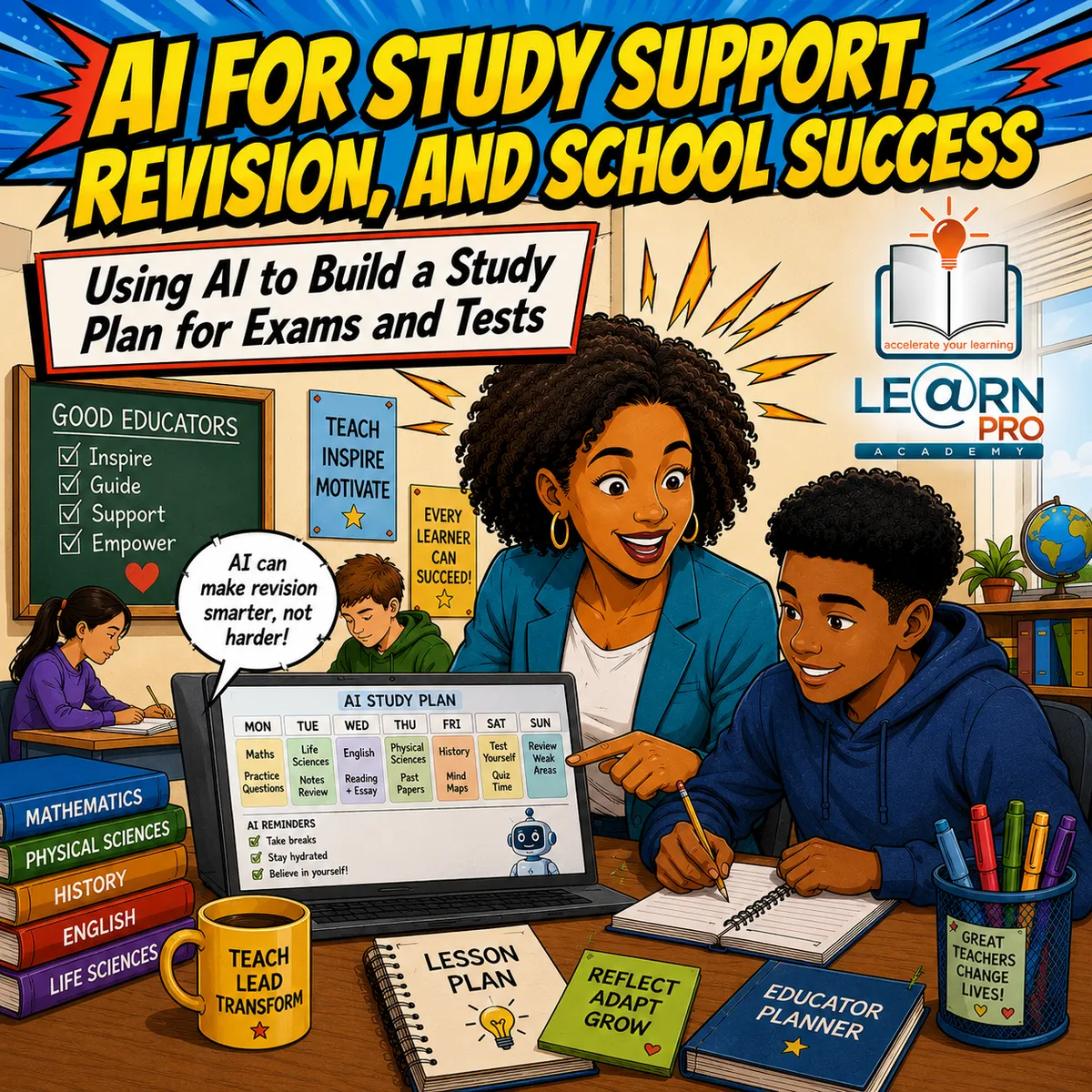
Using AI to Build a Study Plan for Exams and Tests
This is article #2 of 5 in the AI for Study, Support, Revision, and School Success Series
Introduction
Examination time can be one of the most stressful periods in a high school learner's year. As tests, assignments, and exams begin to overlap, many learners feel overwhelmed before they even open a textbook. They may know they need to study, but they often struggle with one simple question: Where do I start?
Parents see this happen every year. A child may spend hours worrying about everything they need to revise but make very little progress because the workload feels too large. Some learners jump from one subject to another without a clear plan, while others spend too much time on their favourite subjects and avoid the ones they find difficult.
Artificial intelligence (AI) cannot study for your child or guarantee good marks. However, it can help learners organise their workload, create realistic study timetables, prioritise important topics, and divide revision into manageable tasks. Used responsibly, AI becomes a planning assistant that helps learners work more calmly and consistently.
This article explains how parents can encourage their child to use AI to build an effective study plan while still developing responsibility, independence, and good study habits.
Why Many Learners Struggle With Study Planning
Planning is a skill that many teenagers are still developing.
Learners often face challenges such as:
Not knowing which subject to study first
Underestimating how long revision will take
Leaving difficult subjects until the last minute
Spending too much time on easy topics
Becoming distracted while studying
Feeling anxious because everything seems urgent
Without a clear plan, even motivated learners can waste valuable study time.
Parents sometimes mistake this lack of organisation for laziness, when in reality the learner simply does not know how to plan effectively.
The Difference Between Studying And Planning
Many learners believe that sitting at a desk means they are studying. In reality, effective studying starts long before the books are opened.
A good study plan answers questions like:
What subjects need attention?
Which topics are most important?
How much time is available?
Which exams come first?
What should be revised today?
When should breaks happen?
Planning removes uncertainty and allows learners to focus on learning rather than constantly deciding what to do next.
How AI Can Help Create A Study Plan
AI is very good at organising information.
A learner can tell AI:
Which subjects they take
Their exam timetable
The dates of upcoming tests
Which topics they find difficult
How many hours they can study each day
AI can then suggest a realistic revision timetable that spreads the workload over several days or weeks.
Instead of seeing one large mountain of work, learners see a series of achievable daily tasks.
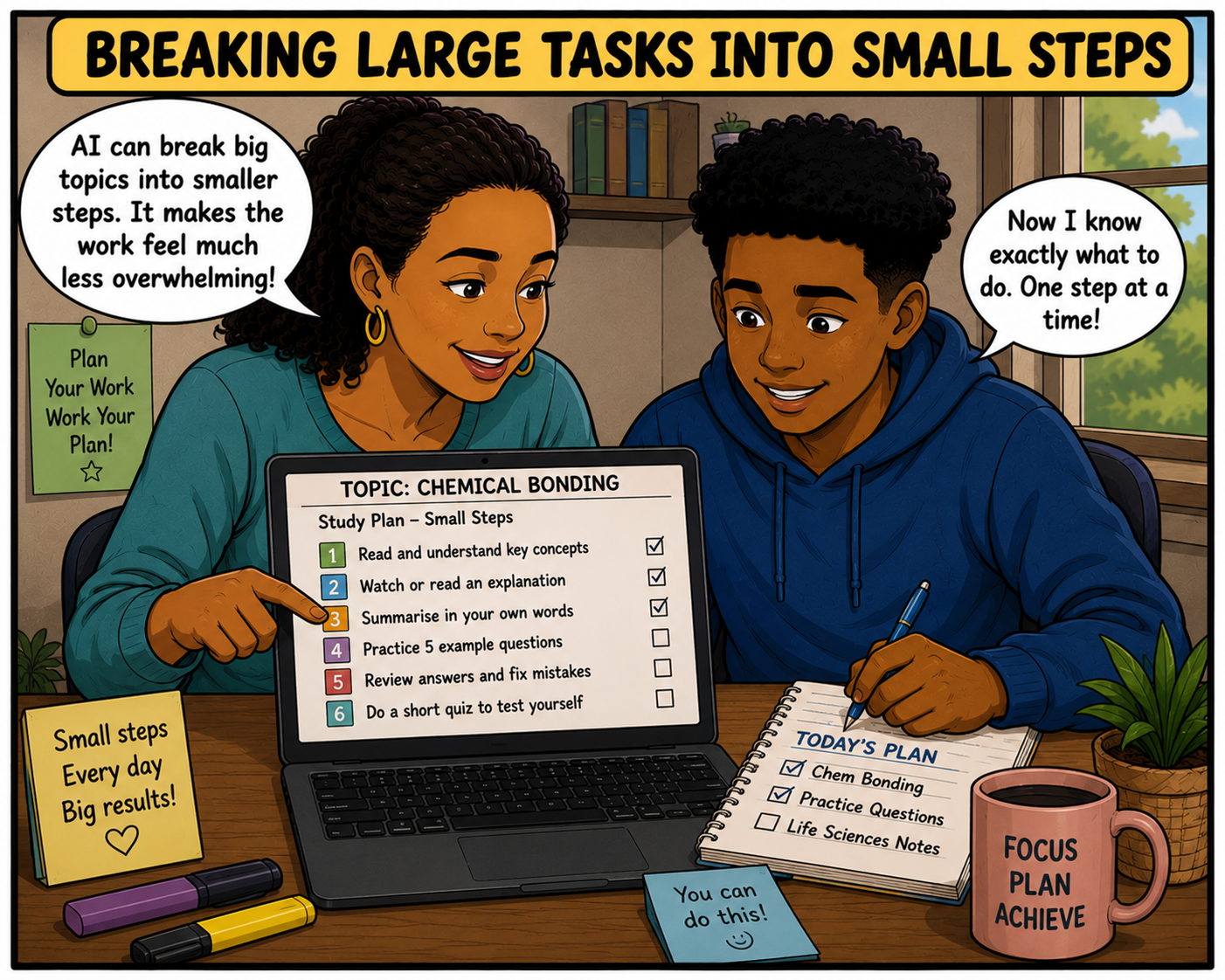
Breaking Large Tasks Into Smaller Steps
One reason learners avoid revision is because the work feels too big.
For example:
Instead of writing: "Study Physical Sciences."
AI can divide it into:
Revise chemical bonding
Complete five practice questions
Review incorrect answers
Revise acids and bases
Complete another practice activity
Small tasks feel much easier to begin than large, vague goals.
Parents can encourage their children to focus on completing one task at a time rather than worrying about everything still left to do.
Creating A Balanced Weekly Schedule
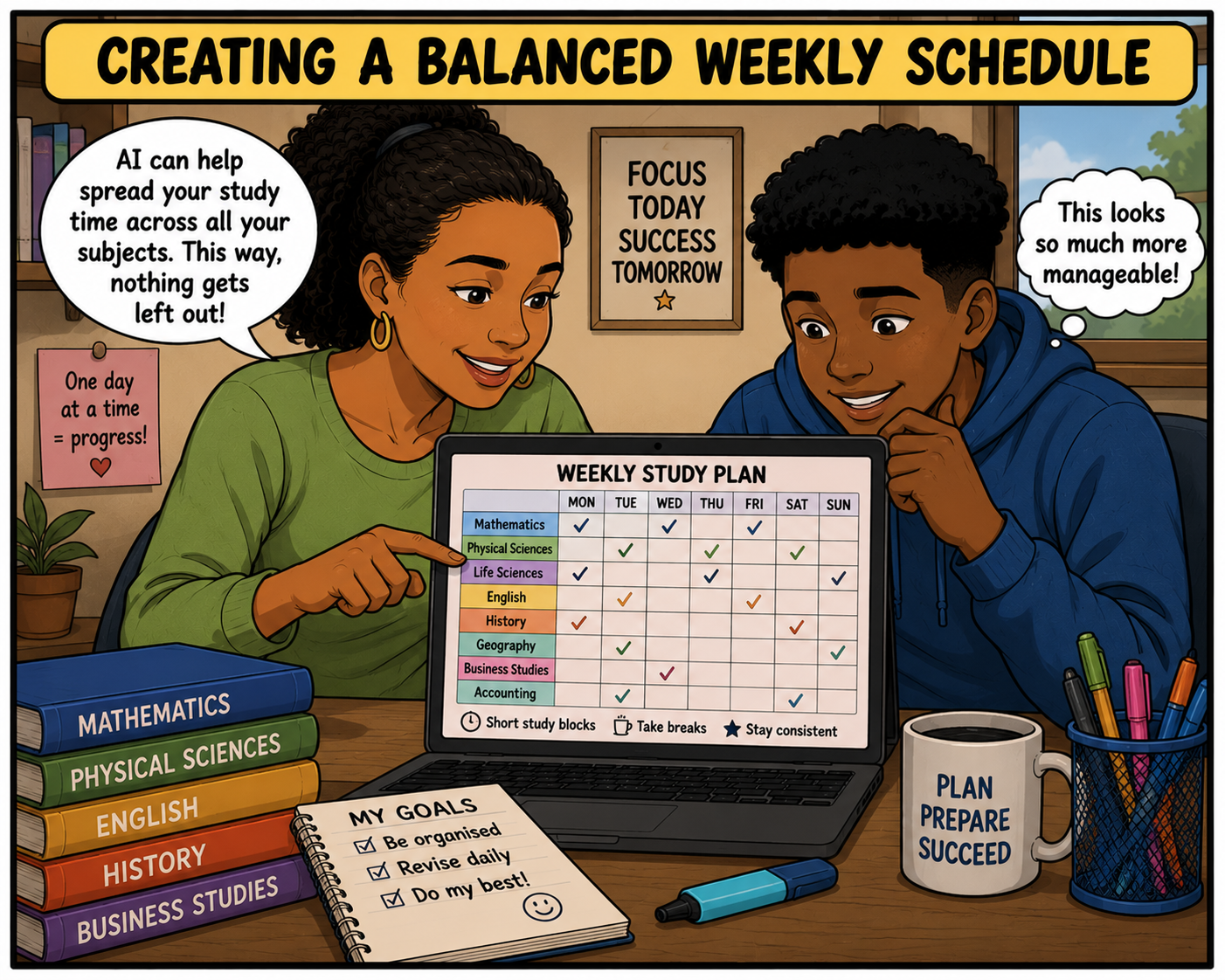
Many learners naturally spend more time on subjects they enjoy. Unfortunately, examinations test every subject — not only the favourites.
AI can help create a balanced weekly schedule that includes:
Mathematics
Physical Sciences
Life Sciences
Languages
History
Geography
Business Studies
Accounting
Consumer Studies
Other elective subjects
Balanced revision reduces the risk of neglecting weaker subjects.
Prioritising Important Subjects
Not every subject requires the same amount of revision.
Some subjects:
Have examinations sooner.
Include more content.
Require more practice.
Need regular problem-solving.
Are currently weaker areas.
AI can help learners prioritise these subjects while still keeping time available for stronger ones.
Parents should remind children that prioritising does not mean ignoring other subjects.
Planning Around Family Life
Every family has different routines.
Some learners:
Attend extra lessons.
Play sport.
Participate in cultural activities.
Have household responsibilities.
Travel long distances to school.
A good study plan should fit around real life. AI can adjust schedules based on available time instead of expecting learners to study for unrealistic hours every day.
This creates plans that are much easier to follow.
Avoiding Unrealistic Study Timetables
Many learners create ambitious revision schedules that quickly fall apart.
For example:
Study six hours every weekday
Complete two subjects every evening
Never take breaks
These plans often fail because they are unrealistic.
AI can help build more achievable schedules by including:
Short study sessions
Regular breaks
Time for meals
Family responsibilities
Exercise
Sleep
Parents should encourage realistic progress rather than perfect timetables.
Helping Learners Set Daily Goals
Large goals can feel discouraging. Daily goals are much easier to achieve.
For example:
Monday:
Revise two Mathematics topics
Complete one English comprehension
Review Life Sciences flashcards
Tuesday:
Revise Accounting concepts
Practise Geography mapwork
Complete History source questions
Completing several small goals each day builds confidence and momentum.
Including Regular Revision Instead Of Cramming
One of the biggest mistakes learners make is waiting until the last few days before an examination.
This often leads to:
Panic
Exhaustion
Poor concentration
Lack of confidence
AI can help spread revision across several weeks. Instead of one long study session, learners revise regularly. This approach improves memory and reduces stress.
Parents can encourage consistent study habits long before examinations begin.
Scheduling Breaks And Rest
Parents sometimes believe that more study always leads to better results. In reality, tired learners often remember less. AI can include planned breaks between study sessions.
For example:
Study for 45–60 minutes.
Take a short break.
Return with fresh concentration.
Regular breaks improve focus and reduce mental fatigue.
Sleep is equally important.
No study plan should encourage learners to stay awake late every night.
Using AI To Adjust The Plan
A study timetable should not remain exactly the same every week.
Sometimes:
A learner finishes early.
A topic takes longer than expected.
School deadlines change.
Family commitments arise.
New tests are announced.
AI can quickly update the timetable without forcing learners to start planning again from the beginning.
This flexibility helps learners stay organised even when circumstances change.
Helping Learners Stay Motivated
Following a timetable can become difficult after several days.
AI can support motivation by helping learners:
Track completed topics.
See their progress.
Celebrate milestones.
Suggest the next revision task.
Generate practice activities.
Parents can support this by recognising effort rather than focusing only on marks.
Positive encouragement often motivates learners more effectively than constant pressure.
Parents Should Guide, Not Control
It is natural to want your child to succeed. However, constantly checking every minute of their study schedule can create unnecessary conflict.
Instead of controlling the timetable, parents can ask questions like:
What are you planning to revise today?
Which subject is your biggest priority?
What helped you decide on today's plan?
Is your timetable realistic?
Do you need help adjusting it?
These conversations encourage responsibility while allowing learners to take ownership of their own planning.
Helping Learners Build Independence
One of the long-term goals of school is preparing learners to manage their own responsibilities.
AI can support this process by helping learners:
Plan independently.
Solve organisational problems.
Review their own progress.
Adjust their schedules.
Develop time management skills.
Parents remain important supporters, but learners gradually become more confident in managing their own workload.
These are valuable life skills that will continue beyond school.
Avoiding Overdependence On AI
Although AI is useful for planning, learners should not depend on it for every decision.
Encourage your child to:
Review the timetable themselves.
Make adjustments when necessary.
Think about what works best.
Reflect on whether the plan is realistic.
Learn from experience.
AI provides suggestions, but the learner remains responsible for following the plan.
Questions Parents Can Ask During Exam Preparation
Supportive conversations often make a bigger difference than checking whether every task has been completed.
Useful questions include:
Which subject are you focusing on today?
Which topic feels most difficult?
Did your study plan work today?
What changes should you make tomorrow?
Have you included enough breaks?
Are you spending enough time on weaker subjects?
These questions help learners think critically about their own study habits.
Supporting Learners During Stressful Times
Examination periods can affect emotional wellbeing.
Parents may notice:
Anxiety
Frustration
Poor sleep
Mood changes
Lack of confidence
A realistic study plan reduces uncertainty. Instead of feeling overwhelmed by everything they still need to do, learners know exactly what their next task is.
AI supports this process by creating structure, but emotional support from parents remains equally important.
Sometimes simply listening to your child's concerns is more valuable than offering solutions.
Practical Tips For Parents
You do not need to become your child's study planner.
Instead, you can:
Encourage planning before revision starts.
Help your child stick to regular routines.
Support healthy sleep habits.
Encourage balanced meals and hydration.
Reduce unnecessary distractions during study time.
Praise consistency rather than perfection.
Remind your child that plans can be adjusted if needed.
Encourage responsible AI use alongside textbooks, class notes, and teacher guidance.
These simple actions create an environment where good planning can succeed.
AI Is A Planning Tool, Not A Replacement For Discipline
A timetable only works if it is followed.
AI cannot force learners to:
Start studying.
Stay focused.
Avoid distractions.
Complete practice questions.
Revise honestly.
These habits still require self-discipline and commitment.
Parents play an important role by encouraging routines, celebrating effort, and helping learners remain accountable for their own goals.
Conclusion
Many learners struggle during exam season not because they lack ability, but because they feel overwhelmed by the amount of work ahead of them. Without a clear plan, revision can become stressful, disorganised, and ineffective.
AI offers a practical way to make study planning easier. By organising subjects, breaking revision into smaller tasks, prioritising important topics, and creating realistic schedules, AI helps learners approach exams with greater confidence and less anxiety. A good study plan gives learners direction and helps them make steady progress instead of relying on last-minute cramming.
Parents do not need to manage every hour of their child's timetable. Their most valuable role is to provide encouragement, ask supportive questions, and create a home environment where healthy study habits can develop. When learners take ownership of their revision while using AI responsibly, they build valuable planning and time-management skills that will continue to benefit them long after their school years are over.
Ultimately, AI is not a shortcut to success. It is a helpful planning partner that works best alongside consistent effort, good organisation, and the encouragement of supportive parents.
Additional Articles in the AI for Study, Support, Revision, and School Success Series
How AI Can Help Your Child Revise More Effectively
Using AI to Build a Study Plan for Exams and Tests
Can AI Help Your Child with Difficult Subjects Like Maths or Science?
Helping Your Child Use AI to Practise for Exams Instead of Panic Before Them
How Parents Can Use AI Conversations to Check Understanding at Home
Disclaimer
AI Tools were used to assist with research. Remember to always cross-check everything that you read.