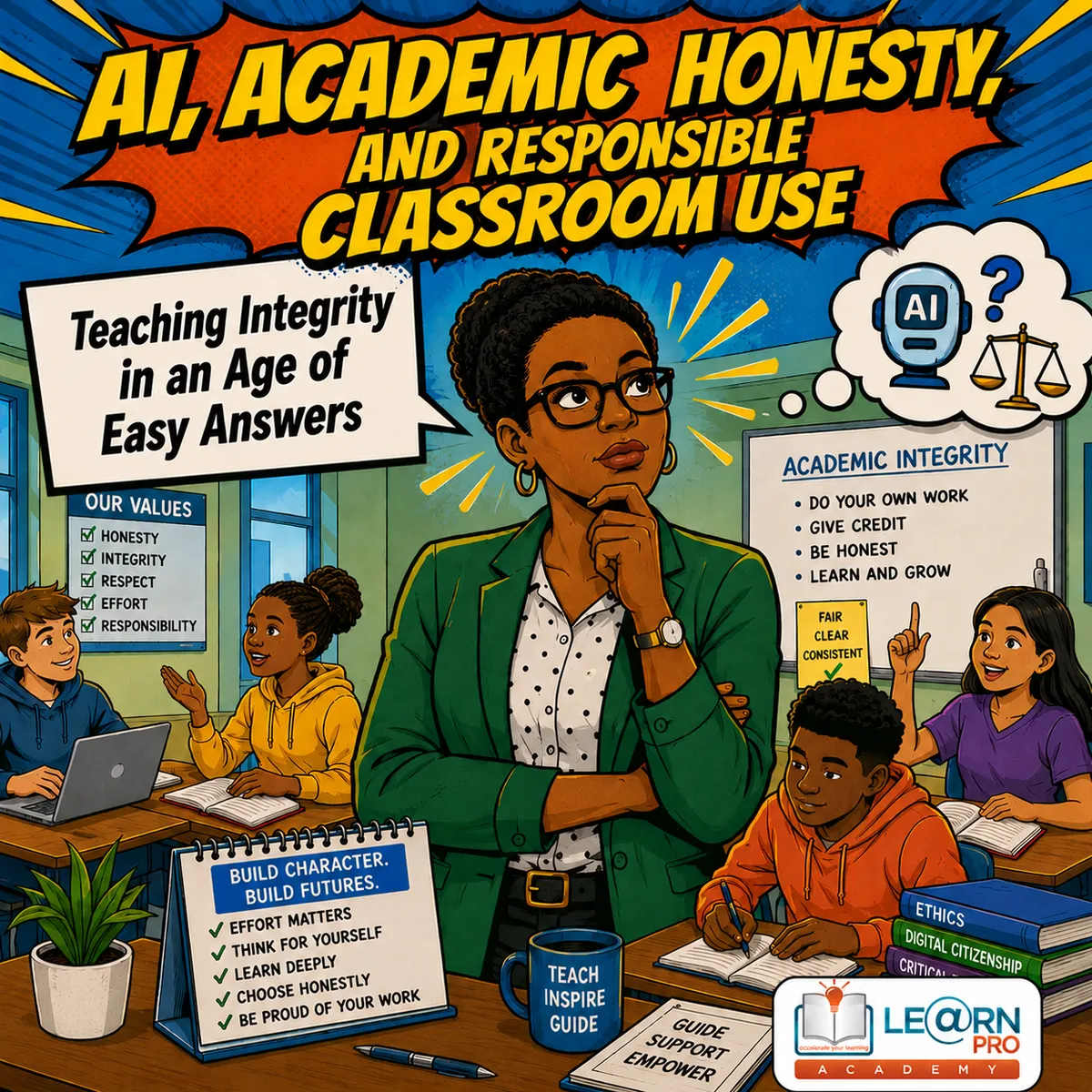
Teaching Integrity in an Age of Easy Answers
This is article #5 of 5 in the AI, Academic Honesty, and Responsible Classroom Use Series
Introduction
Artificial intelligence (AI) has made information easier to access than ever before. Within seconds, learners can ask AI to explain a concept, generate ideas, solve problems, or even write complete assignments. These tools have enormous potential to support learning, but they also present an important challenge for educators.
The greatest risk is not simply that learners may cheat.
The greater risk is that learners may begin to believe that thinking is optional.
If learners become accustomed to allowing technology to solve every problem, they may gradually lose confidence in their own ability to reason, create, analyse, and persevere through difficult tasks. Genuine learning requires effort, curiosity, reflection, and persistence — qualities that no AI tool can replace.
This is why teaching integrity has become more important than ever.
Integrity is not simply about avoiding plagiarism or following school rules. It is about developing honesty, responsibility, resilience, and pride in one's own work. These values remain essential whether learners use AI or not.
Educators have an important opportunity to shape how learners think about technology. Rather than treating AI as either a threat or a shortcut, teachers can help learners understand that AI should support learning while independent thinking remains at the heart of education.
This article explores practical ways educators can build a classroom culture where effort, honesty, and integrity continue to matter in an age of easy answers.
Why Integrity Matters More Than Ever
For generations, schools have taught more than subject knowledge. They have also helped learners develop character.
Qualities such as:
Honesty
Responsibility
Respect
Perseverance
Self-discipline
Accountability
are just as valuable as academic achievement. AI has not changed the importance of these values. If anything, it has made them even more important.
When technology makes shortcuts easier, learners need stronger judgement to choose the right path.
Integrity helps them make those choices.
The Difference Between Learning And Completing Work
Many learners naturally focus on completing tasks.
They ask: "What do I need to hand in?"
Educators want learners to ask a different question: "What do I need to learn?"
This shift changes everything.
If learners believe the goal is simply to submit work, AI may appear to provide an easy solution.
If learners understand that the goal is personal growth, understanding, and skill development, AI becomes a learning tool instead of a replacement.
Regularly reminding learners of the purpose of education helps reinforce this mindset.
Explain That Struggle Is Part Of Learning
One reason learners rely too heavily on AI is that they want to avoid difficulty. However, struggling with challenging ideas is often where the deepest learning happens.
Educators can explain that:
Mistakes help us improve.
Difficult questions strengthen thinking.
Practice builds confidence.
Problem-solving develops resilience.
Learning should not always feel easy.
If AI removes every challenge, it also removes many opportunities for growth.
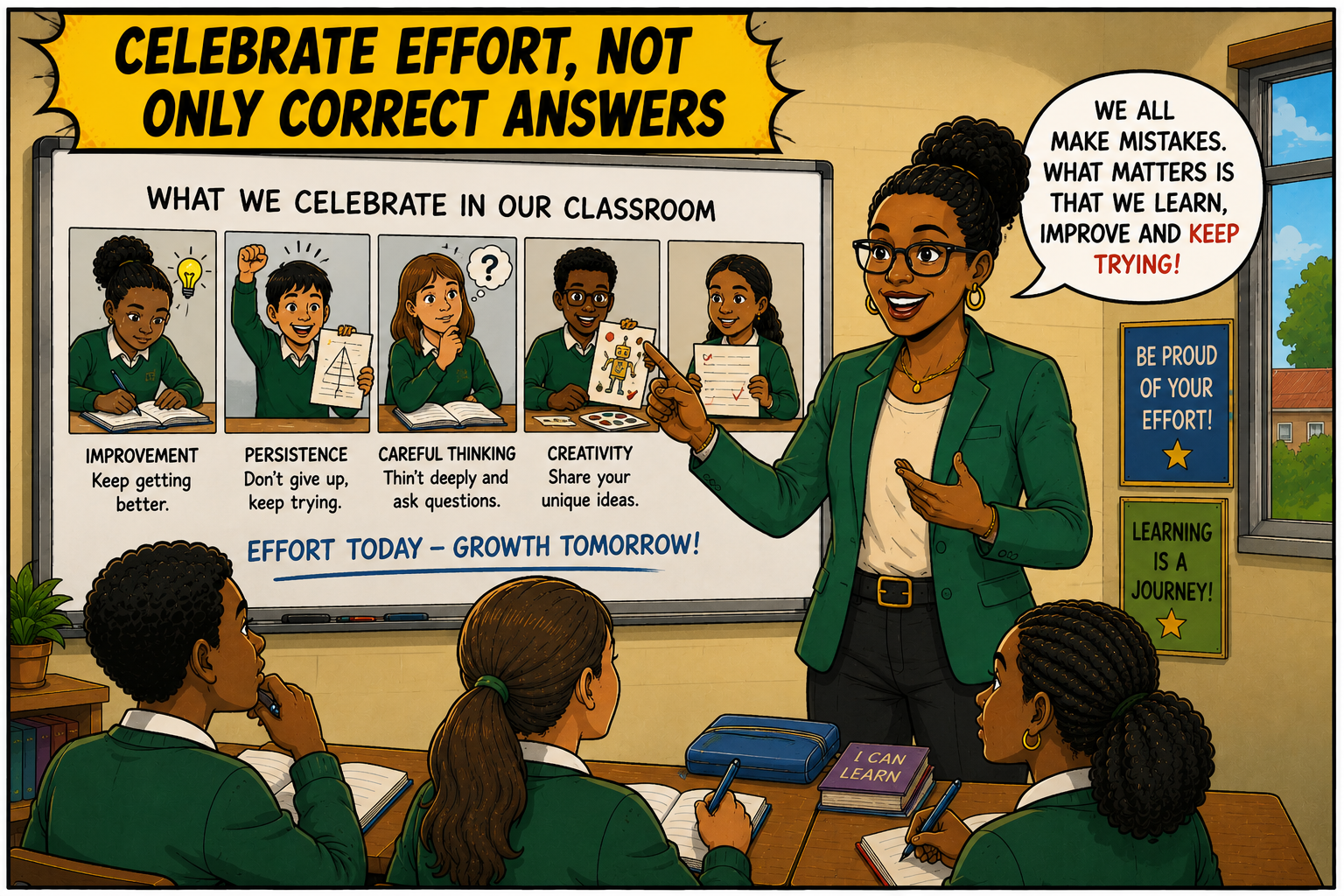
Celebrate Effort, Not Only Correct Answers
Learners often believe that only perfect work deserves recognition. This can encourage shortcuts.
Instead, celebrate:
Improvement.
Persistence.
Careful thinking.
Creativity.
Honest effort.
Constructive revision.
When effort is valued, learners understand that learning is a journey rather than simply a score.
This reduces the temptation to let AI produce perfect-looking work.
Help Learners Value Their Own Thinking
AI can generate impressive answers. However, learners need to recognise that their own ideas still matter.
Encourage learners to understand:
Your experiences are unique.
Your opinions are valuable.
Your creativity is important.
Your reasoning deserves to be developed.
AI may generate information, but it cannot replace a learner's personal understanding or lived experiences.
Building confidence in independent thinking strengthens integrity.
Teach That Honesty Builds Trust
Integrity is closely connected to trust:
Teachers trust learners.
Parents trust schools.
Future employers trust employees.
Universities trust students.
When learners submit work honestly, they build a reputation for reliability. Explain that integrity is not only about school.
It is a lifelong habit that influences relationships, careers, and leadership.
Discuss Real-Life Consequences
Some learners think academic dishonesty only affects school marks. Help them see the bigger picture.
Imagine:
A doctor who cheated through medical school.
An engineer who never learned essential calculations.
An accountant who relied on AI instead of understanding financial principles.
A teacher who never developed communication skills.
The consequences could be serious. Education prepares learners for real responsibilities.
Integrity protects both the learner and the people they will one day serve.
Encourage Learners To Reflect Before Using AI
Teach learners to pause before asking AI for help.
Questions they can ask include:
Am I trying to learn or simply finish quickly?
Could I solve part of this myself first?
What will I learn if I complete this independently?
Can AI help me understand instead of replacing my work?
Will I be able to explain this answer afterwards?
Reflection encourages responsible decision-making.
Build A Classroom Culture Of Honesty
Integrity grows in positive environments.
Educators can encourage honesty by:
Welcoming questions.
Listening without immediate judgement.
Explaining expectations clearly.
Treating mistakes as opportunities to learn.
Encouraging learners to admit uncertainty.
Learners who feel respected are more likely to behave honestly.
Model Integrity As An Educator
Learners pay attention to what teachers do.
Educators can demonstrate integrity by:
Admitting when they make mistakes.
Correcting errors openly.
Giving credit to sources.
Speaking honestly.
Showing fairness.
Treating all learners consistently.
When teachers model integrity, learners see these values in action.
Encourage Healthy Use Of AI
Teaching integrity does not require rejecting AI. Instead, educators can demonstrate responsible use.
Examples include:
Asking AI to explain difficult concepts.
Generating revision questions.
Brainstorming ideas.
Checking grammar after writing independently.
Comparing AI responses with trusted sources.
Learners should see AI as an assistant rather than a substitute for thinking.
Talk About Character, Not Just Rules
Rules tell learners what they may or may not do. Character explains why responsible choices matter.
Discuss values such as:
Honesty.
Respect.
Responsibility.
Courage.
Fairness.
Self-respect.
These conversations prepare learners to make good decisions even when nobody is watching.
Create Opportunities For Independent Thinking
Classrooms should regularly provide opportunities where learners develop their own ideas.
Examples include:
Debates.
Class discussions.
Reflection journals.
Oral explanations.
Problem-solving activities.
Community investigations.
Creative projects.
The more learners experience independent thinking, the more confidence they develop in their own abilities.
Praise Learning Rather Than Perfection
Perfection is often unrealistic. Progress is achievable.
Instead of saying: "Excellent — you got every answer correct."
Consider saying:
"I can see how your thinking has improved."
"I like the way you explained your reasoning."
"You showed persistence even when the task was difficult."
This reinforces learning rather than simply rewarding results.
Encourage Learners To Take Pride In Their Own Work
There is a special satisfaction that comes from completing challenging work honestly.
Remind learners that:
Work completed independently builds confidence.
Skills developed through effort last much longer than copied answers.
Success earned honestly feels more meaningful.
Integrity allows learners to trust their own abilities.
Help Learners Understand That AI Cannot Replace Character
AI may become increasingly powerful.
However, it cannot develop:
Honesty.
Kindness.
Responsibility.
Compassion.
Leadership.
Courage.
Wisdom.
These qualities remain uniquely human.
Schools play an essential role in helping learners develop them.
A South African Perspective
South Africa needs future leaders who combine knowledge with integrity.
Whether learners become teachers, entrepreneurs, healthcare professionals, engineers, artisans, accountants, or public servants, society depends on people who can be trusted.
Technology will continue to change workplaces.
However, employers will always value people who:
Work honestly.
Think independently.
Solve problems responsibly.
Learn continuously.
Make ethical decisions.
Schools help lay this foundation.
Teaching integrity therefore contributes not only to learner success but also to stronger communities and a stronger country.
Practical Classroom Strategies
Educators can strengthen integrity by:
Discussing ethical decision-making regularly.
Explaining why effort matters.
Celebrating improvement.
Encouraging thoughtful AI use.
Including reflection activities.
Asking learners to explain their reasoning.
Rewarding honesty.
Creating assessments that value thinking.
Building respectful classroom relationships.
Reinforcing integrity throughout the year.
Small daily habits have a lasting impact.
Questions Learners Can Ask Themselves
Encourage learners to reflect before submitting work.
Ask questions such as:
Is this my own thinking?
Have I learned something new?
Could I explain this work confidently?
Did AI support my learning or replace it?
Am I proud of how I completed this task?
Would I feel comfortable explaining exactly how I used AI?
These questions help learners develop lifelong ethical habits.
Preparing Learners For Life Beyond School
Education prepares learners for far more than examinations. It prepares them for life. In future workplaces, people may use AI every day.
However, employers will still expect:
Honest communication.
Ethical judgement.
Independent decision-making.
Creative thinking.
Professional responsibility.
Learners who develop integrity at school will be better prepared for these expectations.
Technology may change rapidly. Character remains timeless.
Integrity Is A Habit Built Every Day
Integrity is not developed through a single lesson. It grows through repeated daily choices.
Every time learners:
Complete their own work.
Admit mistakes.
Ask for help honestly.
Respect assessment rules.
Persevere through difficult tasks.
they strengthen their character.
Educators influence these daily choices through their expectations, encouragement, and example.
Conclusion
Teaching integrity in an age of easy answers is about much more than preventing cheating. It is about helping learners understand that genuine learning still requires curiosity, effort, perseverance, and independent thinking, even when AI can produce quick responses.
Educators have the opportunity to create classrooms where honesty is valued, mistakes are seen as opportunities to learn, and technology is used to strengthen understanding rather than replace it. By modelling integrity, celebrating effort, encouraging reflection, and guiding responsible AI use, teachers help learners build habits that will benefit them throughout their education and future careers.
AI will continue to evolve, but the qualities that define responsible, trustworthy, and capable people remain unchanged. Integrity, critical thinking, resilience, and respect for learning will always be among the most valuable skills learners can develop. By protecting these values today, educators prepare young people not only to succeed academically but also to contribute positively to their communities, workplaces, and South Africa's future.
Additional Articles in the AI, Academic Honesty, and Responsible Classroom Use Series
What Counts as Cheating When Learners Use AI?
How to Talk to Learners About Responsible AI Use
Designing Assessments That Reduce AI Cheating
How to Create a Classroom AI Policy That Is Fair and Practical
Teaching Integrity in an Age of Easy Answers
Disclaimer
AI Tools were used to assist with research. Remember to always cross-check everything that you read.